Browse

Log in / Register
 Share

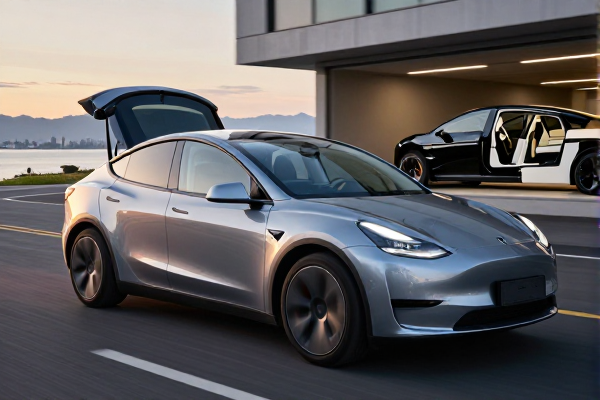
The U.S. National Highway Traffic Safety Administration (NHTSA) announced on Monday, September 8, 2025, that it has opened a formal investigation into Tesla’s certification that its new Cybercab complies with all applicable Federal Motor Vehicle Safety Standards (FMVSS). The probe, designated as an Audit Query, was initiated on September 3 and covers an estimated 1,000 Cybercab units, according to an NHTSA investigation document.
Tesla began commercial deployment of a small number of Cybercab vehicles in Austin, Texas, on Thursday, September 4, and notified the agency that it had certified the vehicles as compliant with all relevant FMVSS. The company also stated its intention to gradually expand commercial deployment to additional locations and increase the fleet size. However, the Cybercab lacks permanently attached conventional manual controls—including a brake pedal, gas pedal, steering wheel, and mirrors—a design that has drawn immediate regulatory scrutiny.
The NHTSA probe will examine the process and technical data Tesla relied upon when certifying the Cybercab, as well as the extent to which Tesla’s certification depended on determinations that certain FMVSS are inapplicable to the vehicle. In the United States, automakers must self-certify that their vehicles meet applicable standards before market entry, subject to NHTSA oversight. The agency conducts investigations when certified vehicles appear not to adhere to those requirements.
NHTSA Administrator Jonathan Morrison emphasized that the agency fully supports the safe development and deployment of automated vehicles but must ensure that applicable laws are followed. “Our role is to verify that manufacturers are not bypassing safety rules through creative interpretations,” Morrison said in a statement. “The Cybercab’s unconventional design warrants a careful review of the certification basis.”
Industry analysts have raised concerns about the precedent this probe could set. “Tesla is pushing the boundaries of what a vehicle can be, but federal safety standards were written with traditional cockpits in mind,” said Dr. Elizabeth Chen, a transportation safety researcher at the University of Michigan. “The NHTSA is now forced to decide whether a car without a steering wheel can still be called a ‘car’ under existing law. This could either accelerate regulatory reform or create a significant roadblock for Tesla’s robotaxi ambitions.”
The NHTSA is currently in the midst of overhauling federal vehicle safety standards to accommodate new technologies. Over the past year, the agency has begun work on eight rulemakings, including standards related to brake pedals, windshield wipers, lighting, and rearview mirrors. Until those rulemakings are completed, existing standards remain in force. The Cybercab probe adds urgency to these efforts, as the agency must decide whether to issue temporary exemptions or enforce current rules strictly.
Tesla has not yet publicly responded to the probe. However, according to sources familiar with the matter, the company is preparing a detailed technical brief arguing that the Cybercab’s design renders certain FMVSS requirements irrelevant—for example, since there is no driver’s seat, there is no need for a brake pedal. Critics counter that such logic could open a loophole for other manufacturers to eliminate safety equipment in autonomous vehicles.
The NHTSA’s investigation is the latest chapter in a series of regulatory actions involving Tesla. In 2023 and 2024, the agency probed Tesla’s Autopilot and Full Self-Driving systems after multiple crashes. The Cybercab, which relies on Tesla’s latest generation of autonomous driving hardware, represents a significant step toward the company’s goal of a driverless ride-hailing service. Musk has previously stated that the Cybercab could generate “sustainable profitability” for the company, but regulatory hurdles remain a major risk factor.
Meanwhile, competitors like Waymo and Cruise have already deployed autonomous shuttles with modified manual controls for emergency use, but none have yet removed all driver interfaces. The NHTSA’s decision in the Cybercab case could set a benchmark for the entire industry. “If the NHTSA allows Tesla’s certification to stand, it will essentially greenlight a new category of road vehicle without any fallback human driver,” said Jonathan Morrison, the NHTSA Administrator. “But if it rejects the certification, Tesla may have to recall vehicles or redesign them—a costly setback.”
The Cybercab fleet currently operating in Austin is limited to a few dozen vehicles, primarily used for employee ride-hailing and select public beta testers. Expansion plans include adding vehicles in Los Angeles and San Francisco by the end of 2025, pending regulatory approvals. The NHTSA probe does not halt operations immediately, but it could lead to a recall or suspension of sales if the agency finds non-compliance.
As the investigation unfolds, consumer safety advocates are urging the NHTSA to set clear rules. “We cannot allow companies to self-certify using loopholes that undermine decades of safety progress,” said Cathy Chase, president of Advocates for Highway and Auto Safety. “The NH