Browse

Log in / Register
 Share

Updated April 27, 2026
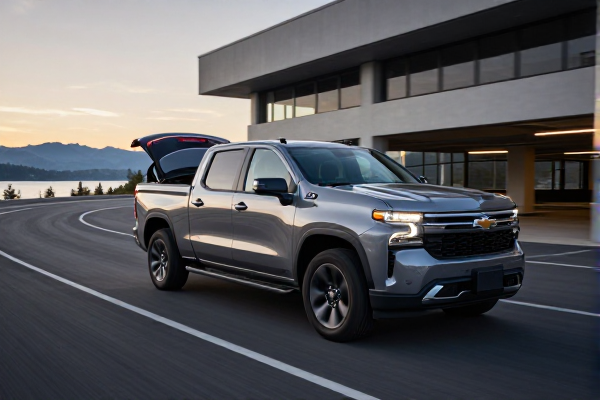
Cobourg, Ont. — William Grice paid roughly $83,000 for a 2026 Chevrolet Silverado diesel in July, expecting a heavy-duty truck he could rely on for years while pulling a travel trailer across Canada. By the end of the third week, he says, the dealership delivered the kind of news that should not happen on a new vehicle: the engine needed to be replaced. “They owe me a new vehicle,” Grice said. The case has become a reminder that on a new truck, a free engine swap does not erase questions about quality, value and trust.
The truck did not last long enough for the owner to finish breaking it in. Grice told CTV News that warning signs appeared almost immediately after he took delivery. According to the consumer-affairs report featuring Pat Foran, the dealership’s final diagnosis was drastic: the entire engine had to come out and be replaced. The original engine barely had time to pass the break-in stage, and the manufacturer’s warranty covered the parts and labor. But for Grice, that was not the point.
His main concern is trust. Once a diesel engine has to be pulled out of a shiny new truck, no amount of fresh oil changes can restore the same confidence. “They owe me a new vehicle,” he insisted. He argues that he did not spend $83,000 on a truck that would need major surgery before he had owned it for a month. He also worries that even if the replacement engine runs perfectly, the vehicle will forever carry a mark against it in its service history, and that means a lower resale value later.
A total engine failure in the first thousand miles is rare, but it is not impossible. Modern diesel engines are covered with sensors and programmed with tight fuel maps. When something goes seriously wrong, the truck may enter a protective shutdown or start making noise that cannot be ignored. The usual suspects include oil starvation, a broken fuel-injector tip, a foreign object left in the intake during assembly, or excessive heat from a cooling-circuit failure. In many cases, the original engine has to be opened up to confirm the root cause.
Manufacturers often decide to replace the entire engine rather than rebuild it on the vehicle. That keeps the owner moving faster and avoids the risk of a second failure caused by leftover debris. For the buyer, however, it still creates a big red flag. A new pickup truck with a replacement engine at three weeks old is not the same as one that just rolled off the transport truck. The emotional value changes, and the financial value often changes too.
GM’s warranty is likely to cover a catastrophic engine failure on a 2026 Chevrolet Silverado. That means Grice might not pay anything for the new engine. But the real loss is harder to repair. Once a vehicle-history report shows “engine removed and replaced,” appraisers can discount that truck compared to an identical unit with a factory-installed engine. That is especially painful on a diesel truck, where owners put a premium on proven, unopened hardware.
Some consumer advocates suggest that after such a repair, owners should request a written extension of the warranty for the new engine. Others push for a resale-value payment or a buyback settlement. Automakers treat those requests case by case, and they rarely make a buyback easy. Grice’s public complaint fits the pattern of a buyer who no longer believes in the vehicle he paid for.
This story takes place in Ontario, but its lessons apply south of the border. Many U.S. state lemon laws have exclusions for vehicles with a gross vehicle weight rating above 10,000 pounds. Heavy-duty pickup trucks such as the Silverado 2500HD or 3500HD can fall outside a state’s consumer protection law, even when they are used for personal transportation. That means a new engine replacement may be covered by warranty, but a lemon-law buyback could be difficult to win.
In Canada, buyers can bring unresolved factory-warranty disputes to the Canadian Motor Vehicle Arbitration Plan, known as CAMVAP. Unreasonable repair delays, dangerous defects, or defects that significantly reduce the vehicle’s value may qualify. Still, CAMVAP has limits, and an award might be a repair or compensation order rather than a replacement vehicle.
For U.S. truck owners, the takeaway is to read the lemon-law statute in their own state before assuming the law will protect them. A heavy-duty diesel truck is a large investment, but legal protection varies widely.
No owner expects to face this in the first month, but if it happens, preparation matters. First, keep every piece of paper, including the window sticker, purchase agreement, service order, and warranty documents. Do not let a dealership keep the only copy of the diagnostic report. Photograph the dash light, the odometer, and the repair order before dropping off the truck.
Second, ask about the replacement engine’s warranty. The replacement might be covered for the remainder of the original warranty, but a written confirmation is worth having. Third, communicate in writing or email so there is a record of every request. If the first dealer visit turns into an engine replacement, ask to speak directly with the manufacturer’s customer-assistance team.
Finally, do not sign a repair release or settlement unless you are comfortable with the terms. If an owner is being offered a new engine and nothing else, there is no harm in asking for compensation for lost value, a warranty extension, or a loaner vehicle. Many automakers will not volunteer those benefits, but a polite, documented request can sometimes lead to a better outcome.
As of April 27, 2026, there has been no public announcement of a settlement or a lawsuit. Grice’s truck sits in a strange limbo: the factory warranty covers the repair, but the owner does not believe a repair is enough. His next steps could include CAMVAP arbitration, a civil claim, or a negotiated deal with GM and the dealership.
For everyone else, this is a cautionary tale rather than a recall or a systemic issue. Most 2026 Silverado pickups will go years without needing a complete engine replacement. But when one fails this early, the public has a right to know how the manufacturer handles it. Grice’s demand is simple: “They owe me a new vehicle.” Whether a new engine becomes a new truck is now up to GM.