Browse

Log in / Register
 Share
Share
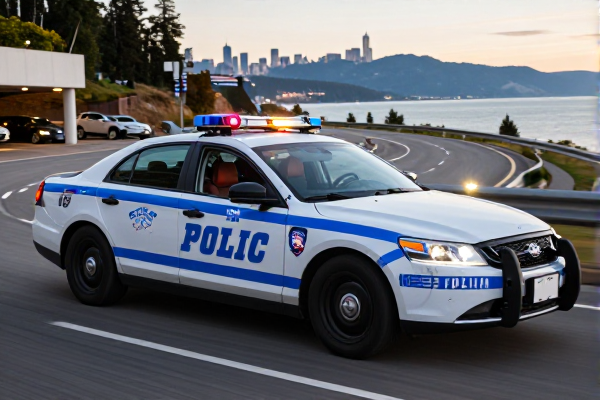
Remember when Mythbusters slapped a car with clay to test aerodynamics? In another iconic episode, the team turned their experimental eye to a more practical driving question, employing a humble fourth-generation Ford Taurus as their mobile lab. The mission: to definitively answer whether a strategy of taking only right turns on grid-like city streets is genuinely more fuel-efficient than idling at intersections to execute left-hand turns. Revisiting this experiment today (October 27, 2023) offers not just a blast from the past but enduring insights into the physics and logistics of everyday commuting.
The premise, concocted by hosts Grant Imahara, Kari Byron, and Tory Belleci, tackled a common piece of driving folk wisdom. The logic seems sound on paper. By avoiding left turns across oncoming traffic, a driver eliminates prolonged idling at red lights, theoretically conserving fuel. The alternative route, composed of three consecutive right turns, forms a rectangle that eventually arrives at the same destination. Mythbusters set out to quantify this trade-off between time, distance, and gasoline consumption under controlled, yet realistic, urban conditions.
For this test, the team required a suitably anonymous and common vehicle, leading them to a beige, fourth-gen Ford Taurus sedan. This model, a ubiquitous sight on early-2000s American roads, provided the perfect real-world baseline. Its standard V6 engine and conventional automatic transmission represented the typical commuting experience for millions. The experimental setup was ingeniously straightforward. The crew mapped two separate courses of equal endpoint distance in a warehouse district. One route required making protected left turns at signaled intersections, while the parallel route was designed for right turns only.
To simulate real traffic, Kari Byron manned a control system that cycled the traffic lights on the course at predetermined intervals. This introduced the crucial element of waiting time, replicating the stop-and-go rhythm of city driving. The most critical—and brilliantly low-tech—measurement tool was the car's own fuel cell. Instead of relying on the dashboard gauge or an electronic flow meter, the team physically removed and weighed the fuel tank before and after each run. This method provided a direct, unambiguous measure of fuel mass consumed, down to fractions of a pound.
The left-turn route trial set the initial benchmark. With Tory and Grant at the wheel, the Taurus navigated the course, encountering red lights that forced periods of idling. Completing the circuit took just over 27 minutes. Post-run, the fuel cell was weighed, revealing a loss of 2.26 pounds from its starting mass, settling at 15.63 pounds. This established the fuel cost of a traditional route with left-hand turns, factoring in idle burn.
Then came the right-turn strategy. The crew repeated the process, but this time navigating the rectangular, right-turn-only path. Immediately, the hosts noted a subjective difference. Grant Imahara commented that the ride felt faster and smoother, devoid of the long waits for a left-turn signal. The data corroborated the sensation: the Taurus completed this route in only 21 minutes, a significant time saving of over 6 minutes despite traveling approximately 33% more total distance. The efficiency of constant motion beat the penalty of added mileage on the clock.
However, the weight scale delivered the surprising verdict. After the quicker right-turn run, the fuel cell weighed 15.55 pounds. The math revealed a critical detail: while faster, the right-turn course actually consumed more fuel than the left-turn route. The myth that "taking only right turns saves gas" was officially BUSTED. The experiment demonstrated a clear trade-off: the right-turn strategy was a time-saver but a fuel-waster. The constant driving, even at low speeds, burned more gasoline than the combination of shorter-distance driving and extended idling in the left-turn scenario.
The Modern Relevance and an Exclusive Perspective While the Mythbusters experiment provided a clear snapshot, its implications evolve with automotive technology. Today’s context adds a fascinating layer. Modern vehicles with start-stop systems automatically shut off the engine at complete stops, drastically reducing or even eliminating fuel burn during idling. In a car equipped with this technology, the fuel penalty for waiting to turn left could be nearly zero, potentially flipping the experiment's conclusion on its head for many drivers.
Furthermore, the principle of minimizing left turns is not just folk wisdom; it's a cornerstone of professional logistics. Major delivery companies like UPS have famously designed routing software to favor right turns, a policy that has saved them millions of gallons of fuel over decades. Their rationale, however, extends beyond simple idling. For large commercial vehicles, left turns are statistically more dangerous, involve longer exposure to oncoming traffic, and cause greater wear on brakes and tires from slower, more cautious maneuvers. For them, the right-turn policy is a holistic safety and efficiency win, even if the pure fuel-burn difference on a per-vehicle test is marginal.
The Mythbusters Ford Taurus test ultimately highlights a fundamental principle of fuel efficiency: constant, moderate-speed motion is ideal, but added distance is a powerful counterforce. In dense urban grids, the extra mileage from "boxing around" can negate the benefits of avoiding idling. The experiment's genius lies in its tangible demonstration of this equilibrium. The result was not a complete wash—the time saved was substantial—but it precisely quantified the cost of that convenience in burned gasoline. It serves as a perfect reminder that in engineering and daily life, optimization often involves balancing competing variables rather than finding a single perfect solution.