Browse

Log in / Register
 Share

JSW MG Motor India is set to unveil a new three-row SUV on August 26, 2026, expected to be named the MG Hector Hawk. The model will debut with both battery-electric (BEV) and plug-in hybrid (PHEV) powertrains, marking a significant step in the company’s new-energy vehicle expansion. According to MG’s trademark filings and recent supplier disclosures, the Hector Hawk will be the first production model in India to ride on the company’s modular ADAPT architecture, which supports multiple electrified propulsion systems.
The SUV is closely related to the Wuling Starlight 560 sold in international markets, but MG’s Indian arm has confirmed substantial localisation in powertrain calibration, feature content, and suspension tuning. With a seven-seat layout and a 2,810mm wheelbase, the Hector Hawk directly targets the growing family-SUV segment, where buyers increasingly demand low-emission options without sacrificing passenger capacity.
The ADAPT (Advanced Distributed Architecture for Powertrain) platform is MG’s answer to the need for flexible electrification. It can accommodate BEVs, PHEVs, strong hybrids, and range-extender electric vehicles. Industry analysts at IHS Markit note that such a versatile architecture gives JSW MG Motor a strategic advantage in India, where charging infrastructure is still uneven and consumer preferences vary widely by region. For the Hector Hawk, MG will initially focus on the BEV and PHEV variants, with strong hybrid and range-extender versions potentially following later.
The fully electric Hector Hawk is expected to use a 69.2kWh lithium-iron-phosphate (LFP) battery pack paired with a front-mounted electric motor. International specifications for the mechanically identical Wuling Starlight 560 indicate the motor delivers 204 PS (150 kW) and 310 Nm of torque. Claimed range is up to 530 km on the Chinese CLTC cycle, which is typically 15–20% more optimistic than the WLTP cycle used in many markets. Real-world range in Indian conditions is likely to be around 400–450 km, based on MG’s own testing estimates.
DC fast charging from 30% to 80% is expected to take about 20 minutes, assuming a 150 kW charger is available. The LFP chemistry offers better thermal stability and longer cycle life than NMC batteries, which could appeal to cost-conscious fleet buyers.
The plug-in hybrid version may prove even more compelling for Indian buyers. It combines a 1.5-litre petrol engine with an electric motor and a 20.5kWh battery pack. Combined output is around 197 PS (145 kW) and 230 Nm of torque. The battery allows an electric-only driving range of up to 125 km, enough to cover the daily commute of most urban households. Total combined range is approximately 1,100 km, eliminating range anxiety for long-distance travel.
This configuration places the Hector Hawk PHEV in a unique position. In India, only a handful of mass-market PHEVs exist, and none offer a third row of seats. MG’s ability to localise the powertrain – potentially including the battery pack and electric motor – could lead to a competitive price point, possibly under ₹30 lakh (ex-showroom) for the PHEV. That would undercut many premium electric SUVs while offering greater flexibility than a pure EV.
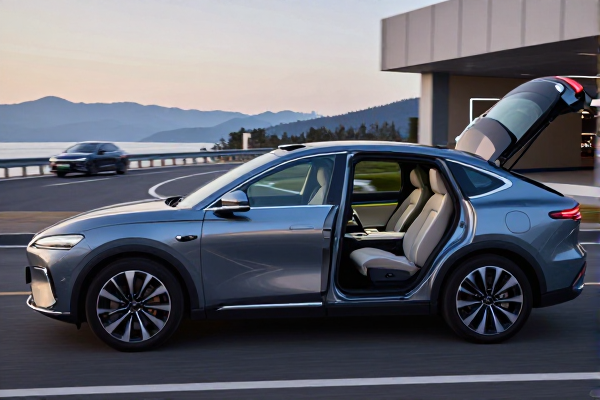
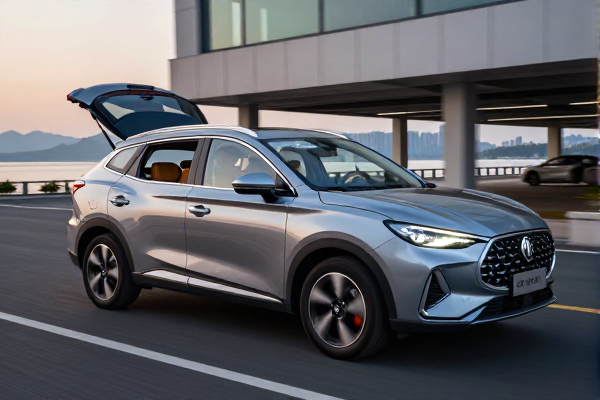
The Hector Hawk adopts a more upright and contemporary design than the existing Hector. The front fascia features slim LED daytime-running lights, rectangular headlamp clusters, and a clean lower grille. Squared-off wheel arches with black cladding, roof rails, and blacked-out pillars give it a robust SUV character. The rear end includes a roof-mounted spoiler and a steeply angled tailgate. India-specific changes may include a revised front grille and MG’s new corporate logo.
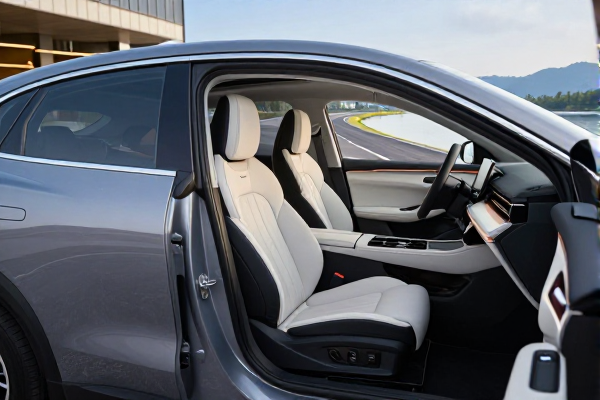
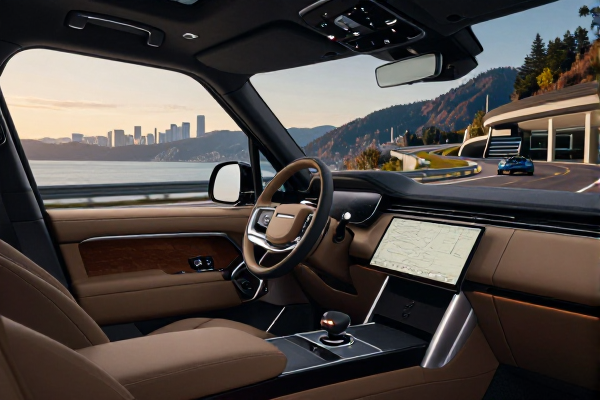
Inside, the Hector Hawk follows a minimalist, driver-focused layout. A 12.8-inch central touchscreen dominates the dashboard, paired with an 8.8-inch digital instrument cluster. Expected equipment includes a panoramic sunroof, powered and ventilated front seats, wireless charging, automatic climate control with rear vents, and a premium audio system. Safety equipment is likely to comprise six airbags, electronic stability control, tyre pressure monitoring, a 360-degree camera, and Level 2 ADAS (autonomous emergency braking, lane keep assist, adaptive cruise control). Final India-spec features will be confirmed closer to launch.
In the pure EV space, the Hector Hawk BEV will compete with the Mahindra XEV 9S (expected in 2026) and the Tata Safari EV. The PHEV, however, has no direct three-row rival in India today. The closest competitors are the Toyota Urban Cruiser Hyryder (PHEV) and the soon-to-launch Maruti Suzuki Grand Vitara PHEV, but both are five-seaters. The Hector Hawk PHEV therefore occupies a unique niche: a family SUV with genuine electric-only capability and a combustion engine for highway trips.
From a global perspective, the Hector Hawk’s PHEV strategy mirrors what Toyota