Browse

Log in / Register
 Share
Share
Updated October 26, 2023 — Land Rover’s flagship, the Range Rover, is poised for a significant mid-cycle update for the 2027 model year, headlined by the debut of its first all-electric variant. However, in a strategic move acknowledging diverse global markets, the brand confirms that combustion engines, including the iconic BMW-sourced V8, are not going anywhere just yet.
Recent spy photography from the Nürburgring has captured heavily camouflaged prototypes of the full-size luxury SUV undergoing rigorous dynamic testing. While the German circuit may seem an unconventional venue for a vehicle renowned for off-road prowess and serene comfort, it underscores Land Rover's commitment to honing the on-road agility and refinement expected from a modern luxury flagship, even as it embraces an electric future.
From what can be discerned beneath the wrap, the 2027 facelift will be an evolution, not a revolution. The prototype's front end features temporary cladding, strategically obscuring revisions expected to the signature grille, lower air intakes, and potentially the headlight graphics. The overall silhouette remains unmistakably Range Rover, with rear-end changes likely to be confined to subtle tweaks to the bumper, tailgate, and taillamp clusters. This approach preserves the model's commanding and timeless presence while injecting a dose of contemporary freshness.
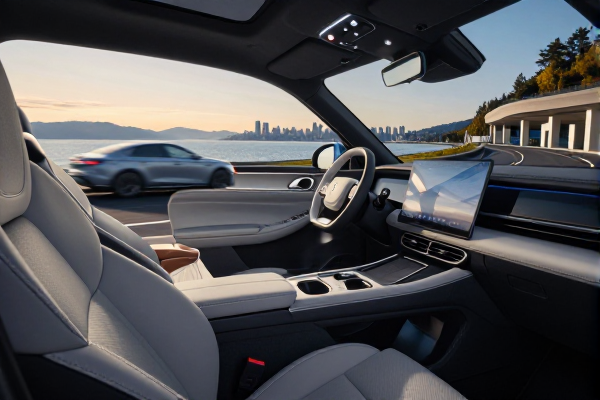
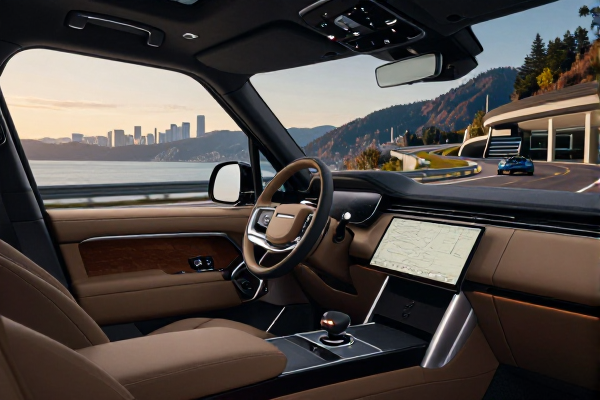
A Cabin Focused on Digital Refinement Although clear interior shots remain elusive, industry sources indicate the cabin will receive more noticeable upgrades. The centerpiece is anticipated to be a new, curved digital display for the infotainment system, offering enhanced graphics and connectivity while maintaining a sleek, integrated look. Crucially, Land Rover is expected to resist a fully touch-sensitive interface, retaining essential physical controls for critical functions like climate and terrain response—a nod to usability and the brand’s adventure-oriented heritage. This updated interior architecture is also likely to be shared with the forthcoming next-generation Range Rover Velar.
The Core News: A Multi-Powertrain Philosophy The most significant revelation for the 2027 model year is Land Rover's confirmation of a broad, “and,” not “or,” powertrain strategy. The star addition is the long-awaited all-electric Range Rover. Reports suggest it will utilize a large battery pack, possibly exceeding 112 kWh in capacity, to deliver the range and performance befitting a vehicle of its stature. This move finally brings the marque's pinnacle model into direct competition with other luxury EV SUVs.
Alongside the EV, the current suite of advanced six-cylinder engines will carry over and likely be enhanced. This includes both mild-hybrid (MHEV) and plug-in hybrid (PHEV) variants, with the latter's battery capacity potentially growing beyond the current 38.2 kWh to extend its pure-electric driving range—a key factor for urban luxury buyers.
A Nod to Tradition: The V8’s Enduring Roar In a decisive move that will please purists and performance enthusiasts, Land Rover has confirmed that the twin-turbocharged 4.4-liter V8 engine supplied by BMW will remain part of the lineup. In its current Application, this powerplant delivers up to 607 horsepower, providing the Range Rover with breathtaking acceleration that contrasts with its serene demeanor. Its continued availability signals that for a significant segment of the luxury market, particularly in regions like North America and the Middle East, the combination of effortless V8 power, a commanding presence, and unparalleled brand cachet remains a potent and desirable formula. A selection of diesel engines is also expected to survive the update for certain markets.
Industry Perspective: A Calculated Bridge to the Future This multi-pathway strategy is a textbook case of managing a high-stakes transition. By offering the full spectrum—from efficient diesel and sophisticated hybrids to a pure-EV and a thunderous V8—Land Rover mitigates risk. It caters to early adopters demanding electrification without alienating its established clientele who value the characteristics of traditional, large-displacement engines. This approach ensures the Range Rover retains its “ultimate status symbol” appeal across diverse buyer psychographics and geographic regulations, effectively building a bridge to a fully electric lineup over the next decade. The 2027 facelift, therefore, is less about a visual overhaul and more about strategically positioning the icon for a complex automotive era.