Browse

Log in / Register
 Share

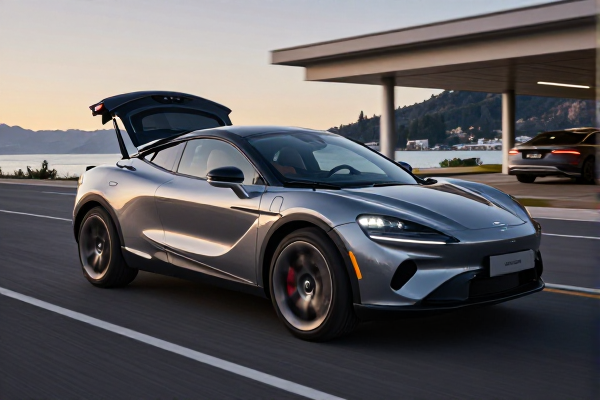
McLaren has ended years of speculation by confirming it will develop and build its first SUV. The announcement, made on March 18, 2025, comes as part of a £500 million investment in the company’s UK manufacturing and engineering operations. The performance-focused SUV is still in early development, but McLaren is targeting a market launch before the end of the decade.
The investment will fund a second vehicle assembly plant in the UK, alongside an expansion of existing facilities in Woking. McLaren also plans to bring engine and gearbox development and production in-house for the first time, moving away from its long-standing partnership with Ricardo. The expansion is expected to create roughly 1,000 direct jobs at McLaren and its surrounding operations, with an additional 3,000 positions across its wider supplier network.
A dramatic pivot from its previous stance. Until recently, McLaren had publicly dismissed the idea of building an SUV. Former CEO Mike Flewitt argued the brand lacked resources and that an SUV did not align with McLaren’s identity. Current leadership, however, sees the move as essential for growth. Chief Operating Officer Michael Straughan told Autocar UK that the company’s long-term product roadmap gave it confidence in the expansion. McLaren joins a growing list of exotic automakers—Ferrari, Lamborghini, Aston Martin—that have successfully entered the high-performance SUV segment.
Powertrain and architecture details remain scarce. The upcoming McLaren SUV will feature a hybrid powertrain, but the company has not disclosed engine type, electric components, or total output. The model does not yet have an official name or confirmed launch date. It will mark a major departure from McLaren’s traditional mid-engined, rear-wheel-drive formula. Straughan indicated future products could expand into front-engined layouts with either rear- or all-wheel drive. The SUV’s architecture is still being evaluated, with options including carbon-fiber construction—an area where McLaren has deep expertise. Most competitors in this segment use aluminum, so a carbon-fiber-intensive structure could give the McLaren a distinctive engineering edge. A front-engined platform might also provide flexibility for additional future models, though no other vehicles have been confirmed.
In-house engine production signals a new era. Since the 2011 debut of the 12C, Ricardo has supplied McLaren’s V6 and V8 engines. Going forward, McLaren will develop and manufacture its own powerplants, optimized for its hybrid strategy and driver involvement. Straughan confirmed that next-generation V8 technology is part of the program, and in-house production could eventually enable different engine configurations. Despite the push toward hybridization, McLaren currently has no plans for a fully electric road car in the immediate future. The brand has gained EV experience through its involvement with Forseven but wants to wait until demand for electric performance cars in this segment strengthens. Straughan warned that an early EV launch could carry “heavy product and commercial risks.”
New production facility, but location still under wraps. The planned second assembly plant will operate alongside McLaren’s existing Production Centre in Woking. The precise location has not yet been announced. McLaren says the new facility is necessary because its current assembly line cannot easily accommodate radically different vehicle layouts. The company intends to own and operate the plant rather than outsourcing to a contract manufacturer. In 2025, the Woking plant produced around 2,000 cars, and it will receive further investment. McLaren also plans to expand its carbon-fiber research center in South Yorkshire and its design and innovation center in Bicester.
Expert take: a calculated risk with huge upside. Industry analysts note that McLaren’s move mirrors the strategy that turned Lamborghini’s Urus into a bestseller and propelled Aston Martin’s DBX. The U.S. market, which accounts for roughly 30% of McLaren sales, is expected to be a primary target for the SUV. “McLaren needs volume to fund its hypercar ambitions, and an SUV is the fastest way to scale,” said Mark Fulthorpe, an automotive analyst at IHS Markit. “The hybrid strategy aligns with tightening emissions regulations in Europe and the U.S., while preserving the brand’s performance heritage.”
McLaren stresses that new vehicles will be introduced alongside its current supercar lineup, not as replacements. The company aims to increase UK manufacturing capacity while continuing production of models like the Artura and 750S. No official name or reveal date has been set, but industry sources suggest a concept could appear within the next 18 months, with production by 2028.