Browse

Log in / Register
 Share

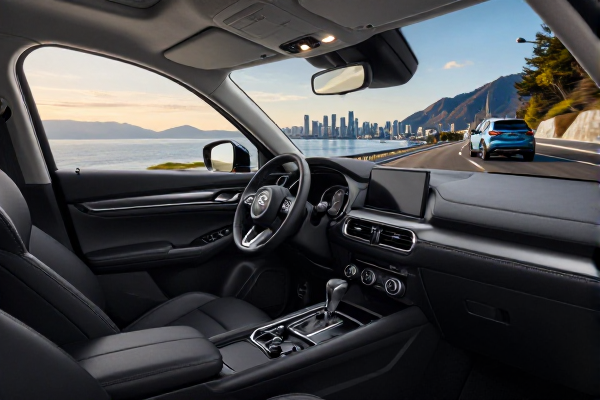
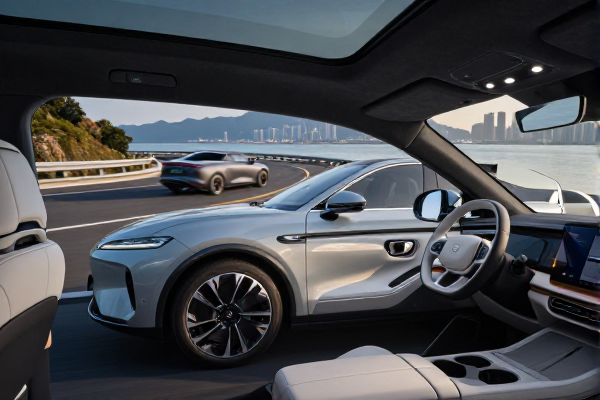
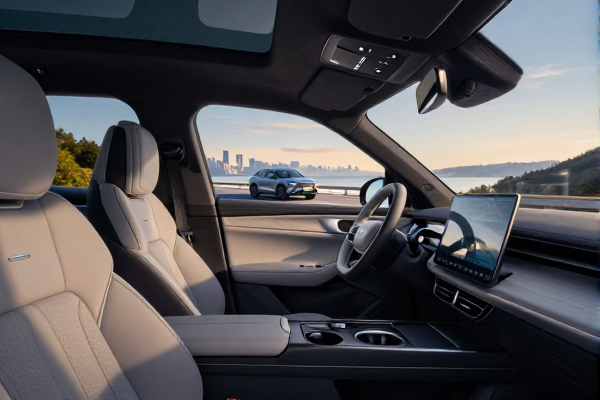
February 13, 2025 — The rotary knob that has anchored Mazda's interiors for over a decade is gone. The 2026 Mazda CX-5, the automaker's best-selling model in North America, now rolls with Mazda Connect with Google Built-In, a new infotainment platform that swaps the familiar commander dial for a large, smartphone-style touchscreen. The move is a notable turn for a company that once argued touchscreens pull the driver's eyes off the road. Mazda's story now: the hardware changed, the mission hasn't.
Matthew Valbuena, Mazda's project manager for in-vehicle technologies and human-machine interfaces, made that point in an interview with Motor1.
"Mazda's driving philosophy remains the same. We are focused on minimizing driver distraction."
To make good on that, the CX-5 spreads control across multiple surfaces. The steering wheel gains dedicated buttons for the available 360-degree camera, M-Drive, and a media source selector. When a driver changes the source, the current track appears in the gauge cluster, not the center screen. Voice recognition is also on board, giving drivers a way to get things done without reaching for the display.
HVAC controls are the one area that largely stays on the touchscreen, fixed to the bottom edge so drivers always know where to find them. Mazda's answer for anyone who prefers not to touch glass: use your voice.
Valbuena described the transition with an iPod analogy. The original Mazda Connect is the iPod Classic; the new system is the iPod Touch. "Both can do the same things, but the iPod Touch has greater flexibility and can do more things than the iPod Classic," he said. The comparison has one wrinkle: Apple discontinued the iPod Touch in 2022. Mazda will hope its new platform has a longer shelf life.
The knob spent years proving itself, though. Mazda Connect debuted in 2013, before Android Auto and Apple CarPlay existed, and the rotary dial let owners steer through menus by feel. The trouble emerged when Mazda added smartphone projection; those systems are designed around touch input, not a dial. The second-generation Mazda Connect, launched in 2019, still omitted touch capability. Mazda responded by bringing touch input to the CX-50, but expectations kept climbing.
Google Built-In is a more thorough answer. Unlike Android Auto, it doesn't mirror a phone onto the dashboard. The platform runs natively in the vehicle, with Google Maps and Google Assistant built in, plus access to more than 350 in-vehicle apps. Managing an ecosystem that size with a single knob, Valbuena said, "would be very difficult." Mazda also didn't want the hardware to limit what the software could do. A dial-era system was a constraint that would only become more restrictive as apps multiplied.
Adopting Google's stack brings another first for Mazda: over-the-air updates. The company can refine the software and add apps after the car is sold, something the dial-era system couldn't do. For a platform born in 2013, that flexibility is exactly what was missing.
Mazda also sees touch as the path of least resistance for modern drivers. Nearly all U.S. adults own a smartphone, and a car that behaves like one is a car people already understand. "We didn't want to have this super complicated user experience that required reading a massive owner's manual," Valbuena said. "We wanted that kind of jump in and go and discover, and this system delivers that."
The change will sting for some loyalists. The old knob invited hands-free, eyes-free operation; reviewers and owners praised its predictable menus and haptic feel. New owners will have to recalibrate, though Mazda's mix of buttons, voice, and a fixed screen layout is meant to ease that learning period.
The timing is notable, too. European safety rater Euro NCAP has announced it will begin penalizing, in 2026, vehicles that force drivers into touchscreens for basic functions like turn signals, wipers, hazard lights, and the horn. The CX-5 keeps those as physical controls while shifting climate settings to the screen. The result is a middle course: conventional controls where safety-critical, a screen where flexibility matters.
Mazda chose its volume leader for the shift, and that choice is another signal. The CX-5 is the brand's biggest seller in North America, and introducing its most consequential interface change on that model suggests real confidence. Valbuena wouldn't comment on which vehicles follow, but said consumers will see both versions of Mazda Connect for a while. "The option is there," he said, adding that consumer sentiment will likely dictate how quickly the Google-based system spreads through the lineup.
Mazda isn't alone in this direction. Volvo, Polestar, Renault, Honda, and Nissan have all adopted Google's built-in platform. What remains unique to Mazda is the way it frames the change: not as a concession to convention, but as another way to keep the driver present.
"Even though our approach to the solution may be different than what we have done previously, the goal is the same," Valbuena said. "It's how do we give the driver the connectivity and the features they are looking for, but in a safe way that does not distract their driving."
The knob is gone. The reasoning that once justified it isn't.