Browse

Log in / Register
 Share


Published: June 16, 2025
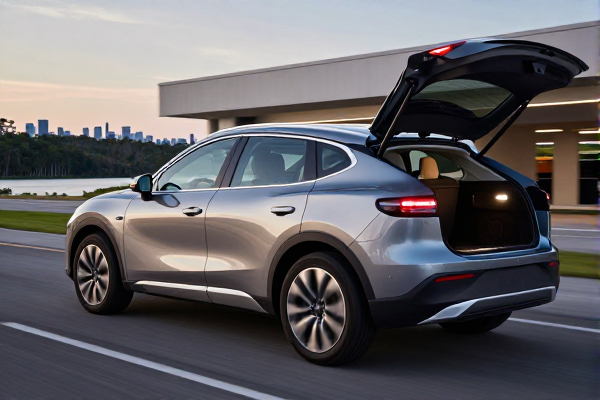
Two subcompact crossovers, two very different strategies. The Mazda CX-30 has become a fixture on American roads, earning praise for its upscale cabin, composed ride, and everyday usability. The SsangYong Tivoli, now built under KGM's management, takes a budget-first approach with a feisty 1.5-liter turbo and a price that undercuts the Mazda by roughly ten thousand dollars — but it isn't offered at any US dealership. Pricing shown here reflects conversions from the Czech market, not American MSRPs, and is intended as a reference point rather than a local offer.
| Specification | Mazda CX-30 | SsangYong Tivoli |
|---|---|---|
| Approx. price (converted) | $31,850 | $21,200 |
| Engine | 2.5-liter NA, 103 kW (138 hp) | 1.5-liter turbo, 120 kW (161 hp) |
| Transmission | 6-speed manual, FWD | 6-speed manual, FWD |
| 0–100 km/h | 9.7 seconds | Not stated |
| Top speed | 194 km/h (121 mph) | 181 km/h (112 mph) |
| Combined consumption | 6.0 L/100 km | 7.0 L/100 km |
| Cargo volume | 430 liters | 395 liters |
| Braked towing | 1,300 kg | 1,000 kg |
Converted from Czech-market pricing, the CX-30 starts around $31,850 while the Tivoli comes in near $21,200 — a discount of roughly a third. Set aside showroom availability for a moment and that's a substantial difference; the savings could cover years of fuel, insurance, or a memorable road trip. However, the Mazda's quoted figure applies to the European "e-SKYACTIV-G 140" configuration, which doesn't align with the US-market car. American dealers sell the CX-30 with a more powerful 2.5-liter calibration, usually attached to a six-speed automatic instead of this manual. Treat the numbers as a geographic snapshot, not a direct match to your local sticker.
The engine bay reveals each car's personality. The Tivoli uses a 1.5-liter GDI-T with direct injection, developing 120 kW (about 161 hp), and peak torque arrives at just 1,500 rpm. That gives it a responsive, low-speed punch that feels eager in stop-and-go traffic. The Mazda counters with a 2.5-liter naturally aspirated unit rated at 103 kW (about 138 hp) in this European tune. It lacks the turbo's immediate mid-range shove, but the larger displacement delivers smooth, linear, and progressively building power — exactly the kind of refinement Mazda buyers expect.
Performance splits go to the Mazda. The CX-30 reaches 100 km/h from rest in 9.7 seconds in this specification and tops out at 194 km/h, while SsangYong doesn't quote a sprint time in this data set and the Tivoli's 181 km/h maximum trails behind. For daily commuting, both offer adequate, if not thrilling, pace.
Despite the big price gap, the two SUVs are cut from similar cloth in the size department. The Tivoli is 4,225 mm long, 1,810 mm wide, and 1,613 mm tall; the CX-30 stretches to 4,395 mm but stands just 1,540 mm tall. So the SsangYong is shorter in length yet taller in stance, which benefits headroom. Ground clearance is nearly identical at 178 mm for the Tivoli and 175 mm for the Mazda. Both seat five, offer five doors, and share a tight 10-meter turning radius — handy for urban parking.
Cargo space edges in the Mazda's favor: the CX-30's 430-liter trunk is 35 liters larger than the Tivoli's 395. Curb weights tick upward with the Mazda, which lists 1,453 kg versus the Tivoli's 1,375 kg — a hint of the extra sound insulation and structural rigidity Mazda builds into its crossover by design.
Running costs follow the same hierarchy. On the European test cycle, the CX-30 returns 6.0 L/100 km combined, with 7.0 L/100 km in urban driving and 5.0 L/100 km on the highway. The Tivoli is thirstier at 7.0 L/100 km combined, 8.0 in town, and 6.0 on extra-urban runs. Translated to US gallons, that's roughly 39 mpg versus 34 mpg equivalent — not dramatic on a single tank, but meaningful across a year of ownership. Both fuel tanks are similar in size at 51 and 50 liters, so range expectations align. Remember, European consumption figures tend to be more optimistic than US EPA numbers; real-world results vary with driving style.
If a trailer is part of your life, the CX-30 is the clear pick. It's rated to pull 1,300 kg braked (about 2,870 lb) or 600 kg unbraked, while the Tivoli manages 1,000 kg braked and 500 kg unbraked. That puts the Mazda in a different class for small campers, jet-skis, or utility trailers and reflects its firmer structure and larger brakes.
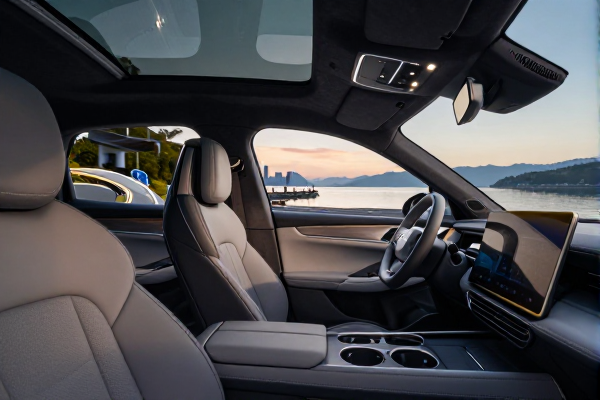
Step inside and the gap widens. The CX-30 has built its reputation on an interior that punches above its class — soft-touch surfaces, crisp instrumentation, and controls that feel precision-engineered. It's a cabin that flatters upscale expectations in a way few crossovers at this price manage. The Tivoli can't match that polish. Its layout is logical and the seats are comfortable enough, but the surfaces and switchgear are clearly cost-engineered to meet a lower price point. That's not necessarily a deal-breaker at $21,000; you're still getting genuine SUV dimensions and a user-friendly infotainment experience. It's just worth knowing exactly what that $10,000 saving represents.
Modern buyers expect more than airbags. The CX-30 comes standard with Mazda's i-ACTIVSENSE suite, including automatic emergency braking, lane-keeping assistance, blind-spot monitoring, and adaptive cruise control on most trims. Independent testing has been favorable, with the model earning five-star Euro NCAP marks at launch and repeated IIHS Top Safety Pick recognition in North America. The Tivoli's driver-assistance offering is present on higher trim levels, but the platform is older and no major crash-test body has refreshed its safety dossier in recent years. If family safety tops your checklist, the Mazda is the easier recommendation.
Here's where the comparison takes a decisive turn. SsangYong hasn't had a meaningful presence in the US market for years, and the rebranded KGM hasn't established a North American dealer network. Even if you track down an imported Tivoli, you'll face parts sourcing delays and zero factory warranty support. Compounding the issue, the current Tivoli (XK generation) was produced only from March 2024 through April 2025 — barely a one-year run as KGM reshuffles its lineup toward newer products like the Torres. That's not the profile of a stress-free long-term ownership proposition.
The CX-30, by contrast, is a core product for Mazda in America, backed by a mature dealership network, established resale values, and a strong crash-safety record. Independent reviewers consistently highlight its premium materials and engaging driving dynamics, so it's no surprise it has become one of the more popular entries in the subcompact segment.
The answer depends on where you live and what you value. If you're in the United States, the Mazda CX-30 is the obvious choice — the Tivoli simply can't be bought, insured, or serviced through official channels, and its imminent phase-out makes long-term support a gamble. The CX-30 justifies its higher price with superior refinement, efficiency, safety, and practicality.
If you're shopping in a market where SsangYong or KGM has a dealer presence, the Tivoli makes a persuasive case: it's roughly a third cheaper, nearly