Browse

Log in / Register
 Share


April 10, 2025 – India’s leading SUV maker Mahindra & Mahindra has confirmed it will double its electric vehicle (EV) production capacity to meet surging demand for sport utility vehicles. The announcement, made during a press briefing in Mumbai, signals a major acceleration of the company’s electrification push, backed by a $1.2 billion investment over the next three years.
The move comes as India’s EV market, still in its infancy but growing rapidly, sees a dramatic shift in consumer preference toward SUVs. Mahindra, which already dominates the domestic SUV segment with models like the Scorpio and XUV700, is now betting that its electric offerings will capture a large share of the transition. The company’s current EV production capacity stands at roughly 30,000 units per year, and the doubling will bring it to 60,000 by early 2026.
Mahindra’s plan involves retooling two existing plants in Chakan, Maharashtra, and Zaheerabad, Telangana, to handle both conventional and electric vehicles on the same assembly lines. The dual-platform strategy allows the company to scale EV output flexibly depending on demand. Rajesh Jejurikar, Executive Director of Auto & Farm Sectors, stated: “We are not just adding capacity; we are building a modular ecosystem that can pivot quickly between ICE and EV.”
The company has also secured battery supply agreements with LG Energy Solution and BYD to ensure uninterrupted cell availability. This is critical as global battery supply constraints have slowed several automakers’ EV ambitions.
India’s SUV market share has jumped from 30% of total passenger vehicle sales in 2020 to over 50% in 2024. Industry data from the Society of Indian Automobile Manufacturers (SIAM) shows that compact and mid-size SUVs now outsell sedans and hatchbacks combined. Mahindra’s own SUV sales grew 22% year-on-year in the last fiscal year, with its Scorpio and XUV700 models leading the charge.
The surge is partly driven by rising disposable incomes, improved road infrastructure, and a cultural preference for vehicles that offer higher ground clearance and a commanding driving position. Electrifying this category makes sense, as the typical SUV buyer is often less price-sensitive and more willing to pay a premium for features like instant torque and lower running costs.
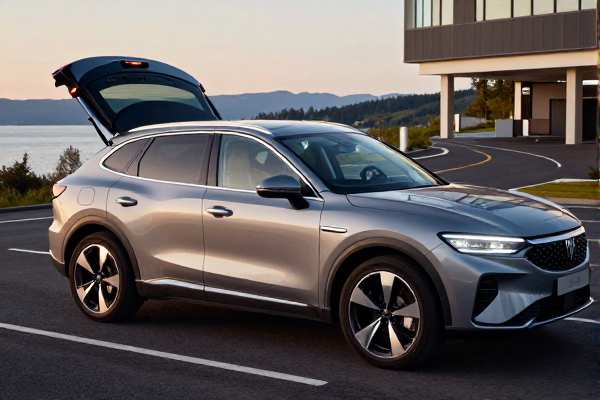
Mahindra’s current EV offering, the XUV400, is a subcompact electric SUV that competes with Tata’s Nexon EV. However, the company’s next-generation EV platform, dubbed the “Born Electric” (BE) series, will debut in late 2025. The BE lineup includes three models: the BE.05 (a compact SUV), BE.07 (a mid-size SUV), and BE.09 (a full-size SUV). These vehicles are built on a dedicated skateboard chassis and will feature LFP batteries for lower cost and improved safety.
The doubling of capacity is primarily to prepare for the BE series, which Mahindra expects to be its volume driver. Pre-launch bookings for the BE.05 have already crossed 50,000 units in India, according to company sources, indicating strong pent-up demand.
Mahindra’s expansion puts it in direct competition with Tata Motors, which currently dominates India’s EV market with a 70% share, largely driven by the Nexon EV and Tiago EV. Hyundai and Kia are also pushing electric SUVs, including the Kona Electric and upcoming EV9. However, Mahindra has a unique advantage: its deep understanding of the SUV buyer’s psychology and a loyal customer base.
Analysts at Crisil say that Mahindra’s capacity doubling could narrow the gap with Tata. “If Mahindra executes well on the BE series, it could capture 25-30% of the EV SUV market by 2027,” said Rohan Gupta, auto analyst at Crisil. “That would be a significant shift in the Indian EV landscape.”
Despite the rosy outlook, Mahindra faces hurdles. The EV ecosystem in India remains underdeveloped—charging infrastructure is sparse, and battery costs are still high. The government’s FAME II subsidy is set to expire in 2025, and while a new EV policy is expected, uncertainty remains.
Yet Mahindra’s bet on SUVs may be a smart play. Global EV demand has slowed in some markets, but India’s growth story is intact. The company’s strong brand equity in the SUV space, combined with its manufacturing agility, positions it to capture the next wave. Additionally, Mahindra is exploring export markets in Southeast Asia and Africa, where its rugged SUVs are already popular.
Mahindra’s decision to double EV production capacity is a clear signal that the company believes the SUV-driven electrification of India is accelerating. With a solid product roadmap, strategic partnerships, and a dose of manufacturing flexibility, the automaker is not just reacting to demand—it is shaping the future of personal mobility in one of the world’s fastest-growing auto markets.
The next two years will be critical. If Mahindra can deliver on its BE promises and keep costs competitive, it could emerge as a formidable No. 2 in India’s EV market, challenging Tata’s dominance. For now, the company’s focus remains on scaling up, getting the product right, and riding the SUV wave—electric or otherwise.