Browse

Log in / Register
 Share

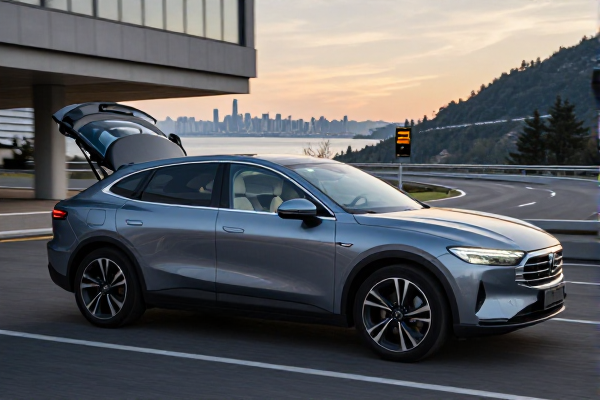
April 26, 2026 — Leapmotor, the Chinese EV maker partly backed by Stellantis, showcased two production-bound models at the Paris Motor Show: the B03 electric hatchback and the D19 flagship SUV. The B03 is aimed at Europe’s compact-car mainstream, while the D19 brings a range-extended powertrain into large-SUV territory. Both reveal how quickly Leapmotor is scaling beyond China — and how much of its technology could eventually influence Stellantis’s global EV lineup.
The B03 is positioned below Leapmotor’s B05 hatchback, and the company is pitching it as a practical, affordable alternative to cars like the Renault 5 and the VW ID. Polo in Europe. The brand has hinted at a price band of roughly €20,000 to €25,000. If the same engineering were ever adapted for North America, that would translate to roughly $21,500–$27,000 before tariffs, certification, and shipping costs. At that level, it would sit in the same conversation as the Mini Cooper Electric and the Chevrolet Equinox EV — though the B03 is a smaller, more city-oriented vehicle.
Under the bonnet, the B03 uses a single 197 hp electric motor driving the front wheels. The battery is a 53 kWh lithium-iron-phosphate (LFP) pack, a chemistry chosen primarily for cost and longevity. Leapmotor claims a 390 km driving range on a full charge, and it says the B03 can accept DC fast charging at up to 133 kW. That allows a 10–80 percent top-up in about 21 minutes, which would put the B03 near the top of its class for charging pace.
The claim is partly enabled by what Leapmotor calls 2.5C charging. In practical terms, it means the B03 can recover useful range quickly on long trips, even though it is not designed as an ultra-luxury long-range EV. For city commuters in particular, the combination of LFP chemistry and fast charging could make the ownership experience less stressful than older budget EVs.
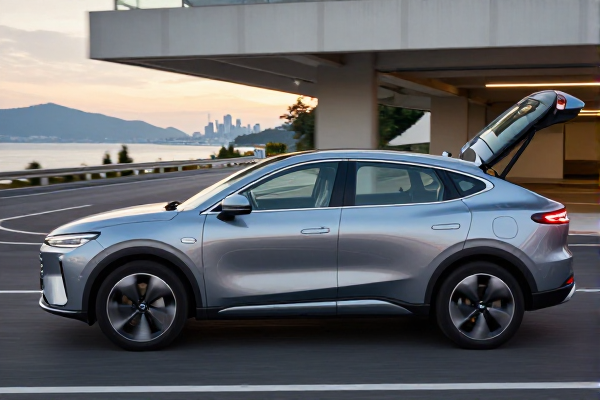
Leapmotor has not tried to make the B03 visually striking. Its design is deliberately conservative, with a tall, functional body. The engineering effort has gone into space and usability instead.
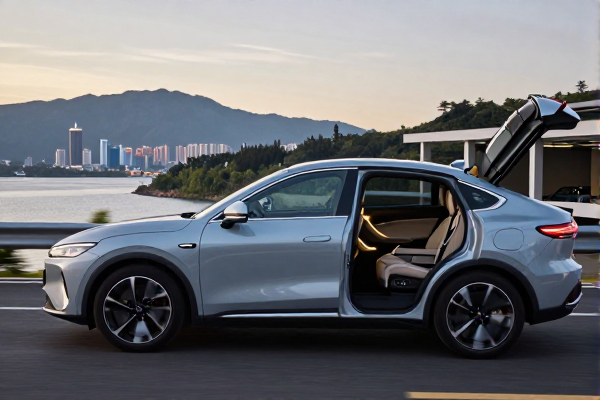
The rear seats offer up to 888 mm of legroom, which would be generous even in the class above. The boot measures 405 litres, and 90 litres of that is tucked below the floor in a compartment Leapmotor calls the Leap Box. A so-called Leap Flex seating system allows the rear bench to fold flat, and the front passenger seat can also fold down when the driver needs to carry long items. The B03 is also expected to have a tight turning circle, which should make parking in dense urban areas easier.
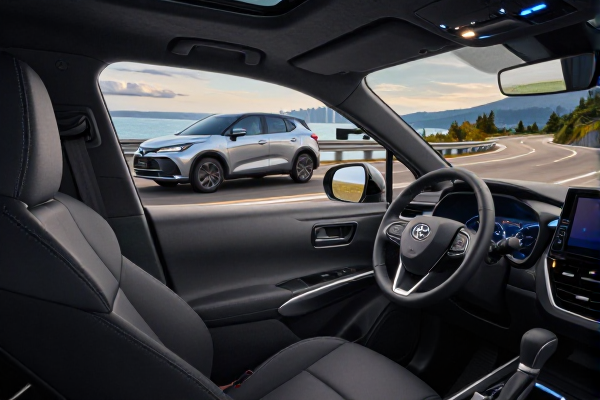
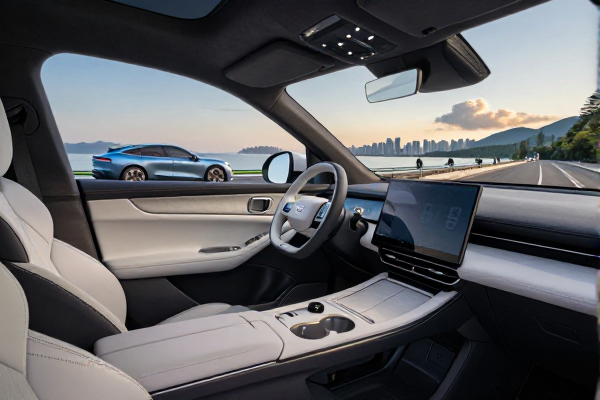
Inside, the B03 has a 14.6-inch floating touchscreen running Leapmotor’s latest 4.0 software. It sits alongside an 8.8-inch digital driver’s display. Wireless Apple CarPlay and Android Auto are included, and the car can receive over-the-air updates.
Standard equipment is generous for the expected price: heated seats, a heated steering wheel, and automatic climate control are all listed. Leapmotor also claims 21 advanced driver-assistance systems, although the exact feature set will depend on market regulations and trim choices. The emphasis on standard kit is clearly intended to make the B03 a value proposition rather than a style statement.
The second headline from Leapmotor’s Paris stand was the D19, a large SUV positioned above the C10 electric and plug-in hybrid model that has been sold in Europe for about a year. Buyers will be able to choose between seven seats or six seats with second-row captain’s chairs. Leapmotor describes the D19’s suspension as adaptive, adjusting in real time to road conditions.
Its greater selling point, though, is the powertrain. The D19 is being prepared for a European launch with what Leapmotor calls a long-range plug-in hybrid REEV setup. In the Chinese market, the car uses an 80 kWh battery for up to 500 km of electric-only driving, plus a petrol range extender that brings the combined figure to around 1,300 km.
Those figures have not yet been run through WLTP homologation, so the European numbers will almost certainly change by the time the D19 reaches showrooms. Still, the strong electric-only range is the key message: it positions the D19 as an EV that happens to carry a generator for long-distance security, rather than as a traditional combustion-heavy hybrid.
Leapmotor is also working to look like a European brand rather than a distant exporter. The company has already started producing the B10 compact SUV at its new factory in Zaragoza, Spain. That factory will help Leapmotor sidestep some import tariffs and shorten its European supply chain. Local production is likely to matter even more as EU trade rules tighten around Chinese-built EVs.
In parallel, Leapmotor is rolling out Free2move Charge, a service designed to make public charging simpler through a single access point. The idea is to reduce one of the biggest practical obstacles for new EV buyers: navigating multiple charging networks while travelling. Combined with the Zaragoza factory and a fast-expanding model line-up, the charging service is a clear sign that Leapmotor is thinking beyond the vehicle itself.
For U.S. readers, the most important question is what this means for Stellantis. Stellantis holds a minority stake in Leapmotor and runs Leapmotor International, the entity responsible for sales outside China. Stellantis executives have described Leapmotor’s technology as a way to accelerate affordable EV development without building everything from scratch.
That does not mean a badge-engineered B03 or D19 is heading to American dealerships soon. Import duties, U.S. safety certification, and the absence of a retail network would make a direct launch costly. But the Paris reveals show how fast Leapmotor is moving as an engineering partner. If Stellantis eventually needs a small, low-cost EV for the North American market, the B03’s platform and powertrain are exactly the sort of foundation it could adapt.
Leapmotor’s Paris display was less about flash and more about practical mobility. The B03 offers a convincing mix of range, charging speed, and interior space at a budget price. The D19 uses a range-extender layout that could make large electric SUVs far less intimidating for buyers worried about charging on long trips.
For now, neither vehicle has an official U.S. launch date. Yet the technology on display is increasingly central to Stellantis’s global strategy. The B03 and D19 are not just Chinese-market experiments: they are bricks in a European manufacturing and mobility plan that could eventually influence what American buyers see from Stellantis brands.