Browse

Log in / Register
 Share

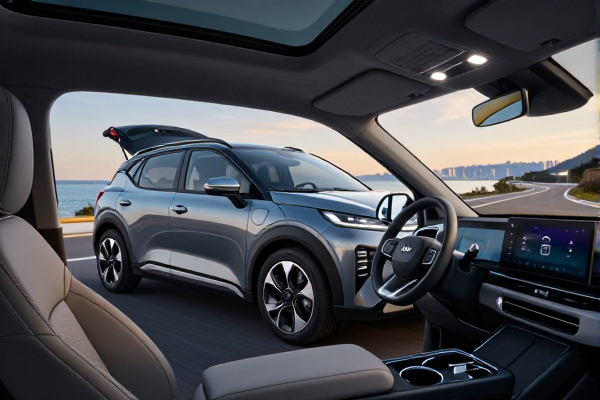
Kia's EV2 is a small electric crossover that refuses to follow the usual "more battery equals more power" script. As of April 27, 2026, the model's spec sheet shows two front-wheel-drive electric powertrains: a 61 kWh long-range version with 99 kW (135 hp) and a 42.2 kWh city-focused version with 108 kW (147 hp). Range and acceleration are split exactly opposite to battery size. The following overview is based on Autohled.cz's complete engine and powertrain data.
| Version | Motor Output | Battery | 0–62 mph | Top Speed | WLTP Range | Charging | Tailpipe CO₂ |
|---|---|---|---|---|---|---|---|
| EV2 42.2 kWh | 108 kW / 147 hp | 42.2 kWh | 8.5 sec | 100 mph | 194 mi (312 km) | 11 kW AC / 100 kW DC | 0 g/km |
| EV2 61 kWh | 99 kW / 135 hp | 61.0 kWh | 9.5 sec | 100 mph | 281 mi (453 km) | 11 kW AC / 100 kW DC | 0 g/km |
Both versions use an electric motor with a one-speed automatic gearbox, which in an EV means a fixed reduction gear rather than a traditional multi-speed transmission. There is no combustion engine, no all-wheel drive, and no manual option. The top speed is electronically limited to 161 km/h, or about 100 mph, for both battery choices.
This is the most interesting part of the EV2's spec sheet. Usually, automakers pair the larger battery with the stronger motor. Kia does the opposite here. The 61 kWh pack is tuned for 99 kW, while the smaller 42.2 kWh pack gets a slightly hotter 108 kW motor.
The likely reason is positioning. The 61 kWh version is meant to maximize real-world range and relaxed highway cruising. The 42.2 kWh version is aimed at urban buyers who want a little more response in stop-and-go traffic. In daily driving, the difference is modest: 9.5 seconds versus 8.5 seconds to 62 mph. That one-second gap will matter less than the extra 87 miles of WLTP range in the long-range model.
Kia has not published torque figures or usable battery capacity. Those are still missing pieces of the EV2 powertrain puzzle. Without them, it is difficult to compare in-gear response or state-of-charge performance accurately.
The WLTP numbers above come from the European test cycle. American buyers should expect EPA ratings to be lower. Historical differences between WLTP and EPA are significant, often reducing range by 15–25 percent depending on the vehicle.
So, realistically:
That would still make the 61 kWh version a legitimate road-trip candidate. The 42.2 kWh version is better treated as a commuter car with occasional highway use. Kia hasn't released official consumption figures either, so it is too early to compare efficiency directly with rivals like the Volvo EX30 or Hyundai Kona Electric.
Both EV2 powertrains share the same charging hardware: 11 kW AC for home wallboxes and 100 kW DC for public fast charging. A 100 kW charge rate is not class-leading, but it is workable for a small SUV. At a properly functioning 100 kW station, the 61 kWh pack should recover a meaningful amount of range in about 30 minutes.
Kia has not published a full 10–80 percent charging curve for the EV2. That curve matters more than the peak number. Many EVs advertise a high peak but taper off quickly. Until Kia provides official charging data, buyers should treat the "100 kW DC" figure as a headline spec rather than a guarantee of consistently fast charging.
Both EV2 versions are rated to tow 750 kg braked, which is roughly 1,653 lb. That is enough for a small teardrop trailer, a jet-ski trailer, or a lightweight camping setup. It is not enough for a large boat or a double-axle camper.
Kerbside weight has not been listed in the spec sheet. Without that number, we can't calculate the EV2's power-to-weight ratio or payload capacity. That is unusual for a model page that otherwise includes detailed technical data. In the European small-car class, the average vehicle from 34 compared versions weighs 1,549 kg and has a power-to-weight ratio of 78.1 kW per tonne. The EV2's lower power output suggests it will sit below that average, but official kerb weight is needed to confirm it.
Kia's reputation for reliability is mixed. The latest TÜV Report shows an average defect rate of 28.3 percent for the Kia brand, placing it 13th out of 14 rated brands in Germany. That sounds bad, but context matters.
TÜV inspections are based on older vehicles in Europe, including combustion-era Kias and models that have been on the road for years. The EV2 is an all-new electric car, so it is not directly represented in those defect rankings. The electric drivetrain has fewer moving parts than a combustion engine, but that doesn't automatically guarantee trouble-free ownership. US buyers should wait for independent owner surveys, IIHS safety ratings, and EPA data before drawing conclusions.
The choice between the two powertrains is actually simple.
Choose the 42.2 kWh version if you mainly drive in the city, have access to home charging, and want the quicker acceleration. The 147 hp rating makes it the slightly more entertaining option, and 194 miles of WLTP range is enough for most daily routines.
Choose the 61 kWh version if you plan to take highway trips or live in a region with cold winters. The extra 87 miles of WLTP range is far more valuable than 12 extra horsepower. Both versions tow the same amount and share the same charging speed, so the bigger battery is the low-stress choice for long-distance buyers.
The Kia EV2 doesn't try to out-power the small electric SUV segment. Its motors are modest, its DC charging rate is middle-of-the-pack, and its European reliability score is not ideal. But Kia has done something useful: it created a genuine split between a short-range, slightly sporty version and a long-range, slightly relaxed version.
The smaller battery's higher power output is an unusual choice, and it's a smart one. It gives the cheaper model a dynamic hook while keeping the long-range model focused on efficiency. Once US pricing, EPA ratings, and charging curves arrive, the EV2 could be one of the easiest small EV decisions on the market.