Browse

Log in / Register
 Share

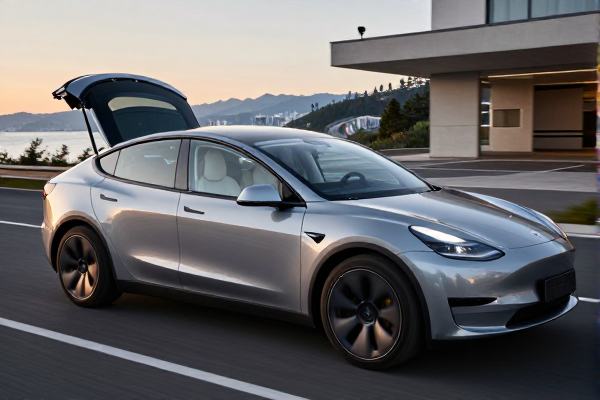
July 20, 2024 – A tragic incident in Katy, Texas, has spotlighted critical safety concerns around autonomous driving technology, after a Tesla Model 3 crashed into a home on June 19, 2026, killing 76-year-old Martha Avila. Preliminary findings from the National Transportation Safety Board (NTSB) indicate the driver manually overrode the vehicle's self-driving system moments before the high-impact collision, raising questions about human oversight and system reliability.
The crash occurred in a residential neighborhood of Katy, a suburb of Houston, where the Tesla Model 3, operated by 44-year-old Michael Butler, veered off the roadway and struck Avila's home. First responders reported Butler claimed the car was in autopilot mode at the time, but subsequent investigations by Harris County law enforcement and the NTSB have uncovered contradictory evidence. Avila was pronounced dead at the scene, marking another fatality linked to advanced driver-assistance systems.
According to the NTSB's preliminary report released last Wednesday, electronic data retrieved from the Tesla confirmed Butler engaged the Full Self-Driving (Supervised) mode but then overrode it by pressing the accelerator pedal to 100% capacity. The vehicle accelerated to over 70 mph in a zone typically governed by lower speed limits, culminating in the fatal crash. NTSB officials emphasized these findings are initial and subject to revision as the probe continues, highlighting the complexity of reconstructing such events.
Butler was arrested and charged with manslaughter following the Harris County investigation, with his case currently pending in local courts. His defense attorney has yet to publicly comment on the charges, but the NTSB's data aligns with law enforcement's assertion that Butler assumed manual control before the crash. This development underscores the legal ramifications for drivers who override automated systems, especially in incidents resulting in fatalities.
Tesla's leadership responded swiftly to the crash, with CEO Elon Musk taking to social media to dispute early accounts that implicated the Autopilot system. Musk argued that Full Self-Driving technology is programmed for cautious navigation in residential areas, making a high-speed crash inconsistent with its design. Ashok Elluswamy, Tesla's vice president of AI software, echoed this sentiment, stating on social platforms that the driver manually overrode self-driving functionality and maintained accelerator pressure post-collision. Tesla has not formally commented on the NTSB report, reflecting the company's typical reticence in ongoing investigations.
In the aftermath, Avila's family filed a wrongful death lawsuit against both Tesla and Butler, alleging negligence and seeking damages. Court records show the suit is pending, and the family's attorneys have not addressed the NTSB's preliminary findings publicly. This legal action adds to a growing list of cases testing automaker liability in accidents involving semi-autonomous features, potentially setting precedents for future litigation in the automotive sector.
The NTSB has announced that all aspects of the Katy crash remain under active investigation, with plans to issue safety recommendations aimed at preventing similar tragedies. These recommendations may focus on improving driver education, enhancing system safeguards against overrides, and refining regulatory frameworks for autonomous vehicles. The agency's proactive stance highlights ongoing efforts to balance technological innovation with public safety imperatives.
Exclusive insights from automotive safety experts provide additional context to this case. Dr. Emily Roberts, a senior analyst at the Insurance Institute for Highway Safety (IIHS), noted that override incidents are a recurring issue with semi-autonomous systems. "Drivers often experience mode confusion or over-reliance on technology, leading to abrupt manual interventions that can escalate risks," she explained. Data from the National Highway Traffic Safety Administration (NHTSA) reveals a 30% increase in reported incidents involving Tesla's Autopilot over the past year, with several under scrutiny for similar override scenarios, suggesting a pattern warranting further study.
Public reaction to the crash has been mixed, with some advocating for stricter regulations on self-driving technologies and others emphasizing personal responsibility. Media coverage has amplified debates around Tesla's marketing of Full Self-Driving capabilities, which some critics argue may mislead users about system limitations. This incident has spurred calls for clearer labeling and hands-on training requirements for drivers utilizing advanced features.
Looking ahead, the Katy crash may influence policy discussions at federal and state levels, particularly regarding mandatory data loggers in autonomous vehicles and standardized override protocols. Industry observers predict that automakers like Tesla could face heightened scrutiny, potentially accelerating software updates to incorporate more robust driver monitoring systems. As technology evolves, this case serves as a cautionary tale about the interplay between human error and automated assistance in modern transportation.
In conclusion, the NTSB's preliminary findings on the Katy Tesla crash underscore the nuanced challenges of self-driving adoption. While systems like Full Self-Driving aim to reduce accidents, incidents of manual override reveal gaps in user interaction and system design. The ongoing investigations and legal outcomes will likely shape future safety standards, pushing for a more integrated approach to vehicle automation that prioritizes both innovation and accountability.