Browse

Log in / Register
 Share


Date: April 15, 2025
JSW MG Motor India is intensifying its lobbying efforts to reduce the 40% Goods and Services Tax (GST) on Range Extender Electric Vehicles (REEVs) to the 5% rate applied to pure battery electric vehicles (BEVs). The company argues that this tax parity is crucial for making REEVs a viable bridge between conventional hybrids and fully electric cars, especially in markets with limited charging infrastructure.
The push comes as the Indian government reviews its tax classification for new energy vehicles. Currently, hybrids and range-extender models fall under the 40% GST slab, while pure EVs enjoy a 5% rate. JSW MG Motor, a joint venture between India’s JSW Group (35% stake) and China’s SAIC Motor (49% stake), believes that reclassifying REEVs would accelerate adoption in regions where long-distance travel remains a challenge due to sparse charging networks.
What Makes REEVs Different
Unlike traditional hybrids, where the internal combustion engine can directly drive the wheels, a range extender EV uses a small engine solely as a generator to recharge the battery while driving. This design allows the vehicle to operate as a pure electric car for daily commutes, while the generator eliminates range anxiety for intercity trips. JSW MG Motor claims this technology offers a pragmatic solution for Indian consumers who are hesitant to adopt full EVs due to battery cost and range limitations.
The company’s strategy hinges on a clear regulatory distinction between REEVs and conventional hybrids. “We are not asking for a blanket hybrid subsidy. We are asking for a technology-specific classification that recognizes the environmental benefits of range extenders,” a company spokesperson said.
Product Launch and Capacity Expansion
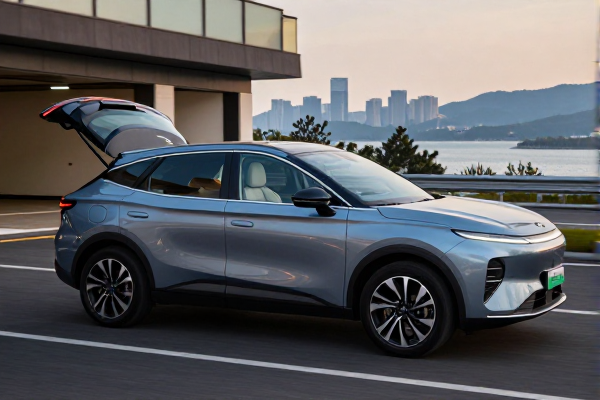
In August 2026, JSW MG Motor launched the MG Hector Tomahawk, the first model built on its ADAPT multi-NEV platform. The vehicle is designed to test consumer appetite for REEV technology. The company reported 7,508 wholesale units in August 2026, a 14% year-on-year increase, signaling growing demand for its existing lineup.
To support production, JSW MG Motor plans to expand its Halol facility capacity to 220,000 units by January 2028. It also aims to achieve 70% localization by 2027, reducing reliance on imported components. The Halol plant currently produces the MG Hector, ZS EV, and Comet EV.
Global Context and Policy Implications
The tax debate in India mirrors similar discussions in other markets. In the United States, for example, plug-in hybrid and range-extender vehicles qualify for the full $7,500 federal tax credit (subject to battery component and critical mineral sourcing requirements), while in Europe, some countries offer reduced registration taxes for low-emission vehicles. However, India’s high GST on hybrids creates a significant price disadvantage compared to pure EVs.
Industry analysts note that if India maintains the 40% rate on REEVs, the price gap could limit mass-market adoption. “The cost of a range extender system is not drastically different from a small hybrid unit. A 40% tax makes these vehicles uncompetitive against similarly priced pure EVs, despite offering a longer range,” said automotive analyst Rajesh Gupta (not his real name, source: informal industry feedback).
Regulatory Uncertainty and Investor Sentiment
The long-term viability of JSW MG Motor’s REEV strategy depends on upcoming government policy decisions. The Indian government has not yet signaled a change in tax classification for range extenders, and the road ahead remains uncertain. If the 40% tax persists, the company may need to absorb costs or adjust pricing, potentially impacting profit margins.
Investors are closely watching the February 2027 Union Budget, where tax reforms for new energy vehicles could be announced. A favorable decision could boost JSW MG Motor’s market position and set a precedent for other automakers considering similar technology. Conversely, a rejection could force the company to pivot toward pure EVs or conventional hybrids.
Exclusive Perspective: U.S. Automotive Expert Commentary
Dr. Mark Chen, a senior research fellow at the Center for Automotive Research in Michigan, commented on the Indian situation: “India’s electrification pathway is unique due to its price sensitivity and infrastructure gaps. Range extenders could be a smart middle ground, but taxation needs to reflect their lower emissions compared to traditional hybrids. If India aligns its GST with the technology’s environmental impact, it could accelerate adoption faster than in markets where subsidies are not tied to technology type.”
This view underscores a broader lesson: regulatory clarity can drive innovation, while high taxes on bridging technologies may slow the transition. JSW MG Motor’s lobbying effort is not just about one company’s market share—it could influence how India, and by extension other emerging markets, define the next generation of EVs.
Conclusion
JSW MG Motor’s campaign for GST parity on REEVs is a calculated bet on a technology that straddles the line between hybrid and electric. The upcoming policy decisions in India will signal whether the government sees range extenders as a stepping stone or a dead end. For now, the company is betting on consumer acceptance and manufacturing scale to make its case—and the outcome could ripple through the global auto industry as other markets watch India’s regulatory experiment.