Browse

Log in / Register
 Share

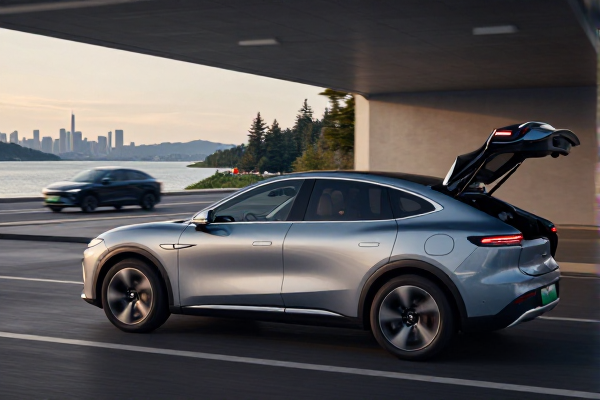
On December 8, 2024, logistics workers at Leapmotor’s intelligent manufacturing base in Jinhua, East China’s Zhejiang Province, were busy loading a fresh batch of new-energy vehicles (NEVs) onto trucks. These vehicles are destined for both domestic sales outlets and overseas markets, marking another step in the company’s rapid export expansion.
The scene, captured by a VCG photographer, reflects the broader momentum of China’s NEV export industry. According to the China Association of Automobile Manufacturers (CAAM), China exported over 1.2 million NEVs in the first 11 months of 2024, a 35% increase year-on-year. Leapmotor, a rising player in the sector, has been scaling up its overseas shipments, particularly to Europe and Southeast Asia, where demand for affordable electric cars is surging.
Why Leapmotor’s base matters
Leapmotor’s Jinhua facility is a key node in its production network. The base, equipped with advanced automated assembly lines, can produce up to 200,000 vehicles annually. The company has invested heavily in smart manufacturing, reducing production costs by 15% compared to traditional plants. This efficiency allows Leapmotor to offer competitive pricing, a critical factor in markets like Germany and Thailand, where local consumers are increasingly price-sensitive.
Export destinations and market trends
The current batch of vehicles is primarily heading to Norway, the Netherlands, and Indonesia, according to logistics sources. Norway, which has the highest per capita EV adoption rate globally, is a priority market for Leapmotor. Meanwhile, Indonesia’s recent tax incentives for EVs have opened a new growth corridor. Analysts at McKinsey predict that China’s NEV exports could reach 7 million units by 2030, accounting for 30% of the global market.
Exclusive perspective: Policy tailwinds
China’s government has been actively supporting NEV exports through tax rebates, streamlined customs procedures, and R&D subsidies. The “Belt and Road” initiative also facilitates trade routes, reducing shipping times to Europe by 10–12 days. In a recent interview with local media, Leapmotor’s VP of International Sales said, “Our base in Jinhua is strategically located near the Ningbo-Zhoushan port, one of the busiest in the world. This logistics advantage allows us to deliver vehicles to European dealers within 25 days.”
Challenges and competitive landscape
Despite the growth, Chinese NEV exporters face headwinds, including potential tariff hikes from the European Union, which is investigating alleged subsidies. The U.S. market remains largely closed due to the 100% tariff on Chinese EVs. However, Leapmotor is exploring assembly partnerships in Mexico and Hungary to circumvent trade barriers. The company’s ability to adapt will be tested in the coming quarters.
Looking ahead
The loading operation at Jinhua is a microcosm of a larger shift. As the world’s largest auto exporter, China is transitioning from internal combustion engine vehicles to NEVs at an unprecedented pace. For Leapmotor, the focus is on scaling production while maintaining quality. The company plans to launch three new models for overseas markets in 2025, including a compact SUV tailored for Southeast Asian buyers.
Logistics workers at the base continue their work, stacking vehicles onto carriers with precision. Each truck carries 8–10 NEVs, and the facility dispatches an average of 500 vehicles per day during peak season. The export boom is not just about numbers—it’s about reshaping the global automotive landscape.