Browse

Log in / Register
 Share

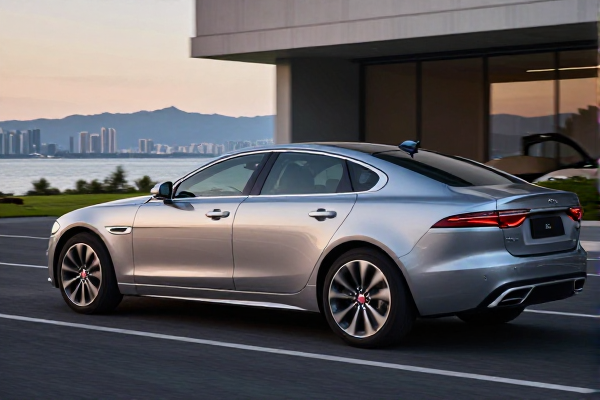
Jaguar's polarizing move away from its combustion-engine past is already pulling in an entirely different kind of buyer. The British automaker reports receiving more than 50,000 expressions of interest for its upcoming all-electric Type 01 GT, and roughly four out of five of those potential customers have never owned a Jaguar before. The disclosure, shared by General Manager Rawdon Glover in an interview with Australia's Drive magazine and picked up by Motor1, suggests the company's decision to scrap its entire lineup and rebuild from scratch is resonating far beyond its traditional fan base. As of May 9, 2025, the figures stand as the strongest public signal yet that the relaunch has captured the market's attention.
Glover told Drive that the volume of responses gave Jaguar a meaningful early read after months of heated debate about the brand's direction. "More than 50,000 people have told us: 'I'm really interested in what you do,'" he said. Most of those prospective clients, he added, have no existing connection to Jaguar showrooms or ownership history. That detail matters because the company's whole strategy depends on attracting people who previously would not have put a Jaguar on their shopping list.
The timing is no accident. Jaguar spent much of the past year clearing its dealerships of long-running nameplates, including the XE, XF, and F-Type, to prepare for an all-electric relaunch. For a marque that spent decades leaning on British heritage and motorsport tradition, the abrupt reset was always going to provoke criticism. But the early response suggests the new pitch — centered on design, technology, and a more exclusive style of luxury — is finding an audience that the old product line never reached.
At the center of that pitch is the Type 01, a low-slung four-door grand tourer that stands at the stylistic opposite end from the conservative sedans Jaguar once sold by the thousands. The dramatic design language, previewed late last year with the Type 00 concept in Miami, marks a clean break from the brand's visual past. The production Type 01 is expected to carry that identity forward while carrying the price tag of a genuine luxury flagship. Jaguar frames the design philosophy as "Exuberant Modernism," a deliberate rejection of the restrained, wood-and-leather clichés that defined the brand for generations.
Jaguar's leadership has been unusually direct about whom it wants inside the car. The ideal customer, Glover acknowledged, is younger, wealthier, and more interested in technology, individuality, and tailoring than in badge heritage. That thinking reflects a cold calculation: the brand must win newcomers because many of its existing owners will not follow it into the electric era. Last year, Glover estimated that as many as 85 percent of current customers could walk away once Jaguar pivoted to expensive battery-electric models.
That trade-off is fully intentional. Instead of trying to keep every loyal buyer, Jaguar aims to capture a narrower, higher-spending segment. The company now talks about competing with Bentley rather than the familiar German trio of BMW, Mercedes-Benz, and Audi. That is a significant step up in price and positioning, and it carries real commercial risk. A brand that spent years fighting in the volume premium segment cannot simply declare itself a luxury house; it has to prove it at the till.
There is also a reason for caution in the reservation numbers. Fifty thousand expressions of interest are not fifty thousand deposits. The production Type 01 has yet to be fully revealed, pricing has not been confirmed, and no delivery timeline has been locked in. Online enthusiasm is a soft signal — necessary, encouraging, but far from a guarantee of sales.
The broader EV market offers a sobering lesson in that gap. Several automakers have collected large reservation backlogs only to see a meaningful share of order holders fade away by the time deliveries began. The distance between "that looks interesting" and "here is my check" is especially steep in a segment where six-figure prices are assumed. Regaining that lost traction is harder than generating it in the first place, and Jaguar's relaunch window will stay open only as long as the novelty holds.
Still, the composition of the interest gives Jaguar reason to believe its message is landing. Glover said the feedback has "validated their decision" to pursue the upper-luxury market. He is right to be encouraged: the people expressing interest now are precisely the demographic the brand did not have before — design-focused luxury buyers who skipped Jaguar entirely during its years of conservative sedans and aging sports cars.
There is precedent for this kind of leap. The Rolls-Royce Spectre demonstrated that ultra-wealthy motorists will embrace electric power when the package is positioned as indulgence rather than compromise, and it has become one of that brand's most sought-after models. The difference is that Rolls-Royce launched its EV with a century of established luxury credibility behind it. Jaguar is trying to manufacture that credibility from scratch, with an empty showroom and a logo that it redesigned to widespread debate.
That debate has not dampened the company's resolve. The December reveal drew strong reactions in both directions, and the accompanying "Copy Nothing" campaign deliberately courted controversy. Executives say the polarizing reception is part of the plan: the goal is not to please everyone but to connect intensely with a smaller, more selective audience. For a company that once tried to be all things to all drivers, that focus is a genuine departure from decades of behavior.
Speculation has circulated that Jaguar might soften its stance and reintroduce combustion engines or plug-in hybrids, particularly as global EV demand wobbles. Glover rejected that line of thinking as incompatible with the brand's new identity. Reversing course, in the company's view, would destroy credibility with precisely the buyers it is trying to woo. Jaguar has publicly committed to an all-electric future and appears willing to accept the consequences, even if it means sacrificing short-term revenue.
The real test will be financial. The Type 01 is expected to sit well above the discontinued XJ in price, and it will need to justify that premium against established names in the ultra-luxury arena. Tata Motors, Jaguar's parent company, has given the brand room to execute this transformation, but patience has limits. The strategy requires a steady flow of new customers to become commercially viable, and the early indicators suggest that flow is starting — at least in the form of sign-ups.
In the luxury business, desire alone is not enough. The industry is full of concepts that attracted applause but never convinced buyers to commit. Jaguar's early lead — more than 50,000 people raising their hands — is a genuinely strong first step. The harder step is converting those raised hands into signed contracts. If the Type 01 delivers on its visual promise and arrives before the buzz fades, this gamble could define a remarkable turnaround. If it stalls, the 50,000 will be remembered as an empty echo rather than a beginning.