Browse

Log in / Register
 Share

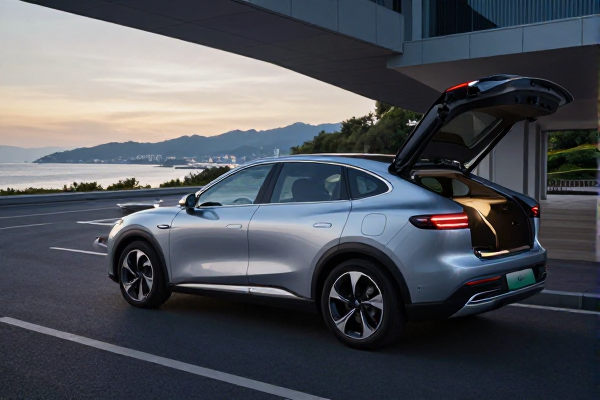
In a pivotal development for the electric vehicle ecosystem, independent validation has confirmed the real-world interoperability of bidirectional charging using the critical ISO 15118-20 standard. The successful tests, conducted in May 2024 by Sweden’s RISE Research Institutes, involved hardware from Toyota Industries and DEFA, marking a concrete move from proprietary systems toward an open, scalable future for vehicle-to-grid (V2G) technology.
This milestone transcends a simple technical checkmark. It represents a fundamental shift in how we perceive electric vehicles—from mere transportation tools to active, grid-supporting assets. The ability for an EV to both draw from and supply power back to the grid (or a home) is central to building a resilient, renewable-powered energy system. As solar and wind generation grows, millions of EVs can act as distributed batteries, soaking up excess power and releasing it during peak demand, thereby smoothing the transition to a low-carbon economy.
“Our validation proves that open standards for bidirectional charging are now a commercial reality, not just a theory,” stated Martin Jonsson, CEO of DEFA Group. He emphasized that this lays the groundwork for EVs to function at scale as Distributed Energy Resources (DERs), unlocking new value streams for owners through energy arbitrage and backup power, while providing crucial flexibility to utility grids.
The validation process, described as seamless by RISE’s Director of Electromobility, Anna Larsson, focused on the complete communication chain between the vehicle and charger using the ISO 15118-20 protocol. This standard is the essential “common language” that ensures different manufacturers’ vehicles and chargers can communicate reliably for complex bidirectional energy flows. Unlike closed, single-vendor demonstrations of the past, this success is a win for the entire industry’s push toward interoperability.
Exclusive Perspective: The U.S. Market Implications While the validation occurred in Europe, its ripples are felt acutely in the United States. The U.S. grid faces increasing strain from climate extremes and the rapid adoption of intermittent renewables. Federal initiatives, like the Bipartisan Infrastructure Law, are pouring billions into EV charging infrastructure and grid modernization. The proven interoperability of ISO 15118-20 provides a clear, standards-based path for American utilities, automakers, and charging companies to collaborate on V2G pilots without vendor lock-in. This could accelerate programs where EV owners are compensated for allowing utilities to manage their battery charging during grid stress, a concept gaining traction from California to New York.
For consumers, the practical benefits are tangible. Imagine an EV owner with home solar panels. During a sunny afternoon, their car could store cheap, clean excess solar energy instead of exporting it all to the grid. Later, during the expensive evening peak, the household could draw power from the car, slashing electricity bills. In a power outage, the EV could become a lifeline, powering essential home appliances for days. Toyota Industries’ Senior Executive Officer, Hiroaki Matsuda, highlighted this vision, noting their work extends beyond vehicles to powering devices and homes, moving society toward a future where EVs deliver greater value as distributed energy resources.
The timing of this achievement is strategically significant. The European Union’s Alternative Fuels Infrastructure Regulation (AFIR) will mandate ISO 15118-20 support in new chargers from 2027, making interoperability non-negotiable. This regulatory push creates a massive, compliant market and sets a de facto global benchmark. Industry leaders argue that such open protocols are the only way to move beyond small-scale pilots and achieve the massive, cost-effective deployment needed for V2X (Vehicle-to-Everything) technologies to fulfill their potential for grid stability and decarbonization.
The path forward is now clearer. With a validated, open-standard foundation, the industry’s focus must shift to widespread adoption, streamlined certification processes, and developing compelling business models for all stakeholders. As more automakers like Ford and GM roll out bidirectional-capable vehicles, and charging station manufacturers integrate the standard, the ecosystem will mature. The successful independent validation by RISE, DEFA, and Toyota Industries is not an endpoint, but the starting gun for the next phase of the electric revolution—where your car doesn’t just take you places, but also helps power your life and stabilize the grid.