Browse

Log in / Register
 Share


December 10, 2026 — Hyundai has officially confirmed that its next compact electric SUV, internally codenamed HE1i, will arrive in the first quarter of 2027. The model, which media reports now expect to be called the Hyundai Ioniq P, was confirmed during Hyundai Motor India’s third-quarter earnings call with analysts on October 29, 2026. It will be launched in India after the Hyundai Bayon, but the company has not yet issued an official name confirmation.
The Ioniq P is set to become the most accessible entry point into Hyundai’s IONIQ sub-brand. It is a born-electric small crossover, currently undergoing road testing in India. The vehicle is built on the E-GMP (K) platform — the same dedicated EV architecture used by the Hyundai Inster (also known as the Casper Electric in some markets). That platform is designed specifically for compact electric vehicles, and Hyundai will use it to target the fast-growing sub-4-meter SUV segment in India, as well as export-oriented small EV markets.
Hyundai will manufacture the Ioniq P at its Sriperumbudur plant in Tamil Nadu, India. Initially, the SUV will use imported battery cells, but Hyundai-Kia has partnered with Exide Industries to localize battery cell production under a joint development program. Localized battery supplies are expected to begin sometime in 2027, which could help Hyundai reduce costs and offer the Ioniq P at a more competitive price point over its lifecycle.
The move to localize cells is a key strategic step. It aligns with India’s phased manufacturing programme for EVs and battery components. For global observers, the manufacturing strategy also suggests that the Ioniq P may eventually be considered for other right-hand-drive or emerging markets, as Hyundai scales its dedicated EV platform outside Korea and Europe.
The Ioniq P is expected to be offered in two versions — Standard Range and Long Range. The global-spec Inster EV uses 42 kWh and 49 kWh battery packs, with WLTP-rated range up to 355 km. In India, the Ioniq P is likely to share battery options with the Kia Syros EV, which is available with 42 kWh and 51.4 kWh packs.
With the larger pack, the Ioniq P is expected to deliver a realistic range of over 400 km on a single charge, depending on driving conditions. That places it comfortably ahead of several existing compact electric crossovers in its segment. The E-GMP (K) platform’s packaging efficiency and 400-volt architecture allow for decent battery capacity without encroaching on cabin or boot space.
The Ioniq P will be among the first Hyundai models to feature the next-generation Pleos Connect infotainment system. The same system is expected to debut on the upcoming third-generation Hyundai Creta. The infotainment unit will offer wireless Android Auto and Apple CarPlay, over-the-air software updates, and a more connected user experience.
Safety and driver assistance will include a Level 2 ADAS suite, with adaptive cruise control, autonomous emergency braking, lane keeping assistance, and related functions. The cabin is likely to offer ventilated and powered front seats, automatic climate control, and a panoramic setup typical of modern Hyundai EVs.
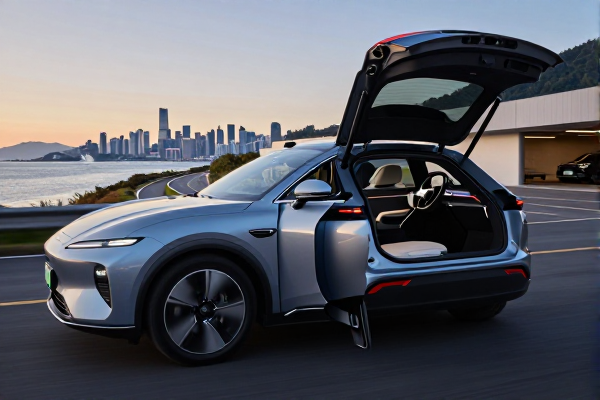
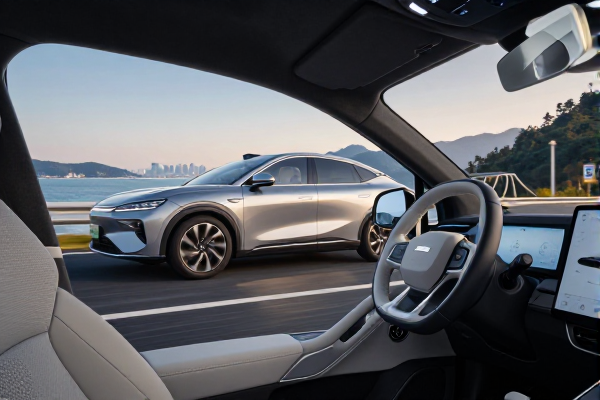
Given the boxy shape, the Ioniq P should also prioritise interior space and urban maneuverability. The design language is expected to mirror the production-ready styling of the Inster, but with slightly more SUV-oriented proportions.
In its home market of India, the Ioniq P will compete directly with the Tata Nexon EV, Mahindra XUV 3XO EV, and the Kia Syros EV. But its relevance extends beyond India. Compact electric SUVs have become the fastest-growing body style in many markets, including Europe and Southeast Asia, where buyers want EV practicality without the premium price tag.
For the US market specifically, Hyundai has not announced plans to sell the Ioniq P. However, the HE1i program is worth watching. Hyundai’s North American EV lineup is currently anchored by the Ioniq 5, Ioniq 6, and Ioniq 9 — all larger vehicles. A smaller, more affordable model could help Hyundai respond to growing demand for entry-level EVs in North America, especially if federal and state incentives make sub-$30,000 EVs more attractive.
Industry analysts note that the E-GMP (K) platform is a low-cost enabler. If Hyundai can scale production in India alongside future global plants, the Ioniq P could eventually serve as the foundation for a global affordable EV push under the IONIQ brand.
Hyundai has kept its IONIQ sub-brand synonymous with premium, design-forward EVs. The Ioniq P marks a deliberate expansion downward. It does not dilute the brand; instead, it broadens the IONIQ family’s addressable audience. With a boxy silhouette, modern technology, and a claimed real-world range above 400 km, the Ioniq P could become one of the most important small EVs in Hyundai’s lineup this decade.
Production is scheduled to begin at Sriperumbudur ahead of the first-quarter 2027 launch. Over the following months, more concrete specifications, interior details, and official pricing are expected to emerge.
For now, the Ioniq P is a reminder that Hyundai is not just chasing bigger batteries and faster charging — it is also engineering smaller, more efficient, and more accessible EVs for the next wave of buyers.