Browse

Log in / Register
 Share

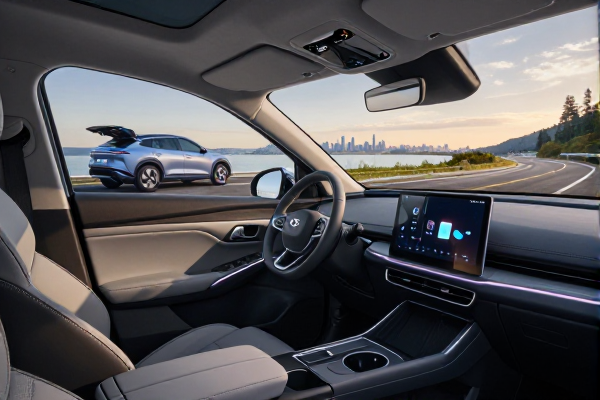
Updated March 20, 2025 — Hyundai has given Europe the small electric crossover it has been waiting for. The Ioniq 3, the newest member of the automaker's dedicated EV family, is drawing early praise for doing something rare in this segment: combining engaging performance, genuinely competitive range and eye-catching value in a single package. It's a compact car with big-car confidence, and it may reset what buyers expect from an affordable EV.
The Ioniq 3 sits below the Ioniq 5 in Hyundai's lineup, taking aim at the B-segment that dominates European streets. Rather than shrink an existing model, Hyundai engineered this car specifically around the needs of urban and suburban European drivers: compact dimensions outside, generous space inside, and efficiency that makes every kilowatt count. The strategy is clear — meet the continent's appetite for smaller EVs without making buyers feel they've stepped down a class.
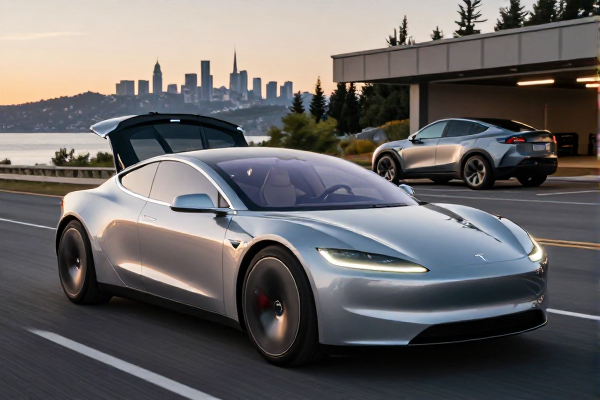
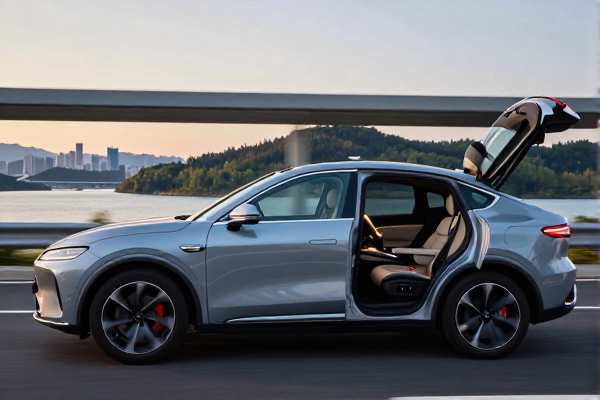
Visually, the Ioniq 3 is unmistakably part of the Ioniq family. The pixel-inspired lighting elements, chiseled bodywork and confident stance give it a presence that many segment rivals lack. It doesn't try to look cute or apologetic about being electric. Instead, Hyundai's designers delivered a small crossover with the same visual maturity as the larger Ioniq models — a fact design publications have been quick to note. The form also serves function: a low drag coefficient pays real dividends at highway speeds.
Underneath, the Ioniq 3 adapts Hyundai's E-GMP platform to a 400-volt electrical architecture. That move keeps costs manageable while preserving the platform's core advantages: a flat floor, a long wheelbase and a structure tuned for refinement. The result is a car that feels far more substantial than its footprint suggests, both in the way it drives and the way it protects its occupants.
The battery line-up includes standard and long-range packs in the low-40-kWh and low-60-kWh ranges respectively. On the WLTP cycle, the long-range version is targeted at roughly 400 km, or about 250 miles, which would put it at the top of its class. Real-world efficiency benefits from careful weight management and the car's aerodynamic shape, so official figures should translate closely to everyday driving. For most owners, that means a full week of commuting on a single charge and the confidence to tackle longer journeys without constant charging stops.
Small EVs often trip on charging speed, but the Ioniq 3 is different. Its 400-volt system delivers charging performance well above the segment average, and the battery's thermal management keeps charge rates high even after several rapid sessions in a row. Smart pre-conditioning is included, letting the car prepare its battery for fast charging as you near a public station. It is exactly the kind of detail that makes electric motoring practical rather than stressful.
Behind the wheel, the Ioniq 3 impresses with maturity. Steering is accurate, the ride is settled, and body control is far better than the class average. Entry-level versions are tuned for maximum efficiency, while the dual-motor variant adds a welcome surge of acceleration. It is not a hot hatch, and it doesn't pretend to be. What matters is that the car feels grown-up, responsive and perfectly at home on both narrow city streets and open highways.
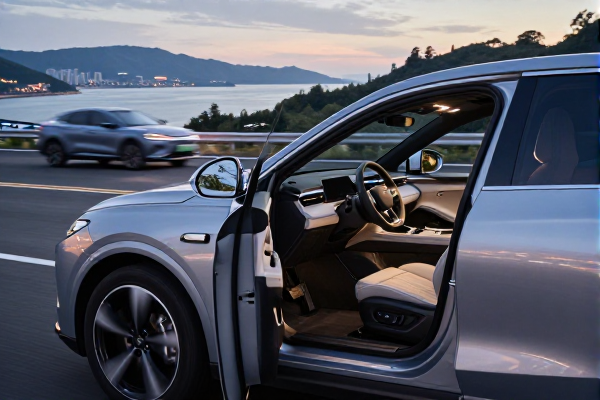
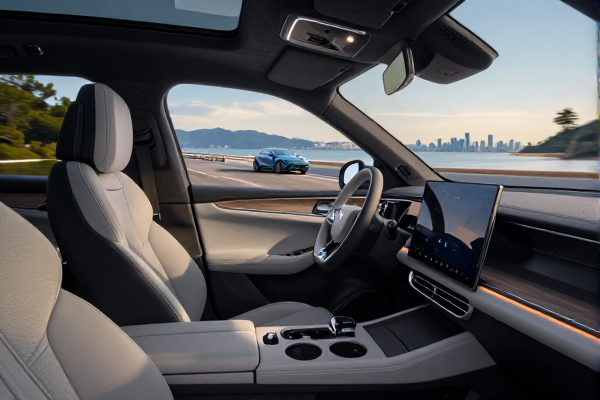
Inside, the Ioniq 3 offers one of the best cabins in its class. Two crisp displays handle infotainment and instrumentation, while physical controls remain for core functions like climate and audio — a deliberate choice, and a smart one. Materials include recycled and bio-based textiles, giving the interior a modern, environmentally conscious feel without resembling a science experiment. Build quality, too, is a step above what this price point usually promises.
Because the battery sits flat under the floor, there is no transmission tunnel and no awkward packaging compromises. Rear-seat legroom is genuinely impressive for a car this size, and the trunk is shaped for real luggage rather than just grocery bags. Add the usual Ioniq family touches — flexible seating arrangements and carefully placed storage — and the Ioniq 3 begins to feel less like a small car and more like a cleverly packaged people mover.
Hyundai's recent models have consistently performed at the top of crash-safety assessments, and the Ioniq 3 is expected to follow that trend with a full suite of active driver aids fitted as standard. Beyond the hardware, the brand's European warranty package — five years of unlimited-mileage coverage plus long battery protection — removes one of the biggest lingering worries EV buyers still have. It all adds to the sense that Hyundai is taking this car, and its customers, seriously.
Pricing is where the Ioniq 3 makes its most convincing argument. In Europe, it undercuts key rivals while offering more equipment as standard. Hyundai has loaded the car with fast charging, a complete driver-assistance suite and its excellent infotainment system from the entry level upward. There is no cynical base model designed purely to hit a price point in an advertisement. The "thinking person's choice" label, first coined by design title Wallpaper*, sticks precisely because the spec sheet and the price tag line up so well.
The Ioniq 3 enters a segment with no shortage of candidates. The MG4 and Smart #1 have built strong followings, the Volvo EX30 brings Scandinavian polish, and newcomers like the Volkswagen ID.2 are already promising to challenge from below. What separates the Ioniq 3 is the totality: no direct rival currently combines comparable range, acceleration, interior quality and pricing in one car. Pick a single metric and someone might edge it; add them all together and Hyundai leads.
The Ioniq 3 is engineered for Europe, and its near-term US availability is unconfirmed. That is a shame, because American consumers are increasingly asking for exactly this recipe: an affordable EV with realistic range and a footprint that works in crowded cities. Hyundai's US line-up currently revolves around the Ioniq 5 and the new three-row Ioniq 9. Should the Ioniq 3 cross the Atlantic, it would immediately become one of the most compelling small EVs in the American market — and a serious problem for every rival planning a compact electric crossover.
Market analysts see the Ioniq 3 as more than just another model launch. They point out that Hyundai has approached the small EV segment with genuine seriousness at a time when some rivals still treat it as a compliance exercise. The proof lies in the platform, the charging behavior and the absence of the cost-cutting that usually accompanies smaller vehicles. If the Ioniq 3 sells as strongly as expected, competitors will have little choice but to recalibrate their small-EV plans in a hurry.
The Hyundai Ioniq 3 is the small EV the industry has been promising for years. It delivers the full package — performance, range and value — without the compromises that have long plagued the segment. For European buyers, it is an immediate benchmark; for everyone else, it is a reason to hope the same thinking reaches their shores. This is not merely a good small car. It is the one to beat.