Browse

Log in / Register
 Share

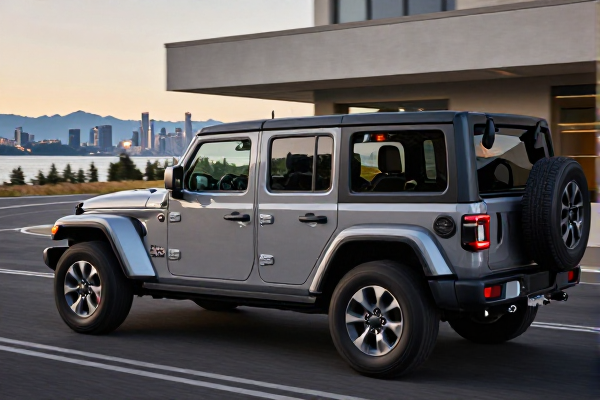
With Mother's Day weekend approaching, "Gilmore Girls" is once again pulling families into its warm, caffeine-fueled orbit. The beloved series, which launched on The WB in 2000 and returned for a Netflix revival in 2016, has become comfort-viewing canon for a new generation. As of May 7, 2025, one detail keeps surfacing in fan conversations and viral edits: why does Lorelai Gilmore drive a soft-top Jeep Wrangler in Connecticut, a state that treats canvas roofs like enemy number one? The answer says more about her character than almost any line in the script.
The show's own early production history adds a twist. The pilot was shot in Unionville, Ontario, and the Jeep that appears in it is a YJ-generation Wrangler — the square-headlight model that ended production in 1995. From episode two onward, Lorelai is behind the wheel of a TJ-generation Wrangler, the round-headlight version built from 1997 to 2006. The swap is a classic pilot-era scramble: the crew grabbed what was available, filmed a single episode, then standardized.
What never changed was the soft top. Through every season, the canvas stays on, windows zippered, heater taxed. Connecticut's Nor'easters do not persuade Lorelai to swap in a hard top. The Jeep's inadequacy as a New England daily driver is a feature, not a bug.
It helps to remember that Stars Hollow never actually existed. The picture-postcard town square was a standing set on a Warner Bros. backlot in Burbank, California — the same gazebo doubled for "Hart of Dixie" and countless other productions. The red Ford Probe endlessly circling the square in establishing shots is a looped background clip that superfans now treat as an unofficial recurring character.
So yes, Lorelai's Jeep is, strictly speaking, a Hollywood vehicle pretending to live in Connecticut. Production convenience explains how it got there. It doesn't explain why it stayed. That took a character like Lorelai.
Lorelai Gilmore (Lauren Graham) is not, by any reasonable measure, a Jeep person. She doesn't camp. She doesn't hike. She has never once been shown off-roading or tailgating. She is a coffee-first, movie-quoting, town-gossip woman who would happily live her entire life within walking distance of Luke's Diner. In one of her rare moments of self-awareness about the vehicle, she flatly states she isn't the convertible type.
And yet she clings to this particular Wrangler for the entire run of the show. The reason has nothing to do with her hobbies and everything to do with her heritage. Lorelai is the daughter of Richard and Emily Gilmore, the embodiment of old-money Hartford respectability. At 16, she became pregnant with Rory, and instead of accepting the carefully managed life her parents had laid out, she left. She built a life as a single mother and inn manager, making Stars Hollow her chosen world.
The Jeep is a monument to that decision. It is loud, boxy, inefficient, and gloriously ordinary — a working person's vehicle that reads as a visual rebuke to the polished sedans in her parents' driveway.
Fans have been articulating this reading for years. A frequently cited Reddit thread describes the Wrangler as Lorelai's "counterculture symbol of rebellion" — the one vehicle her parents would despise on sight. The show even draws the comparison directly: when Rory needs a car, Richard and Emily buy her a Prius, the sensible, hybrid, early-2000s apotheosis of respectable suburbia. Lorelai keeps driving the thirsty canvas-topped Jeep. That contrast is the mother-daughter conflict rendered in sheet metal.
Connecticut makes the choice even more pointed. Anyone who has owned a soft-top Wrangler in a cold climate knows the routine: the top rattles, the heat escapes, the seals leak, and the cabin hums at highway speed. Most owners garage it in November or install a hard top. Lorelai does neither. She is also almost never shown putting the top down. She doesn't actually want the wind in her hair. She wants to own a decision that can't be justified by any practical metric.
That is the entire Lorelai Gilmore operating system. She holds on to choices that look like mistakes because the reasonable alternative is the world her parents built.
The Jeep's afterlife has attracted at least one very specific, very famous admirer. Doug DeMuro, the auto journalist behind Cars & Bids, has repeatedly described "Gilmore Girls" as the greatest television show ever made, and he's been open about his obsession with the actual production Wrangler.
When the original series wrapped in 2007, the Jeep was auctioned off. In a twist so on-the-nose that a screenwriter would be accused of pandering, it ended up with a family in a small Connecticut town. DeMuro later tracked down the buyer's daughter and asked to buy it. The response was a firm "family heirloom." He hasn't given up. His running argument is that the crossover between hardcore car people and "Gilmore Girls" devotees is essentially him, which makes him the Jeep's inevitable future owner.
"Gilmore Girls: A Year in the Life" returned in 2016, and the Wrangler was right there with Lorelai — a little more scarred, a little more perfect. The vehicle had become a time capsule: proof that, even after all those years and all those miles, she never traded away the person she decided to become as a teenager.
The show treats its other vehicles with the same care. Luke Danes, the gruff diner owner, drives a pragmatic old pickup that fits his flannel-and-coffee ethos. The Gilmore grandparents command polished, status-conscious sedans that announce their address before they park. Lorelai's Jeep is just the loudest example of a simple rule: on this show, the car is the character.
Most television shows treat vehicles like furniture. "Gilmore Girls" turned a Wrangler into a biography. The soft top is cold in winter, noisy at speed, impractical in every way, and utterly incapable of pretending to be something else. Nobody who knows Lorelai Gilmore would expect her to drive anything else. The Jeep makes no sense in Connecticut, no sense as a daily driver, and no sense for a self-proclaimed non-convertible person. Which means it makes perfect sense — because Lorelai built her entire life on being exactly what her parents' world says she shouldn't be. That's not a casting mistake. That's a masterclass in making a car feel like a character.