Browse

Log in / Register
 Share

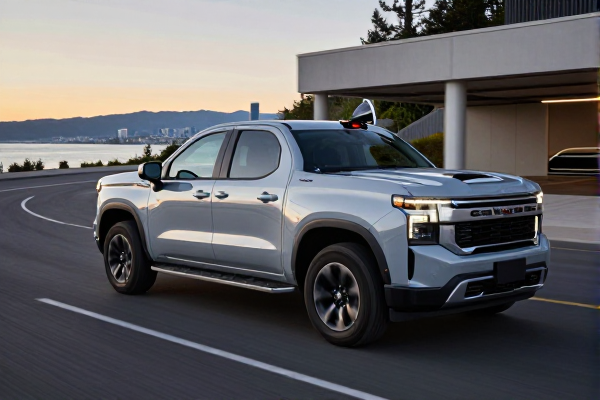
The first Chevrolet Silverado EV Trail Boss and GMC Sierra EV AT4 trucks built this month are carrying battery cells that use 100% recycled nickel, cobalt and manganese, General Motors confirmed this week. A batch of Cadillac EVs is part of the same rollout. It's a genuine step toward closing the battery supply loop, but the fine print deserves a close read: the 100% claim covers only the cathode's three main metals, the program is a pilot, and the performance evidence comes from GM's own engineers, not independent labs. (This article was updated on March 21, 2025.)
Melissa Flaherty, GM's director for its sustainable EV battery ecosystem, laid out the mechanics in a company post. The chain starts with 80 end-of-life GM EV battery packs, which were sent to battery recycler Cirba Solutions. Cirba shredded and separated those packs into black mass — the dark, metal-rich blend left after lithium-ion cells are broken down.
GM and its partners processed more than 12 metric tons of that black mass into new cathode active material, the battery component that most directly controls how much energy a cell can hold. GM says the recycled material met the same quality, safety and performance requirements it applies to virgin material.
Ultium Cells, GM's battery joint venture, then built new cells from that cathode material. GM turned those cells into modules and full packs at Factory ZERO in Michigan and at Spring Hill Assembly in Tennessee. That's the notable part: this went through GM's normal production chain, not a lab-scale side line.
GM has identified the first models to receive them: the Chevrolet Silverado EV Trail Boss, the GMC Sierra EV AT4, and the Cadillac LYRIQ, LYRIQ V, VISTIQ, ESCALADE IQ and ESCALADE IQL. The company says these first units are headed to customers now.
What GM hasn't provided is a volume number — or a way for a buyer to check whether a specific vehicle is in the group. For a fleet manager writing a purchase order for twenty Silverado EVs, "some trucks built this month have them" leaves a meaningful gap. Ask the dealer to check the build record before you assume your truck has them.
The recycled figure is narrower than it sounds. It applies to nickel, cobalt and manganese inside the cathode. It does not cover the lithium in the cell, the anode, the electrolyte or any other pack component.
There's also the wording issue. GM says the recycled supply "includes" material from its own retired packs. That's a different statement from saying all of the recycled content came from GM batteries. The distinction matters to anyone who cares exactly where their truck's minerals were recovered.
Recovery rates are another limit. Industry-standard processes can pull out as much as 95% of nickel, cobalt and manganese, and as much as 80% of lithium, depending on the chemistry and the equipment. Those are ceiling numbers for the recycling sector, not verified results from this pilot.
GM says cells built with the recycled cathode material performed as well as virgin-material cells in its testing. That's a useful data point. It is not the same as third-party confirmation.
No one outside GM has published range, towing, fast-charging or cold-weather figures for these packs. For truck owners who live on a grade with a loaded trailer, or who make a living with the bed full, the only test that ultimately counts is years of service under real conditions. That test has just begun.
Raw materials are the biggest single cost factor in a battery cell. That's why the economics here matter beyond the green-branding story. The Inflation Reduction Act created tax credits for producing electrode materials in the U.S. and for recycling critical minerals. The work Cirba Solutions and Ultium Cells just demonstrated is exactly the kind of activity those credits were designed to encourage.
GM wasn't specific about dollars, and it made no promise that the Silverado EV or Sierra EV will get cheaper. But the path is visible: if recycled cathode metals can consistently meet virgin quality, material costs should drift downward as volumes grow. Whether that lands on the sticker price or on GM's bottom line is a separate question.
GM says its remanufacturing and refurbishment programs are built to reuse more than 70% of pack components. That matters the first time a pack fails out of warranty: a refurbished pack is a cheaper repair than a full replacement.
For packs that can't return to vehicle duty, GM plans a second act in stationary storage. It is working with Redwood Materials to move roughly 10,000 second-life batteries into energy infrastructure. That stretches a pack's useful life well beyond its time on the road and delays the day it gets shredded for metal again.
GM isn't alone on the recycling circuit. Ford has a long-running relationship with Redwood Materials covering battery scrap from its BlueOval SK plants, with both companies openly discussing a domestic cathode supply chain. Tesla has touted in-house battery recycling capacity in Nevada, and Nissan has worked on battery circularity through its 4R Energy venture for years.
What sets GM's announcement apart is the specificity. Naming a truck model, a build month, and a 100% recycled figure for three cathode metals is more concrete than most automakers have offered. It raises the bar for comparing claims — and it gives skeptical buyers a number to test against.
If the recycled-content angle matters to you, put these questions to the dealership:
Eighty dead GM packs went into a shredder, came out as black mass, and turned into the cathode material now riding inside new trucks that customers will drive this year. That's a visible, measurable step in the industry's long argument over what happens to EV batteries after they die.
But GM itself calls this a pilot, not the destination. The claim is partial, the proof is in-house, and the real-world record doesn't exist yet. The fine print isn't hiding a scandal; it's just telling you how early this really is. For anyone whose truck has to earn its keep, that's the part that matters most.