Browse

Log in / Register
 Share

June 12, 2025
CarMax has some welcome news for an auto industry that spent two decades worrying about the "carless generation": 80% of Gen Alpha teenagers say they plan to get a driver's license, and more than two-thirds say they are genuinely excited to drive. The survey, released today by the nation's largest used-car retailer, also delivered an unexpected throwback detail—this most digital-first of generations still wants a real, in-person test drive before buying.
Gen Alpha—broadly, kids born after 2010—is only beginning to reach driving age. The oldest members are just entering the window for a learner's permit in many states, which makes the survey more about intent than action. But intent, in this case, flies in the face of nearly every driving trend of the past 40 years.
For decades, the share of American teens rushing to the DMV has fallen. Licensing rates among 16- to 19-year-olds slid from roughly 64% in the early 1980s to around 42% by 2019, according to University of Michigan Transportation Research Institute data. Researchers have blamed everything from the rising cost of cars and insurance to the arrival of ride-hailing and the simple fact that many teens no longer needed wheels to socialize online.
Against that backdrop, CarMax's numbers mark a notable turning point—at least in attitude. Eight in ten Gen Alpha teens say they plan to get licensed. More than two-thirds describe themselves as excited about driving. If even part of that enthusiasm translates into action, it could help reverse a generational decline that has reshaped everything from suburban infrastructure to automaker marketing.
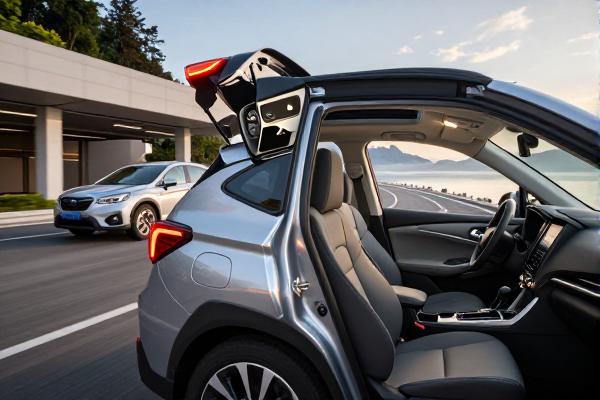
The survey's most intriguing finding may be the one about test drives. Despite growing up with online shopping, one-click delivery, and digital showrooms, a large share of Gen Alpha teens said they value driving a car in person before committing. That's a clear signal that even the most connected generation treats the test drive as a rite of passage.
It's also a reminder to the industry that digitizing the car-buying experience has limits. CarMax has invested heavily in its omnichannel model over the years, letting shoppers browse inventory and line up financing from a couch. Yet the company's own survey suggests the physical walk around the lot—and the moment a teenage driver settles into the driver's seat—still carries real weight. Industry surveys have long ranked the physical test drive among the strongest influences on a purchase decision, and these findings suggest that pattern will hold as Gen Alpha enters the market.
Why would a generation raised on screens be so jazzed about driving? Read the survey alongside recent behavioral shifts and a few explanations emerge.
First, many Gen Alpha teenagers spent their early childhoods in pandemic-era lockdowns. Mobility feels like freedom to a cohort that remembers being stuck at home in ways older generations don't. Second, car culture has migrated to social media in a big way—restomods, supercars, and first-car hauls pull millions of views on TikTok, Instagram, and YouTube, giving cars a cool factor they briefly lost to smartphones and streaming. Third, driving remains a tangible marker of adulthood, the kind of milestone that a driver's license still instantly signals.
None of this means every teenager who expresses excitement will be driving at 16. Cost remains the biggest obstacle. Insurance premiums for young drivers have climbed steadily, used-car prices, while cooling from pandemic peaks, are still far from cheap, and not every family has a spare vehicle or the time to teach a new driver. But the survey is a reliable early indicator that the desire is there.
As Gen Alpha gets behind the wheel, the car they drive will be safer than anything their parents learned in—which is exactly what the times demand. Motor vehicle crashes remain the leading cause of death for U.S. teens, according to the CDC, which is why every state now has some form of graduated driver licensing that phases in driving privileges.
Teens entering the system today also inherit a generation of safety tech—automatic emergency braking, lane-keeping assist, blind-spot monitoring—features that were luxury options a decade ago and are now common even in used vehicles. That tech won't replace supervised practice, but it adds a cushion, and automakers are increasingly marketing advanced driver aids directly to younger buyers and their parents.
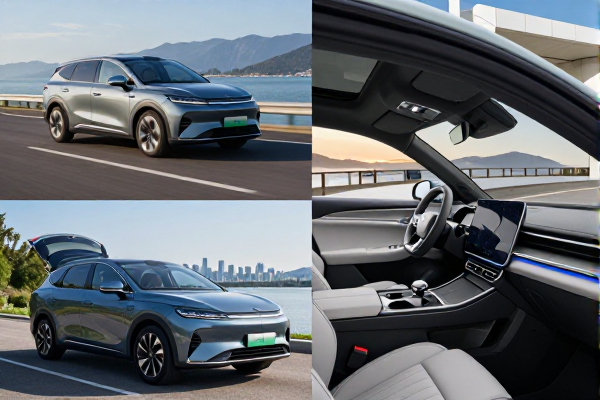
For automakers and dealerships, the implications are significant. A wave of newly interested first-time buyers would boost demand for entry-level cars, compact SUVs, and affordable EVs. It would also change how stores are designed. If Gen Alpha values the in-person test drive, dealers should resist the urge to cut the experience short in the name of efficiency—it may be the very step that closes the sale.
Driving schools, insurance companies, ride-hailing firms, and even city planners will all have a stake in whether Gen Alpha's enthusiasm becomes a longer-term shift in American mobility. One survey can't guarantee the future, but it does bust a persistent myth: that the youngest Americans have no interest in driving. The numbers say otherwise—and they say it with a hand on the wheel, in the front seat, on the road.