Browse

Log in / Register
 Share

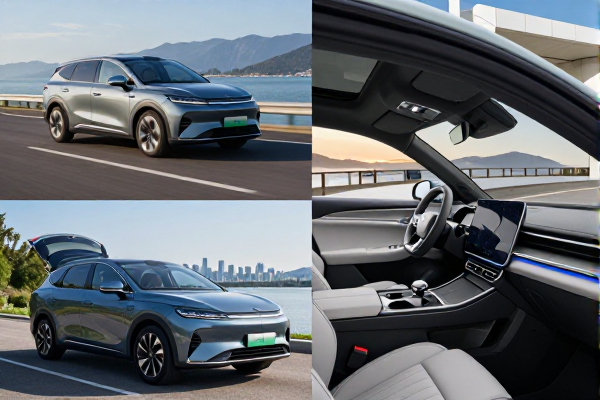
A $6 coffee might be a small daily splurge, but as a fuel budget it is surprisingly revealing. According to a new cost-per-mile breakdown from smart-charging company Ohme, that same $6 can cover roughly 30 miles in a typical gasoline car, about 150 miles in an EV charged at standard home electricity rates, and as many as 300 miles when that EV is charged on a cheap overnight plan. The figures, adapted here for U.S. drivers as of June 30, 2026, show that the cheapest fuel is not the one advertised at the pump or on a utility bill—it's the one that produces the lowest cost per mile.
The gas side of the comparison
Start with a gasoline vehicle that gets around 25 miles per gallon and fuel priced at $4.50 a gallon. That works out to about 18 cents per mile. A $6 coffee therefore buys 1.33 gallons, which is just over 33 miles of driving at 25 mpg. Not every U.S. driver pays $4.50 a gallon, but this is a fair middle-ground scenario for a crossover or a sedan with average fuel economy.
The electric side can be 5 to 10 times cheaper
The electric side of Ohme's example assumes an EV that averages 4 miles per kilowatt-hour. At a typical U.S. residential electricity rate of roughly 16 cents per kWh, the cost per mile is about 4 cents. The same $6 then covers around 150 miles. If the utility offers an off-peak rate near 8 cents per kWh, the cost drops to 2 cents per mile, and that $6 gets about 300 miles.
The important detail is that the car itself has not changed. The only variable is the price of the electricity. So the range-per-dollar difference is not a knock against gasoline engines or a victory lap for EV motors—it is a reflection of how much a driver pays for the energy going into the vehicle.
What that means over a year
Run the numbers over 6,800 miles, which is close to the annual mileage of many commuters, and the gap gets much larger than one coffee.
That adds up to a $952 difference between gasoline and a normally priced EV charge, and a $1,088 difference when the cheaper off-peak plan is available. Even drivers who never touch a smart tariff still come out well ahead on energy cost per mile.
Use dollars per mile, not price per gallon or kWh
Comparing a gallon of gasoline to a kilowatt-hour is an apples-to-oranges exercise. The clearer metric is dollars per mile. In the scenario above, the gas car costs about 18 cents per mile, the EV on a standard rate costs about 4 cents per mile, and the EV on an off-peak plan costs about 2 cents per mile.
This is why a coffee can take a gasoline driver only down the block while taking an EV driver across town or across the region. It also explains why the word "savings" is sometimes misleading: the cheapest EV scenario depends on a combination of home charging, a rate plan that rewards overnight charging, and a car that delivers reasonable kilowatt-hour efficiency.
Not every EV charge is cheap
The 300-mile result assumes home charging, a place to park and plug in, and a utility plan that actually offers lower overnight rates. Many U.S. utilities have time-of-use tariffs, but they are not universal. Public DC fast charging often costs 40 to 50 cents per kWh, which puts the same $6 at only 48 to 60 miles. That is still ahead of gasoline in this example, but nowhere near the 300-mile headline.
Efficiency also varies with conditions. Four miles per kWh is a realistic real-world average for many EVs, not a guarantee. Highway speeds, cold weather, and battery preconditioning can drop that to 3.5 miles per kWh, which increases the cost per mile slightly. Even then, the EV usually remains cheaper to fuel than a gasoline car, but the margin narrows.
The bottom line
The coffee budget is fixed. How far it takes you depends on what you drive, where you charge, and which rate plan you are on. The cheap-electricity scenario is not available to everyone, but for drivers who can set up home charging and shift to overnight power, it remains one of the biggest per-mile discounts in personal transportation.
None of this accounts for the higher purchase price of an EV, insurance, maintenance, or the cost of installing a home charger. But on a pure energy basis, the choice is clear: the same $6 either gives you a short errand run in a gas car or a full day's driving in an efficient EV on an off-peak rate.