Browse

Log in / Register
 Share

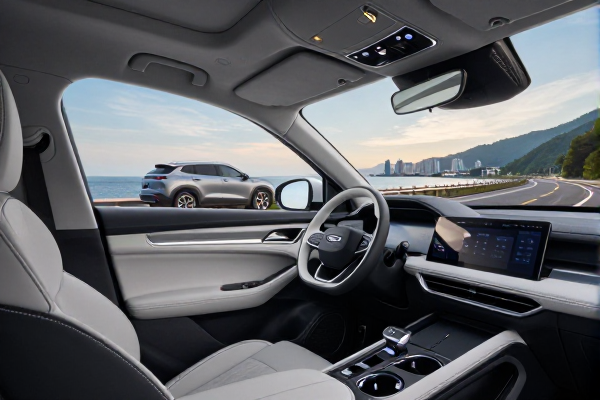
April 6, 2025 — Solid-state batteries, long hailed as the next frontier for electric vehicles, have finally inched closer to production reality. Geely, the Chinese automotive conglomerate, announced plans to begin pilot deployment of its solid-state battery technology in 2027, with real-world validation already underway. The company claims a pack-level energy density of up to 500 Wh/kg, which could deliver over 1,000 kilometers (621 miles) of range on a single charge—a figure that rivals the reach of gasoline-powered vehicles.
This announcement marks a significant step for an industry accustomed to perpetual promises of breakthrough batteries that never quite materialize. Geely’s timeline puts it alongside key players like Toyota, CATL, and Samsung SDI, all of which have targeted the late 2020s for commercial solid-state rollouts. The key difference: Geely is already testing its cells in vehicles, suggesting a faster path to mass production.
The headline figure of 500 Wh/kg is particularly striking if achieved at the pack level, as Geely’s statements suggest. Most current lithium-ion packs hover around 150–200 Wh/kg, while top-tier cells like Geely’s own Golden Brick liquid-electrolyte batteries reach about 250 Wh/kg at the cell level. To achieve 500 Wh/kg at the pack level would require substantial improvements in both cell chemistry and structural integration.
Doubling energy density would allow automakers to either pack the same range into a smaller, lighter battery—freeing up space and cutting weight—or cram enough energy to exceed 600 miles into a footprint similar to current packs. For the U.S. market, where long-distance driving and towing demands are common, such a range boost could finally eliminate “range anxiety” as a barrier to EV adoption.
Another potential advantage of Geely’s solid-state design is longevity. According to reports, the battery could last up to 1 million kilometers (about 621,000 miles). That’s more than double the typical warranty of today’s EV batteries and edges close to the life of a modern internal combustion engine.
If real-world durability matches those claims, it would drastically reduce total cost of ownership—a key concern for fleet operators and individual buyers alike. It could also open the door for second-life applications, such as grid storage, where batteries with 70–80% remaining capacity are still useful.
Geely’s 2027 pilot is not an end point but a start. The company will need to prove that its solid-state cells can survive the rigors of daily driving—temperature extremes, rapid charging, and mechanical stress—without the dendrite formation or electrolyte degradation that have plagued earlier attempts.
On the competitive front, Toyota has stated it will introduce solid-state batteries in a limited-production hybrid by 2025, with full EV application likely around 2027–2028. CATL, the world’s largest battery maker, recently demonstrated a condensed matter battery with 500 Wh/kg but has not disclosed a production timeline for solid-state. Samsung SDI aims to begin mass production of solid-state cells in 2027.
Geely’s edge may lie in its vertical integration: the company owns its battery subsidiary, Geely Battery, and has deep ties to suppliers like LG Energy Solution and CATL through joint ventures. This gives it a supply chain advantage that pure-play automakers lack.
For American consumers, Geely’s announcement is a reminder that the solid-state race is global. While Geely may not sell vehicles under its own name in the U.S., it owns Volvo, Polestar, and a stake in Smart, all of which operate in North America. Future Volvo or Polestar models could be among the first to feature solid-state packs.
Moreover, the U.S. Department of Energy has invested heavily in domestic solid-state research through its Battery500 initiative and other programs. If Geely’s technology proves viable, it could pressure American automakers and battery startups to accelerate their own timelines.
Geely has moved the solid-state battery conversation from “when” to “how soon.” With a clear target of 500 Wh/kg, 621-mile range, and million-kilometer lifespan, the company is betting that real-world validation will convince the industry that solid-state is no longer a laboratory curiosity. The next two years will be critical as pilot data emerges and competitors scramble to match or beat the timeline.
For now, range anxiety and longevity concerns may finally have a credible answer—one that is not just around the corner, but already rolling onto the road.