Browse

Log in / Register
 Share

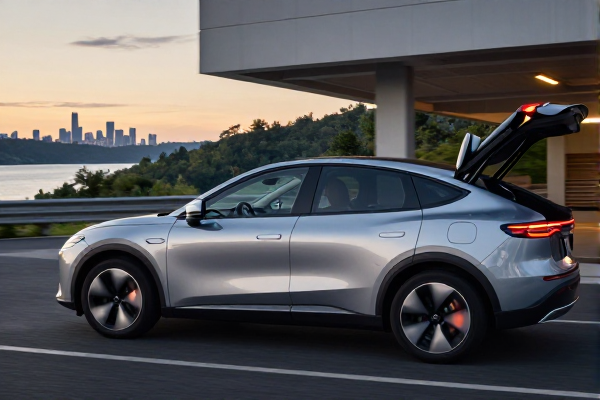
July 16, 2026 — Geely has locked in full details of the Monjaro mid-size plug-in hybrid SUV ahead of its Australian launch in the first half of 2027. Shown for the first time in right-hand drive, the refreshed GEA-Evo model will arrive Down Under exclusively as a PHEV, in three trim levels with front- or all-wheel drive. It packs a 40kWh battery, delivers 170km of WLTP electric range, and makes up to 250kW and 667Nm in overseas tune. Here's everything we know — and why it deserves attention well beyond Australia.
Geely isn't tiptoeing into the family-SUV segment. The Monjaro is a five-seat mid-sizer that will slot above the existing Starray EM-i as the more premium offering in Geely Australia's lineup — and its competitive set is obvious. This is a direct challenge to the Toyota RAV4, Hyundai Tucson and Kia Sportage, the three dominant players in the segment.
What separates the Monjaro from those mainstream rivals isn't just its equipment list; it's the size of its battery. The 40kWh pack is more than double the Starray's, and roughly three times the capacity of the RAV4 Prime's battery. That's not an incremental update. It's a deliberate strategy to redefine what a plug-in hybrid should be.
Every Australian Monjaro EM-i pairs the 40kWh pack with a 1.5-litre turbocharged four-cylinder petrol engine. Geely quotes a 170km WLTP electric driving range — the equivalent of about 106 miles in US terms — with overseas output of up to 250kW (335 horsepower) and 667Nm (492 pound-feet).
Put those numbers next to the segment leaders and the gap is striking. The Toyota RAV4 Prime generates 302 hp from an 18.1kWh pack and offers about 42 miles of EPA electric range. The Hyundai Tucson PHEV and Kia Sportage PHEV share a 13.8kWh pack and roughly 33-34 miles of range. Even after applying the usual WLTP-to-EPA discount, the Monjaro would more than double the real-world EV range of any mainstream plug-in SUV sold today.
Australian power figures aren't confirmed yet, but if the overseas number carries over unchanged, the Monjaro would also outmuscle the RAV4 Prime on combined system output — and it would do so with a conventional four-cylinder engine, not a high-strung performance setup.
Geely also hasn't detailed charging specifications for the Australian market. Given the battery size, a decent DC charging rate will be important for buyers who want to treat the Monjaro as a pure EV for daily commutes.
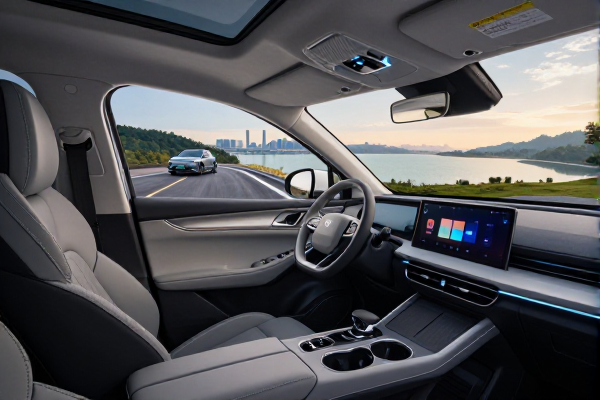
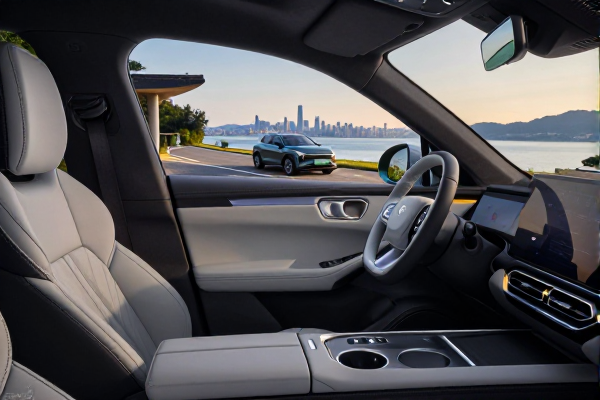
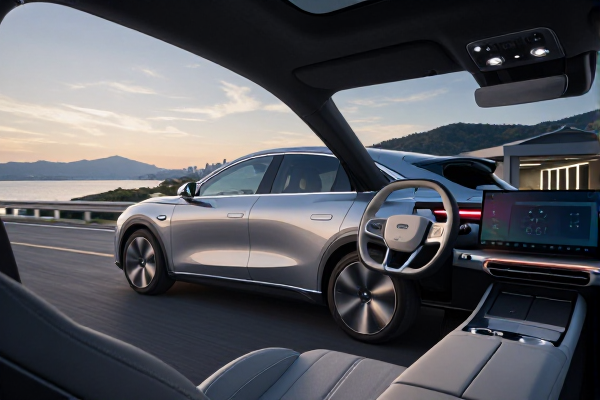
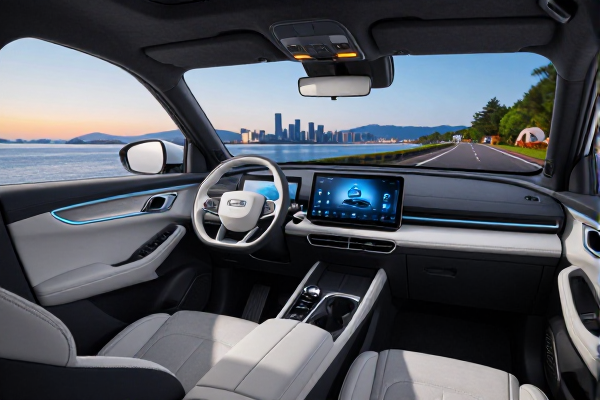
The Monjaro's cabin is clearly designed to impress. Standard fitment includes a 15.4-inch multimedia touchscreen, a 25.6-inch head-up display, a large digital instrument cluster and a power tailgate. Boot capacity is larger than the Starray's, which should satisfy family buyers.
Higher trim levels are expected to bring 20-inch alloy wheels, adaptive damping suspension, massage front seats with heating and ventilation, and heated rear seats. That's a feature set that sits well above the RAV4's — and closer to luxury-brand territory.
The Monjaro also supports vehicle-to-load (V2L) and vehicle-to-vehicle (V2V) power output at up to 6.6kW. That means it can run power tools, camping gear or household appliances — or even top up another electric vehicle. It's the kind of practical capability that's becoming a genuine deciding factor for PHEV buyers.
Geely says the Monjaro is equipped with the group's latest safety technology, including seven airbags and a 'star armour' chassis cage for crash protection, plus a full array of active driver-assistance systems. Five exterior colors and three interior color schemes will be on offer.
Geely won't confirm local pricing until closer to launch, but the Monjaro's positioning is clear: it will cost more than the Starray, which starts at $37,490 AUD and tops out at $44,990. That places the Monjaro squarely in RAV4, Tucson and Sportage territory — and near the plug-in versions of those cars in the Australian market.
Geely's line that the Monjaro will be "competitively priced considering the kit" suggests the brand is aiming for a value-for-money position rather than a premium price. If it lands near the RAV4's non-hybrid price points but undercuts PHEV competitors, it could be one of the largest disruptions in the segment since the Kia Sportage was redesigned.
Geely's passenger-car brand doesn't sell in the United States. Tariffs, regulatory hurdles and brand awareness all stand in the way, and there's no official commitment to enter. But the Monjaro deserves attention from American buyers and industry analysts for three reasons.
First, the technology isn't isolated. Zhejiang Geely Holding controls Volvo Cars, and the GEA-Evo architecture and EM-i powertrain family are part of the group's global electrification strategy. Advancements tested in Australia often ripple across other brands and markets — and a platform this capable doesn't stay exclusive for long.
Second, the Monjaro is a direct rebuttal to the "compliance PHEV" approach that has dominated the segment. Most automakers fit the smallest possible battery to meet regulations and collect credits. Geely is doing the opposite: fitting the largest battery that makes sense, so the car functions as an EV for daily life with an engine for backup. If that message lands with Australian buyers, it will be studied closely by every competitor with an eye on the US market.
Third, there's the i-HEV plugless hybrid system. Developed with Horse Powertrain — the Renault-Geely joint venture — the i-HEV uses a new ultra-lean-burning 1.5-litre petrol hybrid setup that Geely claims is more efficient than Toyota's hybrid system. The brand says the Emgrand sedan can consume as low as 2.22L/100km, which translates to roughly 106 mpg US. That's a direct challenge to Toyota's hybrid dominance, and these are exactly the kind of efficiency claims that catch regulators' and analysts' attention.
Geely Australia CEO Alex Gu told CarsGuide in May that he was pushing for Australia to be among the first markets to receive the i-HEV technology, though nothing has been confirmed. US availability hasn't been publicly discussed.
The Monjaro is one of three new models joining Geely's Australian lineup in 2027, effectively doubling its local range. The Emgrand sedan — a Toyota Camry rival — also arrives in the first half of the year as an EM-i PHEV in two variants, using an 18.4kWh battery for a WLTP electric range of more than 80km. It pairs a 1.5-litre engine with a gearbox-mounted electric motor for more than 180kW and 250Nm.
After the Emgrand, Monjaro and the so-called Battleship 700 join the lineup, Geely Australia will span six models: the EX2 hatchback, the EX5 electric mid-sizer, the Starray PHEV, and the three newcomers. That's an aggressive expansion for a brand that has barely established itself in the region — and it signals that Geely considers 2027 its year to go mainstream.
Expect more details on Australian pricing, local specifications and charging capabilities closer to the Monjaro's launch in the first half of 2027. For US buyers, the Monjaro is less about what's happening on the other side of the Pacific and more about what it previews. A mainstream PHEV with three times the battery capacity of its rivals, a plugless hybrid system that claims to beat Toyota at its own game, and a parent company with American ties through Volvo — that's a combination worth watching no matter which market you're in.