Browse

Log in / Register
 Share

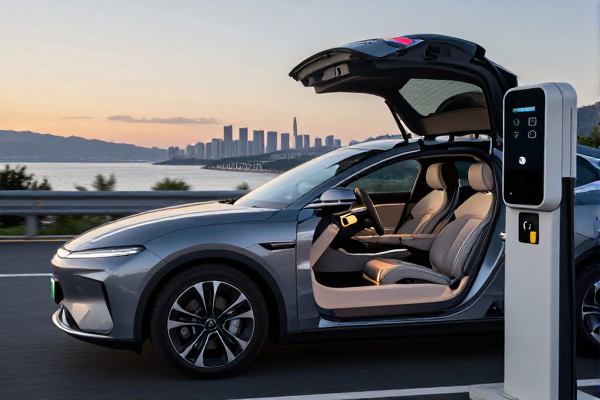
As of March 15, 2026, America's EV charging networks are growing fast — and so is the tension when a gas-powered car parks in an "EV ONLY" spot. The practice, known as ICEing, has become a flashpoint in the electric transition. But the legal question — "Is it actually a ticket?" — depends entirely on location. In roughly a dozen states, yes. In many cities, also yes. Everywhere else? It's complicated.
The stakes are easy to quantify. The U.S. Department of Energy currently tracks more than 81,000 public EV charging stations across the country, housing over 254,500 individual ports. Yet the agency's own projections indicate the nation will need roughly 28 million ports by 2030 to keep pace with vehicle electrification.
That enormous supply-and-demand gap means an occupied charger — particularly one occupied by a car that isn't plugged in — creates tangible harm. EV drivers with low batteries may face hours-long waits, missed commitments, or even a tow call. Automaker research and charging-network data consistently show that range anxiety remains one of the top deterrents to buying an EV. A blocked stall, in other words, isn't just an inconvenience; it's a direct drag on EV adoption.
At the state level, anti-ICEing statutes exist but remain the exception. Rhode Island, Maryland, Virginia, North Dakota, Colorado, Massachusetts, Arizona, Illinois, Oregon, Washington, Hawaii, and Florida all permit fines for gas vehicles occupying EV stalls. Penalties vary significantly — some states classify the offense as a standard parking violation, while others have created dedicated codes for charging-space abuse.
California is the strictest. There, a gas car in an EV-only space can be towed, not just cited. Enforcement is overwhelmingly complaint-based, meaning many violators never see a ticket unless an EV owner picks up the phone. Another wrinkle: several of these states require signage to meet specific dimension and wording standards. A fading "please don't park here" note taped to a pole carries no legal weight.
For every state with crisp rules, there's another with murky ones. Connecticut, for example, includes EV charging restrictions in its official statutes but attaches no practical enforcement mechanism. Technically actionable, practically unpunishable.
Municipal codes add another layer even where state law already speaks. Seattle independently tickets gas cars in EV spots, reinforcing Washington's existing statute. The legal floor is set by the state, but the ceiling can be raised by a city council at any time. The consequence is that two parking lots five miles apart can have entirely different enforcement realities.
Hybrid vehicles have never fit neatly into the EV-parking debate. Nevada, New Hampshire, Massachusetts, Connecticut, and Illinois all include hybrids within their legal definitions of electric or zero-emission vehicles. Other states omit them entirely, leaving patrol officers to make judgment calls.
Most jurisdictions that enforce these laws settle the question the same way: Is the vehicle plugged in? A plug-in hybrid actively charging is, in nearly every state, in compliance. The same hybrid parked unplugged during a coffee run becomes indistinguishable from a gas sedan in an officer's eyes — and just as citable.
Across the entire patchwork, one standard recurs: a vehicle must be actively charging to occupy an EV charging space. That applies to EVs too. In metros like San Francisco and Los Angeles, idle fees for fully charged EVs still sitting at a stall can outpace an ICEing ticket. Several major charging networks now automatically bill occupancy time after a charging session ends, a policy designed to keep stalls rotating.
This "plugged in only" rule also gives private property owners a powerful enforcement tool. On private land, contract law does the heavy lifting. Malls, apartment complexes, and corporate campuses can legally tow any unplugged vehicle from an EV stall — even in states without anti-ICEing statutes — as long as the rule is clearly posted at the property entrance. That's why tow-company phone numbers increasingly share space on EV-spot signs.
Technology is rapidly reshaping how these rules are enforced. Several parking management firms now operate camera systems that detect unplugged vehicles occupying EV stalls and issue private citations automatically — a model common in Europe that is now spreading through U.S. garages from Texas to the Northeast. Driver reporting features on apps like PlugShare and ChargePoint create real-time data trails that property owners are beginning to act on.
None of these enforcement methods require a state anti-ICEing law. In practice, a gas car parked in an EV spot at a shopping center in Alabama — a state with no such statute — can still legally be impounded based on posted private-parking rules.
For gas-car owners, the only reliably safe answer is simple: don't park there. For hybrid drivers, the minimum standard is to actually connect to the charger and manage the session. For EV owners, courtesy cuts the other way — unplug and move once charging is complete, because a finished EV occupying a stall frustrates other drivers just as quickly as a gas car does.
The broader trajectory is clear. Anti-ICEing enforcement is expanding, not retreating; state-level bills and stricter municipal codes continue to advance. And if the evolution of accessible parking enforcement is any guide — where advocacy gradually led to meaningful penalties — patience with blocked chargers is running out across the country.