Browse

Log in / Register
 Share
Share
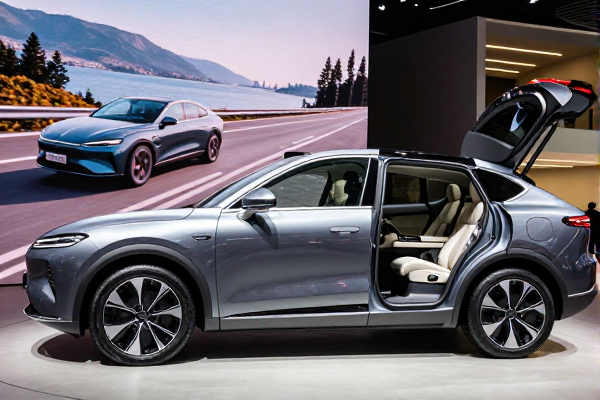
The Paris Motor Show, which opened on the 12th, has become a pressure cooker for the global car industry. As of April 26, 2026, the message from the exhibition halls is clear: the electric vehicle market is no longer a promising blue ocean but a crowded, price-sensitive "red ocean" where every automaker is forced to compete on cost, speed and software.
One of the most striking sights is a retro-styled city car. Citroën, the French brand owned by Stellantis, has brought back the spirit of the legendary 2CV—the utilitarian "people's car" that shaped postwar mobility in France. The modern reinterpretation features round headlights, a curving body and patterned seats that recall the original's charm. Its price, however, is what made the booth feel relevant for today: about €15,000, or some $16,000. That's the kind of sticker price that entry-level EV buyers in the U.S. and Europe have been waiting for.
Beneath the nostalgia, Stellantis is making a more practical change. The company has been working with Chinese automaker Leapmotor to create a small electric-vehicle platform in Italy. The result won't be seen on the road until around 2028, but the strategy is already visible: instead of nursing a multi-year development cycle, Stellantis wants to shorten the journey from sketch to showroom to two years. Chief Technology Officer Ned Curic has said the company is absorbing Chinese automakers' rapid development know-how. It's an admission that the old rulebook is too slow for an electricity-first era.
Volkswagen Group is also attacking cost with a different playbook. Four models—ID. Polo, ID. Cross, CUPRA Raval and Skoda Epiq—may look different, but share about 80% of their components and underlying architecture. This is the classic automotive tactic of teeing off a single modular platform into several brands, but the scale is more aggressive. Volkswagen Group needs volume to amortize its software and battery investments, and this shared approach lowers engineering, procurement and assembly costs while preserving each brand's style.
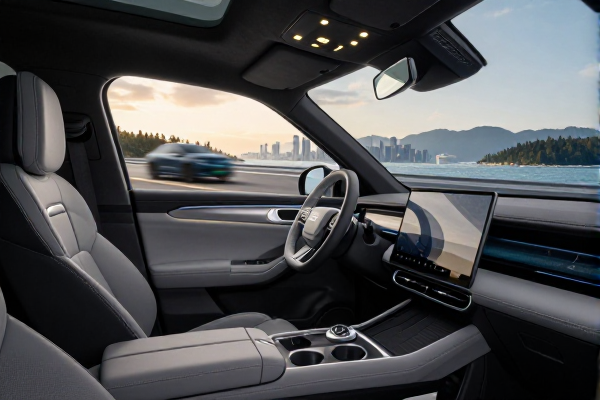
Renault countered with a family-oriented concept. The E-Space Concept is a six-seat electric MPV with second-row seats that rotate 180 degrees, turning the cabin into a flexible living or meeting area. It also features Level 2++ driver assistance, meaning the driver can take hands off in some limited conditions. Production is planned for 2028 at the Busan plant in South Korea. Renault's approach is to make the EV cabin more useful, rather than just extending range and speed.
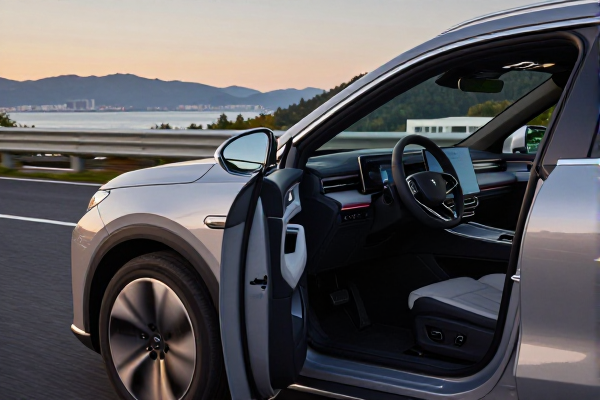
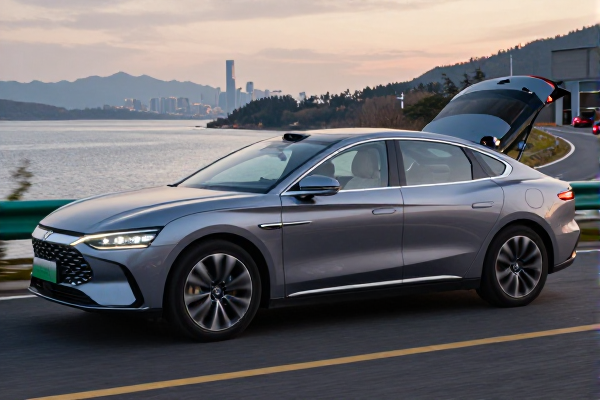
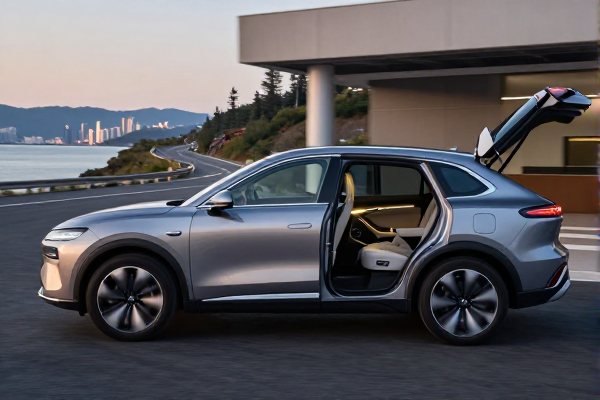
Chinese giant BYD brought another weapon: speed of charging. The Atto 8 large SUV is equipped with an ultra-high-power charging system that, BYD claims, replenishes the battery from 10% to 97% in nine minutes. A conventional EV can take 30 minutes to an hour for a similar charge, depending on the station. If real-world performance matches the claims, recharging will become as routine as a gasoline fill-up. This could remove the range-anxiety argument that still pushes many U.S. buyers toward hybrids and combustion cars.
Tesla took the opposite route and let software do the talking. Its Cybercab, a compact two-seat vehicle, has no steering wheel, accelerator or brake pedals. The concept is a robotaxi by design: passengers dial a destination and the system does the rest. Tesla's long-standing thesis is that cars will evolve from owned assets to on-demand transport services, and the Cybercab is its most tangible expression yet. The company faces significant regulatory hurdles, but the Paris display suggests it wants to be around for the long game.
Hyundai Motor handed out a mix of conventional and futuristic news. It chose the Paris show for the global premiere of the BAYON small SUV, and it presented a new Tucson with the Gleo AI voice assistant, a feature designed to keep drivers connected without distracting them. More telling was the company's confirmation that its IONIQ 5 is being integrated with Waymo's autonomous driving system. Hyundai is already working with Waymo in the U.S., but executives have hinted at expanding the partnership beyond America. Kia, meanwhile, reinforced its European lineup with the Seltos crossover and K4 hybrids, a sign that Korean brands want to serve both electrified-and-EV-only households.
For American readers, these Paris debuts may seem distant, but they point to the next chapter of the U.S. EV market. After a few years of aggressive price cuts, the average transaction price of a new EV in the U.S. has fallen, yet affordability remains the top concern. A $16,000 concept car is exactly the kind of shock to the system that established automakers need to prepare for, especially with Chinese brands already eyeing U.S. distribution channels. The takeaway from Paris is that the competitive landscape has shifted from "who has the best battery" to "who can make electrification cheap enough for everyone."
From a policy perspective, the Paris show reflects a European auto sector that is fighting to keep its industrial base while Chinese competition increases. The European Union is considering tariffs on Chinese-made EVs, but even with trade barriers, the short-term effect has been to push Chinese automakers to localize production. For American manufacturers, this is a reminder that no market is protected from global competition for long.
The show also illustrates a broader theme: automakers can no longer rely on their legacy brands or technologies. They are borrowing platforms from Chinese partners, shrinking development cycles, and betting on robotaxi services that don't exist yet. While some of these concepts may not reach production exactly as shown, the strategic direction is undeniable. Speed, scale and price will define the winners in this red ocean, and the battle lines are now clearly visible.