Browse

Log in / Register
 Share
Share
March 2024 - A groundbreaking study on electric vehicle battery longevity has challenged widespread concerns about rapid capacity loss, revealing that most EVs retain over 90% of their original battery health even after 100,000 kilometers of driving. The research, analyzing data from thousands of real-world cars, provides substantial evidence that modern battery technology is far more resilient than previously assumed.
Conducted by Swedish automotive marketplace Carla, the analysis examined battery performance across approximately 10,000 electric vehicles in Sweden between 2022 and 2026. The findings offer a crucial reality check for potential EV buyers and current owners worried about long-term value and performance. Contrary to popular fears, the data suggests battery degradation is a gradual, manageable process rather than a swift deterioration.
The leaderboard for battery health preservation presented some unexpected results. After the initial 10,000 km, vehicles from Kia and Hyundai held the top spots, preserving 97.25% and approximately 95.4% of their battery capacity, respectively. This strong showing highlights the competitive edge of these brands in battery management system (BMS) technology and cell quality.
Premium European automakers also performed admirably. Mercedes-Benz and BMW models demonstrated robust battery health, maintaining around 95% and 94.5% capacity. Interestingly, Ford vehicles placed ahead of Geely Group's Volvo and Polestar, suggesting that a brand's premium status does not automatically guarantee superior battery longevity.
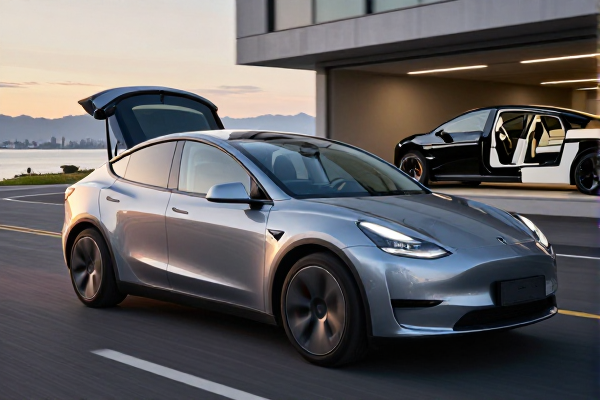
Perhaps the most talked-about finding was Tesla's placement. Often cited for impressive battery metrics in other analyses, Tesla ranked 12th in this particular study, with its cars retaining 90.2% battery health. This variance underscores how real-world conditions, regional specifications, and battery sourcing can influence outcomes compared to controlled laboratory tests or manufacturer claims.
A significant insight from the report is the negligible drop in battery health between the 50,000 km and 100,000 km marks. The average degradation was just over 2%, indicating that the most significant capacity loss occurs very early in an EV's life, after which the decline curve flattens considerably. This pattern is reassuring for the long-term economics of electric vehicle ownership.
Delving into specific models, the Kia Niro EV emerged as the champion, exhibiting the least overall degradation. The Hyundai Kona Electric and Kia EV6 followed closely, showcasing the strength of Korean EV engineering. The Volvo XC40 Recharge and Polestar 2 also ranked highly, confirming that Geely Group's electrification strategy is yielding durable products.
The study crucially notes that its findings are not directly transferable to all global markets. Vehicles sold in Sweden are often European-spec models with battery packs sourced from different suppliers than those destined for North America or Asia. Climate is another major factor; Sweden's cooler temperatures are generally gentler on batteries compared to the extreme heat found in regions like the American Southwest or Australia.
Beyond brand rankings, the research provided valuable analysis on battery chemistries and suppliers. By comparing different cells within the same Tesla Model 3 platform, it isolated the impact of the battery itself. Cells from China's CATL, predominantly Lithium Iron Phosphate (LFP) chemistry, showed the highest average health (93.3%), followed by LG Chem cells (91.5%). Panasonic's NMC batteries ranked lower.
This chemistry comparison holds particular relevance for the U.S. market. LFP batteries, known for their longevity, safety, and cost-effectiveness, are becoming increasingly common in standard-range models. Tesla, Ford, and others are rapidly adopting LFP technology, which suggests future studies in the U.S. may show even better degradation profiles than this Swedish data.
The study intentionally excludes BYD, which has a minimal presence in Sweden. This omission is significant because BYD's proprietary "Blade" LFP batteries are supplied to several automakers and are a growing force in global markets. Their absence indicates the rankings represent a snapshot of the European market landscape, not the global battery technology frontier.
For American consumers, the core takeaway is profoundly positive. The narrative of catastrophic battery failure is largely a relic of the early EV era, dominated by air-cooled, first-generation batteries. Today, nearly all new EVs feature sophisticated liquid-cooled thermal management systems and advanced cell chemistry, contributing to exceptional durability.
Supporting this optimistic view is data closer to home. While not part of the Carla study, reports from U.S.-based telematics firms and insurers are beginning to echo these findings, showing American-driven EVs are also achieving excellent long-term battery health. The fears of a steep, expensive depreciation cliff due to battery decay are increasingly unsupported by real-world evidence.
Ultimately, this research confirms that battery degradation should be a minor concern for most modern EV buyers. The technology has matured to a point where the battery pack is one of the most durable components of the vehicle. The focus for consumers can now confidently shift from "if" the battery will last to how to optimize its lifespan through intelligent charging habits and proper care.