Browse

Log in / Register
 Share

July 15, 2025 – The global push to run more of the economy on electricity is no longer just a climate goal. It’s becoming a hard-nosed test of affordability, industrial competitiveness, and energy security. For resource-rich Kazakhstan, that test is already exposing cracks in a system built for the fossil-fuel era.
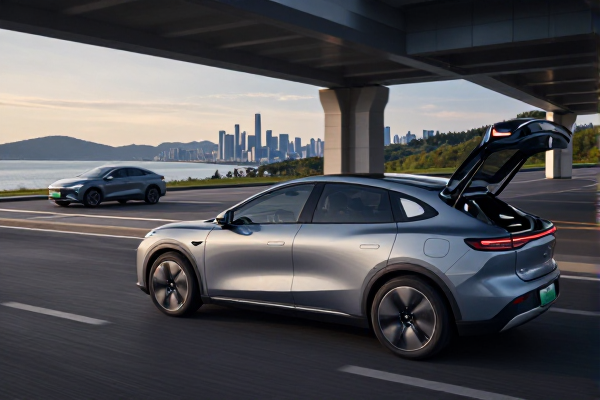
Electricity currently supplies about 20% of the world’s final energy use, according to the World Resources Institute (WRI). In China, that share is nearing 30%; the United States sits at 22%, and the European Union at 21%. Meanwhile, the International Energy Agency (IEA) reports that global electric car sales topped 20 million in 2025, meaning one in four new cars sold worldwide runs on batteries. These are not short-term spikes—they signal a structural shift away from burning fossil fuels directly toward electrified transport, heating, and industrial processes.
The efficiency gains are staggering. Internal combustion engines waste up to 80% of fuel energy as heat, while electric motors convert roughly 80% of electrical energy into motion. Heat pumps can deliver three to four units of heat for every unit of electricity. That arithmetic means an economy can use more electricity and still cut total energy consumption. WRI cites a study showing that fully electrifying a typical European household’s heating and transport could slash its energy bill by more than half.
Yet the transition brings a new bottleneck: the grid. Electric vehicles, data centers, factories, and cooling systems are piling demand onto networks that in many countries are already strained. The next phase of electrification, WRI’s Clem Perry notes, requires not just more generation but smarter consumption. Charging cars overnight, pre-heating buildings, and using batteries to absorb peak loads can squeeze far more value out of existing infrastructure—without asking consumers to change routines.
For Kazakhstan, the stakes are high. The country is pushing to expand industrial output, digital infrastructure, and data centers—all heavy electricity users. Economist Ruslan Sultanov, who writes the Tengenomika channel, argues the real measure isn’t total kilowatt-hours produced but economic output per megawatt. “The question is how much added value each megawatt can create,” he says. That means grid reliability, storage, and the ability to quickly connect new industrial consumers are becoming as important as building new power plants.
What’s often overlooked is Kazakhstan’s unique position in the electrification supply chain. The country is the world’s largest uranium producer, a top-ten source of copper, and holds significant reserves of lithium, rare earths, and other critical minerals needed for batteries, motors, and grid equipment. In early 2025, the U.S. and Kazakhstan signed a strategic minerals agreement aimed at diversifying supply chains away from China. For Kazakhstan, this creates a dual opportunity: supply the raw materials for global electrification while simultaneously electrifying its own economy more efficiently.
But the limits are real. Steelmaking, aviation, shipping, and petrochemicals remain tough to electrify directly. Hydrogen and synthetic fuels may be better fits there. As Perry puts it, the goal isn’t “electrify everything” regardless of cost, but to pick the applications where electricity delivers the highest economic and efficiency returns. For Kazakhstan, that means focusing on urban transport, industrial processes, buildings, and digital infrastructure first.
The global energy transition is thus entering a more nuanced phase. The old question was how to replace fossil fuels with clean power. The new question is how to build an economy that uses electricity more productively—connecting demand faster, managing peaks smarter, and turning every megawatt into more value. Sultanov’s point hits home: Kazakhstan’s success in the electrified economy won’t be measured by how much power it generates, but by how much economic weight it can put behind each unit.