Browse

Log in / Register
 Share

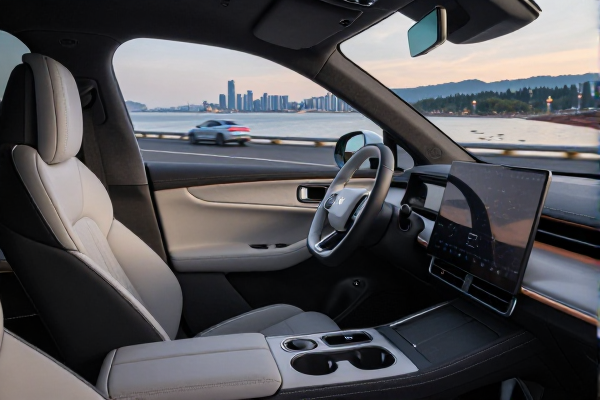
A recent drunk driving case in eastern China has sparked debate over whether modern vehicle technology can influence criminal intent. On March 20, 2025, a court in Jinyun County, Zhejiang Province, rejected a driver's unusual argument: that his car's automatic call to 110 (China's 911 equivalent) amounted to voluntary surrender, entitling him to a lighter punishment.
The driver, identified only by his surname Zhou, was found asleep behind the wheel with the engine running. Police arrived after the automaker's emergency response center—unable to reach him through repeated system alerts—dialed police. A blood test revealed Zhou’s alcohol level at 186 mg per 100 mL, more than double China’s legal limit of 80 mg/100 mL (which corresponds to a 0.08% blood alcohol concentration, the same as in most U.S. states). Additionally, records showed Zhou had a prior DUI conviction in 2016.
Zhou’s defense hinged on the claim that because the vehicle’s built-in assistance system triggered the police contact, he should be considered to have surrendered himself. However, the court ruled that the call was initiated passively by the automaker’s rescue center after Zhou lost effective control of the vehicle. The judges stated that the call was not made at Zhou’s request or because he intended to turn himself in.
Legal experts in the United States say the same reasoning would likely prevail in American courts. "Voluntary surrender requires an affirmative act by the defendant showing a willingness to submit to authorities," explains David Carter, a DUI defense attorney in Los Angeles. "If a car’s automatic telematics system—like OnStar or Ford’s 911 Assist—calls emergency services without the driver’s conscious intention, it cannot be seen as a voluntary act by the driver. In fact, many state courts have held that a driver who is unconscious or incapacitated cannot form the intent required for a surrender."
The incident raises broader questions about accountability as vehicles become more autonomous. Zhou had engaged the driving-assistance function after drinking at a local bar, then pulled over when drowsy. His car, however, remained powered on, and the automated safety systems continued monitoring. When he failed to respond to warnings for an extended period, the automaker’s emergency center—likely similar to General Motors’ OnStar or BMW’s Intelligent Emergency Call—placed the call to police.
This is not the first time a vehicle’s automatic call has led to a DUI arrest; in the U.S., OnStar has assisted police in locating drunk drivers multiple times. Yet the novelty of Zhou’s surrender claim underscores how quickly drivers may try to exploit emerging technology. “As cars become smarter, defendants will test whether features like automatic collision notification or driver-monitoring systems can be reframed as evidence of cooperation,” says Carter.
China’s drunk driving laws have become stricter in recent years, with penalties including detention, fines, and license suspension. The court sentenced Zhou to one month of criminal detention and a fine of 2,000 yuan (about $300). The sentence is consistent with typical first-offense DUI penalties in China, though Zhou’s prior conviction could have led to harsher treatment.
The case also highlights differences in how Chinese and American courts handle DUI defenses. In the U.S., some states allow the “necessity defense” for DUIs (e.g., driving drunk to escape a threat), but voluntary surrender is rarely successful unless the driver physically walks into a police station or calls 911 themselves. The passive nature of Zhou’s call made his argument even weaker.
Global car manufacturers continue to expand emergency response systems. In the U.S., employers and regulators are pushing for mandatory alcohol ignition interlocks in new cars, but voluntary systems like Tesla’s “Autopilot” or Ford’s “BlueCruise” do not yet disable a vehicle if the driver is drunk. Zhou’s car likely had a driving-assistance feature that did not require a sober driver—only that the driver stays alert. When he fell asleep, the system defaulted to emergency contacts.
For now, the court’s decision reaffirms that technology cannot retroactively create an intent to surrender. As one legal observer noted, “You can’t have your car do the right thing and then take the credit yourself.”