Browse

Log in / Register
 Share


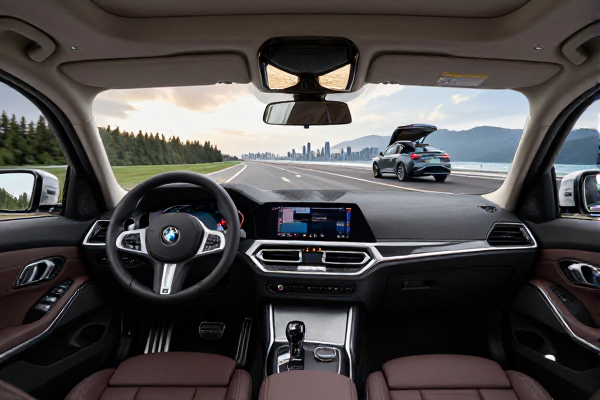
On a quiet Tuesday morning in Washington, D.C., a driverless sedan glides through a left turn near Dupont Circle. The steering wheel spins freely, guided by lidar and data streams from a distant server farm. Inside, a safety monitor sits with arms folded, watching the machine make decisions that would have required a human’s split-second judgment just five years ago. Outside, a bicycle courier swerves around a delivery truck, and a tourist steps off the curb without looking—old habits of a city that still breathes with human unpredictability.
But March 20, 2025, marks more than another test mile. It marks a point where the technology’s quiet march has stirred a loud countermovement in the nation’s capital. This week, the United Auto Workers (UAW) and the Washington Taxi Operators Association jointly filed a formal complaint with the Federal Trade Commission (FTC), alleging that Waymo’s aggressive expansion into commercial autonomous ride-hailing violates antitrust principles by using predatory pricing and state-backed subsidies to undercut human-driven competitors. The complaint, reviewed by this reporter, argues that Waymo’s zero-passenger rides during the test phase amounted to “data colonialism” that drives down wages and forces veteran drivers into bankruptcy.
This is not merely a labor grievance. It is a test case for how America will manage the most consequential shift in transportation since the automobile replaced the horse.
The split in the autonomous vehicle industry—best exemplified by the messy divorces and restructurings between Uber, Waymo, and Cruise—is often framed as corporate strategy. But when you walk the marbled corridors of the Rayburn House Office Building, you hear a different story. Lawmakers are fielding an unprecedented number of calls from constituents who fear their livelihoods are being erased by algorithms that cannot comprehend a rent payment or a child’s medical bill.
“The car sees everything except our lives,” said Martha Jimenez, a 20-year D.C. taxi driver who testified before a House subcommittee last week. “I’m not against progress. But progress that leaves out the people who built this city’s transportation system is not progress. It’s replacement.”
Jimenez’s testimony echoes a sentiment gaining traction among labor organizers. In February, the D.C. Council held a hearing on a proposed bill (B25-0417) that would require a licensed human operator in every autonomous vehicle operating in the city until 2030, and mandate a community transition fund paid by companies from their first year of revenue. The bill has stalled under pressure from tech lobbyists, but unions see it as a blueprint for other cities.
The numbers tell part of the story. A 2024 study from the Economic Policy Institute estimated that if autonomous vehicles capture 25% of urban ride-hailing miles in D.C. by 2030, the city could lose 8,000 transit and taxi jobs—a conservative projection. Meanwhile, the same study found that the median income of human drivers in the District has already fallen by 12% since 2022, before full-scale autonomous deployment, as pricing algorithms from ride-hailing apps compress earnings.
Yet efficiency advocates argue that automation will reduce traffic deaths, lower emissions, and provide mobility to the elderly and disabled. They point to data from the Virginia Automated Vehicle Testing Initiative, which recorded a 40% reduction in collisions per mile for autonomous fleets compared to human drivers. The counter-argument is not about the technology’s promise—it is about the pace and the lack of a safety net.
“We are not technophobes,” said Eric Williams, a union organizer with the Amalgamated Transit Union. “We are trying to buy time for a generation of workers to retrain, and for the social safety net to catch up. Right now, the machine is moving faster than the law can think.”
The tension comes into focus on K Street, where the lobbying infrastructure for and against regulation is vast. Waymo alone spent $4.2 million on federal lobbying in 2024, according to OpenSecrets. But unions have also stepped up: the AFL-CIO launched a “Right to Drive” campaign that targets municipalities, arguing that public roads are a commons that should not be ceded to private algorithm-based fleets without explicit community consent.
One key battleground is data. The FTC complaint filed this week asserts that Waymo’s practice of collecting vast amounts of urban driving data—pedestrian behavior, traffic patterns, even the locations of informal taxi stands—gives it an unfair advantage that no human driver can match. The complaint demands that Waymo and other autonomous operators be required to share anonymized route and pricing data with a public oversight board, modeled after the systems used in New York City’s taxi medallion era.
Back on the street, the ghost behind the wheel remains invisible to most passengers. They step into a clean, quiet car, tap a destination, and are delivered without conversation. But those who know the city’s arteries—the bus drivers who memorized alternate routes during presidential motorcades, the taxi drivers who knew which corner had the best coffee—are slowly fading into the margins.
“I used to know this city like the back of my hand,” said Jimenez. “Now the car knows it better. But it doesn’t care if I make my mortgage next month.”
The road ahead will not be decided by code alone. It will be decided in hearing rooms, union halls, and voting booths—and by the willingness of a society to ask whether a machine that never tires should be allowed to replace the man who never stopped driving. The autonomous vehicle industry is betting on inevitability. Labor is betting on the enduring value of a human touch. And somewhere in the middle, Washington is wrestling with the most fundamental question of the 21st century: who gets left behind when progress drives forward?