Browse

Log in / Register
 Share


On April 26, 2026, Dot Ai announced the completed $65 million acquisition of Envoy Technologies, a California-based provider of shared electric vehicle services for residential and hospitality properties. The deal folds Envoy’s network of on-site EVs into Dot Ai’s mobility platform, adding carsharing to apartment communities, hotels and resorts across the United States.
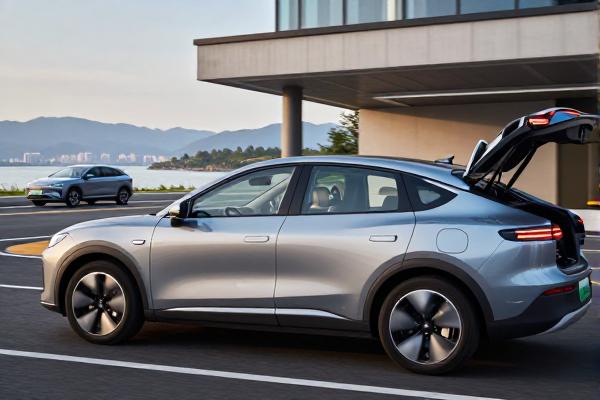
Envoy is not a traditional car rental company. It places a small fleet of EVs at partner properties and links them to a mobile app. Drivers can reserve a vehicle, unlock it without a key, and pay by the hour or day. The fleet is parked in dedicated spaces, which is a key difference from free-floating carsharing services that leave cars scattered around a city.
For Dot Ai, the acquisition offers a shortcut into property-based mobility. Rather than building relationships with property owners from scratch, Dot Ai inherits Envoy’s existing contracts, local operating experience and proven playbook for permitting, insurance and property management. What looks like a car rental deal on the surface is actually a distribution deal for EV access in places where people already live and travel.
The $65 million price tag also shows how much value strategic buyers now place on the connection between mobility and real estate. Envoy’s model turns parking spaces into revenue-generating assets, giving building owners a new amenity that can raise appeal with tenants and guests without major capital outlays.
Most EV adoption in the United States centers on single-family home charging. Renters, apartment dwellers and hotel guests often face a different reality. They may not have access to a garage outlet, a private charger or a public station near their door. Envoy’s approach removes that barrier by putting the vehicle nearby and handling the charging within the property footprint.
The benefits go beyond convenience. For apartment buildings, a shared EV fleet offers residents a car-inclusive lifestyle without the costs of ownership. For hotels and resorts, it creates a zero-emission transport option for guests who would otherwise rely on ride-hailing or rental cars. Property owners get a differentiating feature that can help with resident retention and occupancy.
That amenity is becoming more important. Younger renters, in particular, have shown a shift toward flexible mobility rather than outright car ownership. Having a shared EV parked on-site gives them a way to make occasional trips without the insurance, parking and depreciation costs that come with private vehicles.
Dot Ai says it plans to run Envoy as a complementary unit, which is a sensible first move after an acquisition of this size. The near-term priorities will be keeping Envoy’s existing locations operational while integrating the booking and telematics systems. That kind of technical alignment is what ultimately determines whether a merger produces value or just adds complexity.
The deeper opportunity is on the software and data side. Dot Ai can apply its analytics platform to Envoy’s fleet usage, helping to match vehicle supply with property-level demand. Some buildings will need more cars on weekends; others may need them for weekday commutes. Pricing can be adjusted by the hour or by season. This level of operating precision is hard for a smaller standalone company to replicate with limited engineering resources.
Industry observers see this deal as less about owning vehicles and more about owning the resident and guest mobility relationship. Envoy’s app and property partnerships serve as distribution channels. Once the app is installed, a customer can be reached for additional services, such as charging billing, microtransit bookings or subscriptions to other shared mobility modes. That is the bigger prize beyond the current carsharing fleet.
The carsharing industry has had a volatile decade. Some prominent operators have abandoned dense urban markets due to high insurance costs, parking challenges and fleet maintenance expenses. Property-based models like Envoy’s have a structural advantage because vehicles are returned to designated spaces, which lowers the cost of redistributing cars and simplifies charging management.
On-site shared EVs also help solve the chicken-and-egg problem of charging infrastructure. A shared car comes with a assigned parking spot, and that spot can include a charger. Instead of waiting for broad public charging buildout, a property owner can install a few Level 2 chargers that support a whole fleet. That efficiency makes the model viable in locations where public fast-charging networks remain thin.
The International Energy Agency has pointed to shared mobility as a way to improve EV utilization and reduce the total number of vehicles needed. When a car is used by multiple people across the day, the emissions benefit per vehicle is larger. Real estate partnerships are one of the fastest ways to accelerate that pattern outside the traditional car ownership model.
Neither company has released a detailed rollout roadmap beyond the closing. In the near term, existing Envoy locations will need to maintain service levels so that property partners and users see no disruption. A seamless transition is critical, since the value of the acquisition depends on trust and operational quality at the property level.
Expansion is likely to target metropolitan areas with high concentrations of multifamily housing and hospitality destinations. Hotels with airport shuttles, resort properties with large parking footprints, and apartment complexes with underused garages are natural fits. The combined company can also pitch integrated packages: EV fleet access, charging management and a mobile booking platform under one agreement.
There are risks, however. Competition in property-based mobility is growing, with new entrants trying similar models. The success of this deal will rest on how quickly Dot Ai can convert Envoy’s localized playbook into a scalable national service. Delivering that while managing the cultural fit between two teams will be the real test.
Dot Ai’s purchase of Envoy Technologies is more than a fleet expansion. It represents a bet that the next wave of EV growth will happen not only in driveways and public highways, but in the parking garages, lobbies and resort entranceways that shape daily life. By combining Envoy’s real estate presence with its own software capabilities, Dot Ai has positioned itself to be a one-stop provider for property owners looking to meet modern mobility demand.
The announcement marks a milestone for both companies. For Dot Ai, it provides a meaningful footprint in the U.S. EV sharing market. For Envoy, it brings the scale and engineering depth needed to stay ahead of rising expectations. Whether that momentum produces a more profitable and widely available service will depend on how well the two teams execute in the months ahead.