Browse

Log in / Register
 Share

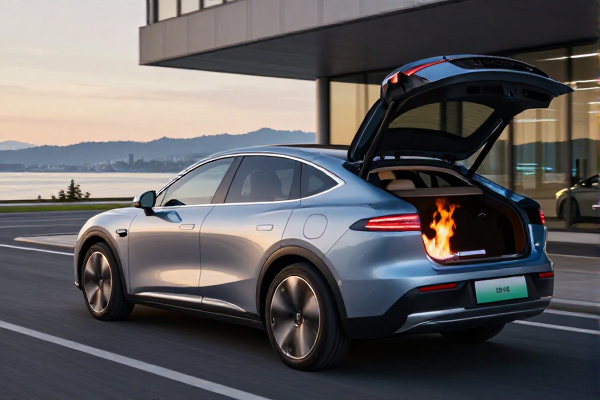
South Florida EV drivers have another reason to feel confident behind the wheel. On April 27, 2026, the Coral Springs Fire Department showed NBC6 reporter Isabella Martinez a new suppression system built for one of the hardest jobs in modern firefighting: stopping an electric vehicle battery fire. The live demonstration gave the public a rare look at how the region's first responders are preparing for the growing number of EVs on the road. It also answered a simple but important question: if a battery catches fire, how do crews contain it?
For decades, a burning car meant a familiar routine for firefighters: hit the visible flames with water, add foam if needed, and cool down hot spots. Electric vehicles rewrite that playbook. When a lithium-ion battery suffers serious impact, the internal cells can begin a chain reaction known as thermal runaway. Each damaged cell releases heat that raises the temperature of nearby cells, producing more heat and flammable gas until the entire pack becomes one continuous fuel source.
That is why EV fires often outlast a traditional hose stream. The visible flames can go out while the battery still smolders inside, then reignite minutes later. Gasoline fires can also return, but the process is generally easier to predict. With lithium-ion, the energy is stored inside the same material that catches fire, so cutting off outside air alone is not enough.
The system demonstrated in Coral Springs is designed for exactly that problem. It surrounds the battery compartment with a fire-resistant barrier, slows the heat buildup, and helps starve the reaction of oxygen. Firefighters can deploy it quickly and keep the incident from turning into an hours-long water battle