Browse

Log in / Register
 Share


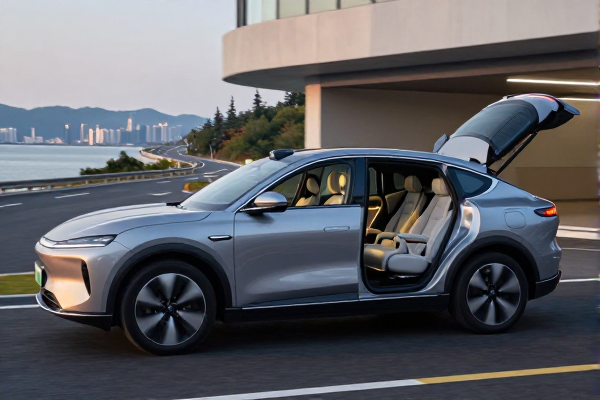
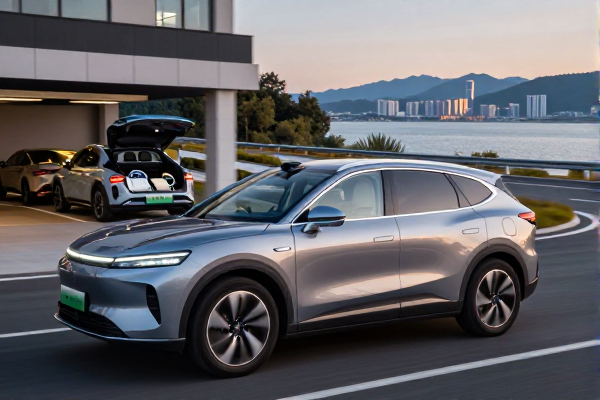
As of May 7, 2026, Denza is keeping its Z9 GT at the center of an aggressive push to combine effortless luxury with technology that would have seemed impossible in a production car just a few years ago. The Chinese automaker’s flagship electric grand tourer has been turning heads for its “Crab Walk” mode, a system that lets the car move diagonally across a parking lot or slither into a slim curb-side gap. It is far more than a display of software tricks: the feature is enabled by an unusual three-motor chassis that makes the Z9 GT one of the most maneuverable large cars on sale.
Crab Walk is Denza’s name for the Z9 GT’s ability to drive with all four wheels pointed in the same direction, at an angle to the body. In practical terms, the vehicle can travel diagonally, front-end first, without turning. Imagine parallel parking a full-size luxury car in a space barely longer than the car. Instead of performing a multi-point shuffle, the driver can simply crab the car into place. Denza says the feature draws on the vehicle's rear-axle steering and independently controlled rear motors, which allow the rear wheels to align with the front wheels and drive the car diagonally at low speeds.
It sounds like a parade trick, but for a car that is roughly 5.2 meters long, it addresses a real urban problem. Tight underground garage ramps, narrow lane entrances, and packed valet lanes are exactly the kind of places where a long EV can feel more like a marsupial than a grand tourer. With Crab Walk, the driver gets a direct solution instead of a longer turning circle and a lot of patience.
Some journalists and industry observers initially dismissed crab-walk systems as gimmicks. But the Z9 GT’s implementation is integrated with the car’s broader e3 platform. The three electric motors are not just for show; they provide torque vectoring, improving grip in the wet and allowing the car to pivot around its rear axle in tight turns. In a long luxury car, rear-wheel steering reduces the turning circle by a significant margin, which makes city driving easier in daily use.
The trick is also useful at speed. Individual motor control can counteract wheelspin before an electronic stability program has to intervene. That is the kind of mechanical layer that makes driver-assistance systems feel native rather than bolt-on. It also gives the Z9 GT a handling character that separates it from cheaper electric sedans, where chassis control is often left to software-based traction control alone.
Under the skin, the Z9 GT is a serious performance machine. The top all-wheel-drive variants pair three motors for a combined output near 1,000 horsepower in Chinese specification. Launch figures vary, but the 0-100 km/h sprint takes about three seconds in the flagship trim. More relevant for day-to-day driving, the range tops out at around 600 kilometers on the CLTC cycle. That puts it in the same bracket as other electric luxury GTs, although the shape and weight of the car mean real-world efficiency will vary.
The model is underpinned by an 800-volt architecture, which supports faster charging speeds. Denza’s own charging network and BYD’s battery technology give the Z9 GT a practical edge in markets where fast-charging infrastructure is still being built out. The use of LFP battery chemistry in at least some versions also addresses the long-term durability concerns that have dogged certain nickel-manganese-cobalt packs.
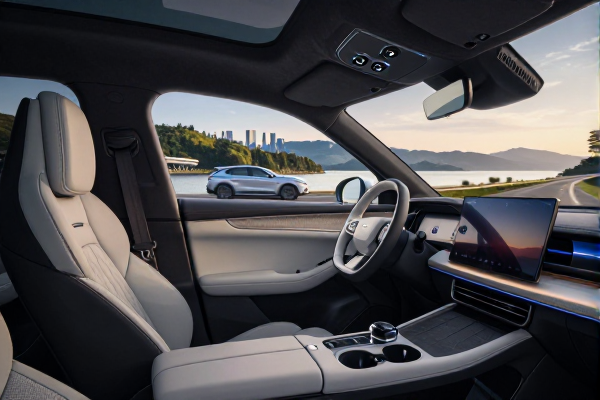
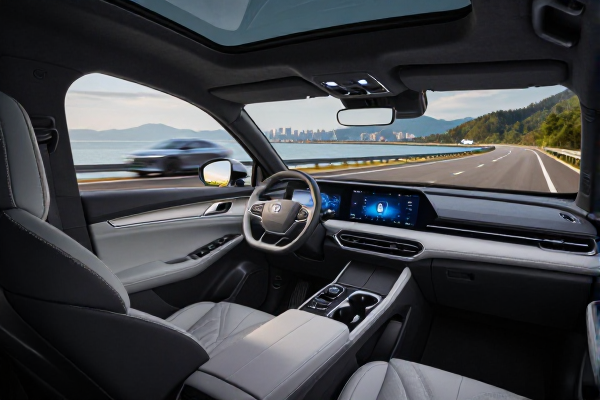
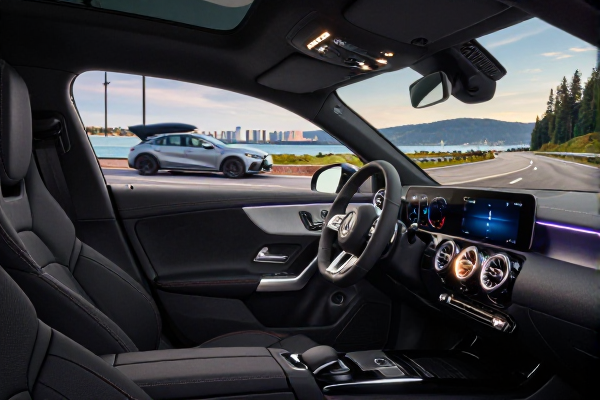
Denza positions itself as a rival to established premium badges, and the Z9 GT’s interior reflects that ambition. There are screens placed across the dashboard, a digital cockpit for the driver, and a multifunction display for the front passenger. Materials are deliberate rather than loud, mixing leather, Alcantara-like surfaces, and metallic accents. The rear seats are shaped for comfort on long cross-country drives, not just for around-town rides.
The infotainment system runs on a platform developed by BYD’s software team. It supports voice commands in natural language, including control over the windows, climate, and navigation. Over-the-air updates are a key part of the strategy, with Denza pushing improvements to the driver assistance suite and chassis control. The interior does not try to copy the minimalist style of Silicon Valley EVs; it leans into a more executive, tech-forward mood.
What makes the Z9 GT more than a niche electric GT is what it says about Denza’s place in the BYD ecosystem. Denza was originally a joint venture with Mercedes-Benz, but BYD now steers the product strategy. That means Denza can tap BYD’s battery supply chain and manufacturing scale, then spend money on design and software without worrying about legacy combustion platforms.
In global markets, Denza is being positioned above BYD’s own passenger cars, but below the new ultra-luxury Yangwang brand. The Z9 GT has to carry that image. It is a land yacht, a technology demonstrator, and a sales tool for a brand that wants to be seen as more than a value EV maker. The Crab Walk mode is part of that narrative: it proves that Denza can do things that even Mercedes, with all its engineering tradition, does not yet offer in the same form.
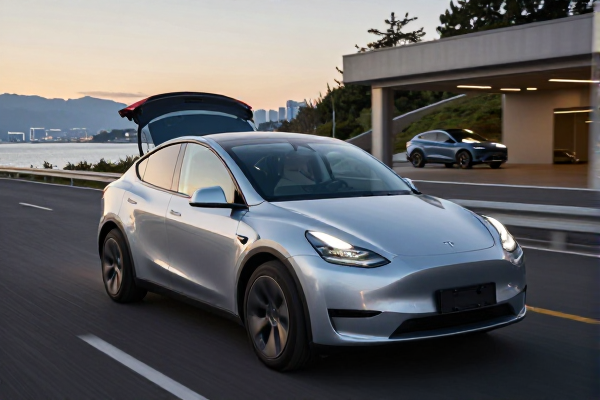
The inclusion of multi-motor torque-vectoring in a luxury car is not entirely original—it exists in some high-performance EVs from companies like Lucid and Tesla. But the Z9 GT’s packaging puts the technology in a more mainstream luxury segment. People who follow BYD’s expansion have noted that the Z9 GT is less about high unit sales than about resetting perceptions. If a brand wants to command a high price point, it cannot rely on equipment bundles alone. It needs a feature that can be explained in a 30-second video.
Crab Walk fills that role. In China, short videos of the Z9 GT sliding diagonally have already generated significant social media attention. That is valuable because traditional advertising cannot reproduce the emotional pull of seeing a huge car solve a problem that every city driver understands.
The Z9 GT does not have the market to itself. The Porsche Taycan Cross Turismo and Audi e-tron GT have already defined what an electric performance wagon should feel like. More recently, the Nio ET9 and the Xiaomi SU7 Ultra have raised the bar for software and build quality at similar or even lower prices. Denza’s challenge is not engineering; it is building trust in a badge that many Western buyers will not immediately recognize.
There are also questions about whether Crab Walk mode will be allowed in certain markets. Regulations typically govern steering systems, and a car that can move diagonally at the touch of a button may require type approval beyond normal automotive homologation. Denza has not said which jurisdictions will receive the feature in its full form, and it is likely that some markets will receive the Z9 GT with the system restricted to low speeds or fully disabled until certification catches up.
As of the beginning of May 2026, Denza has not announced a definitive North American launch for the Z9 GT. A broader global push remains likely, but timing will depend on tariffs, local regulations, and the company’s ability to build service networks. In China, the Z9 GT is already a visible presence in first-tier cities, and the brand’s plan to add more storefronts will determine how quickly the luxury message spreads.
The Z9 GT may not need to sell in huge numbers to be successful. Its role inside BYD is similar to the role of a concept car that actually makes it to production: it lets the whole group claim a leadership position in electric vehicle technology. When a nearly 5.2-meter luxury car can sidestep a traffic cone as comfortably as it cruises a highway, it forces people to ask what else the next generation of EVs will be able to do.