Browse

Log in / Register
 Share
Share

July 11, 2024 — Dongfeng Motor Corporation, a Chinese state-owned automaker, made its inaugural public appearance in Canada this week, showcasing electric vehicles at Montreal's Old Port. This move leverages Canada's low-tariff import quota for Chinese EVs but raises significant concerns over data privacy, as Dongfeng's ties to the Chinese government subject vehicle data to extraterritorial laws like China's National Intelligence Law. With connected cars collecting sensitive information, Canadian consumers face uncharted risks, while U.S. observers note parallels to global data security challenges.
Unlike private Chinese competitors such as BYD, Dongfeng is directly controlled by China's State-owned Assets Supervision and Administration Commission (SASAC), making it a central state-owned enterprise. This structural distinction is critical for buyers. Under China's National Intelligence Law (2017), all entities under Chinese jurisdiction, including state-owned firms, must assist with national intelligence work upon demand—a provision that applies globally. Coupled with China's Cybersecurity Law (2017) and Data Security Law (2021), which grant authorities access to company-held data, this creates a legal framework where Canadian privacy laws, like the Personal Information Protection and Electronic Documents Act (PIPEDA), may be overridden. PIPEDA, enacted in 2000, lacks explicit rules for cross-border data flows, leaving gaps in consumer protection.
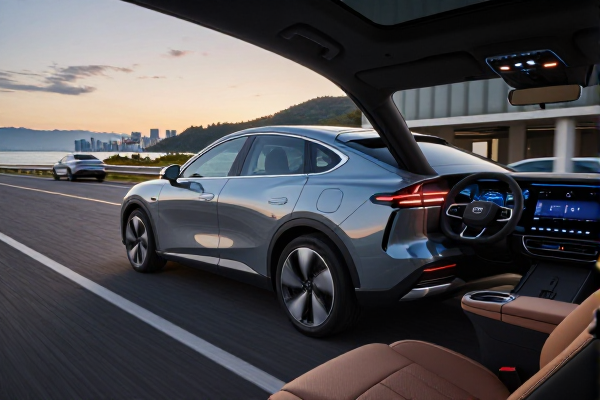
At the Montreal event, Dongfeng's Canadian distributor, North World Industry, displayed two models: the Vigo (sold as Nammi 06 in China) and the Nammi Box 01 hatchback. These vehicles feature 800-volt charging systems, doubling the standard voltage for faster charging with reduced heat. More notably, the Vigo's spec sheet confirms a Qualcomm Snapdragon 8155 chip powering its infotainment system, enabling over-the-air updates, smartphone remote control, and persistent data links to Dongfeng's servers. Connected vehicles typically collect location history, driving behavior, cabin audio, synced phone contacts, and app usage—data categories the U.S. Federal Trade Commission deems sensitive and worthy of enhanced protection. For a state-owned entity like Dongfeng, this data not only follows corporate privacy policies but also falls under legal obligations to the Chinese state.
China's National Intelligence Law, Article 7, mandates that organizations support intelligence efforts, with Article 14 allowing agencies to demand cooperation. The U.S. Department of Homeland Security has warned that Chinese firms may be compelled to share data secretly, even if requests conflict with local laws. Recent expansions, like the 2023 Counter-Espionage Law, broaden disclosure requirements to any information related to "national security and interests," potentially covering vehicle data. However, legal analysts note that Article 7 lacks explicit penalties for passive non-compliance, though the broader ecosystem—including data localization rules and state-appointed leadership at Dongfeng—creates an environment where independent guarantees for Canadian data security are untenable. No public security audit exists for Dongfeng's data practices, and server routing details remain undisclosed, leaving buyers in the dark.
Canada's privacy framework is ill-equipped for this challenge. Privacy Commissioner Philippe Dufresne noted in 2026 that PIPEDA doesn't require privacy impact assessments for cross-border data transfers, a gap he recommended addressing before Chinese EVs hit the market. Proposed legislation, Bill C-36 (the Protecting Privacy and Consumer Data Act), introduced in June 2026, would impose fines up to C$25 million, but it hasn't been passed. An internal Public Safety Canada memo from 2026 highlighted risks from connected vehicles, stating data "can have intelligence value" to adversaries. Industry Minister Mélanie Joly confirmed in 2026 that an EV data protection framework is in development, but no timeline is set, underscoring regulatory delays as Chinese EVs advance.
Canadian buyers can take steps to reduce risks: avoid syncing personal contacts or financial apps to vehicle systems, use a minimal-data phone profile for pairing, and disable cellular connectivity where possible—though this may disable updates and remote services. Monitoring Transport Canada's upcoming cybersecurity guidance is advised. However, experts caution that no consumer action can fully eliminate the structural risk from China's intelligence laws, which bind the manufacturer, not the driver. This echoes broader global trends where users must balance connectivity with privacy in smart devices.
Dongfeng's strategy may align with Canadian policy preferences. Prime Minister Mark Carney has emphasized that Chinese investment must involve "material Canadian production," such as joint ventures with local control and value-added activity. Dongfeng, though smaller in sales than peers, has extensive joint-venture experience, including partnerships with Nissan and Stellantis for global distribution. In contrast, BYD prefers wholly owned manufacturing, potentially making Dongfeng a more compliant partner under Carney's terms. This JV template could facilitate smoother market entry, even as data concerns persist.
Value-added insight: The Dongfeng case mirrors ongoing debates in the U.S. over foreign-made connected devices. For instance, the U.S. has heightened scrutiny on Chinese tech firms under laws like the CLOUD Act and through agencies like the Federal Trade Commission, which enforces data privacy rules. American consumers face similar dilemmas with imported smart cars, where data may be subject to foreign jurisdictions. Recent U.S. initiatives, such as proposed federal privacy legislation and National Highway Traffic Safety Administration guidelines for vehicle cybersecurity, highlight a proactive approach lacking in Canada. This contrast suggests that as EVs globalize, data sovereignty will become a key trade and security issue, urging nations to harmonize regulations or risk fragmented protections.
Under a 2026 bilateral trade deal, Canada replaced a 100% surtax on Chinese EVs with a 6.1% tariff on up to 49,000 vehicles annually, in exchange for reduced Chinese tariffs on Canadian agriculture. Government data from July 2024 shows 6,531 EVs entered under this framework mid-year, using about 27% of the initial quota. With Dongfeng eyeing a 2027 commercial launch, and other Chinese brands like BYD and Chery exploring entry, Canada's market could see rapid transformation. However, data privacy concerns may slow adoption, prompting calls for stricter oversight before widespread sales.
Dongfeng's Canadian debut underscores a pivotal shift in the EV landscape, where technological advancement intersects with geopolitical data risks. For consumers, awareness and caution are paramount, while regulators must accelerate updates to outdated privacy laws. As the U.S. watches closely, this case may inform broader policies on cross-border data flows, ensuring that innovation doesn't come at the cost of personal security. The journey ahead will test how democracies balance open markets with protective safeguards in an interconnected world.