Browse

Log in / Register
 Share
Share
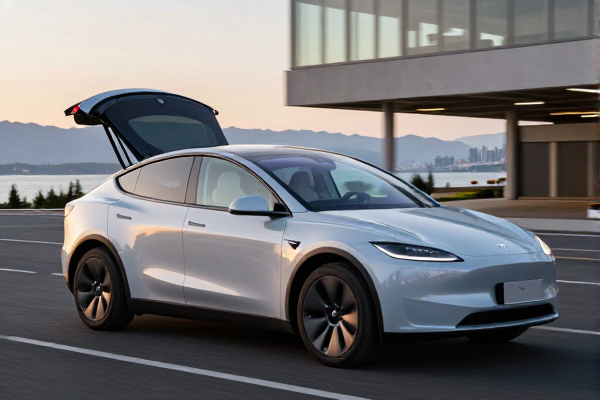
The business and tech worlds are abuzz with renewed conjecture about a potential merger between electric vehicle giant Tesla and aerospace pioneer SpaceX. This speculation, as of May 24, 2024, is not driven by any formal announcement but by the accelerating convergence of technologies and strategic vision under their shared architect, Elon Musk. Observers note Musk's persistent efforts to weave his companies into a more interconnected technological fabric, raising fundamental questions about the future structure of his empire.
At the heart of the discussion is Musk's overarching ambition to create a synergistic technological ecosystem. This vision extends beyond shared battery research or materials science. It envisions a future where SpaceX's Starlink satellite network provides seamless global connectivity for Tesla's fleet of autonomous vehicles, where advanced manufacturing techniques from rocket production revolutionize car assembly, and where Tesla's energy storage solutions power SpaceX facilities. The potential for cross-pollination of innovation is a powerful narrative fueling merger talks.
Financial and structural synergies present a compelling, though complex, argument. A combined entity could theoretically streamline R&D expenditures, consolidate staggering manufacturing expertise, and create a unified balance sheet of unprecedented scale. This could provide immense capital flexibility for moonshot projects like Mars colonization or fully autonomous transportation networks. However, the operational and cultural integration of a car company and a rocket manufacturer—each with distinct regulatory environments, supply chains, and risk profiles—poses a monumental management challenge.
Market analysts are divided on the immediate feasibility. Some point to the starkly different investor bases and risk appetites for automotive versus aerospace stocks. A merger could trigger significant volatility as portfolios are reassessed. Furthermore, regulatory scrutiny would be intense, spanning antitrust authorities, securities regulators, and specific oversight bodies for both automotive safety (NHTSA) and aerospace (FAA). The complexity of such a regulatory gauntlet cannot be understated and is a primary reason many experts view a full merger as a long-term possibility rather than an imminent reality.
Adding a layer of exclusive insight is the recent strategic maneuvering observed at the executive level. While no merger plans are confirmed, there has been a notable increase in high-level personnel exchanges and joint task forces between Tesla and SpaceX in the last quarter, focusing on AI development, materials procurement, and human resources strategy. This operational intertwining, often away from the public spotlight, suggests a deeper alignment is being actively engineered, regardless of the ultimate corporate structure.
The speculation received a recent, indirect boost from Musk himself during a moderated discussion on his platform, X. When questioned about the ultimate integration of his companies' technologies, he stated, "The goal has always been to accelerate the advent of sustainable energy and a multi-planetary future. The corporate structure is a means to that end; it will evolve as needed to serve the mission." This mission-oriented rhetoric is interpreted by many as leaving the door wide open for radical structural changes, including a merger, if it demonstrably advances his core goals.
In conclusion, while a Tesla-SpaceX merger remains in the realm of speculation, the underlying currents making it a credible topic for discussion are stronger than ever. It is a story less about immediate corporate action and more about the logical endpoint of Elon Musk's integrated vision for humanity's future. The coming years will likely see increased collaboration and shared technology platforms, keeping the merger question alive as observers watch to see if the next logical step is a complete unification of these two iconic companies under a single corporate banner.