Browse

Log in / Register
 Share

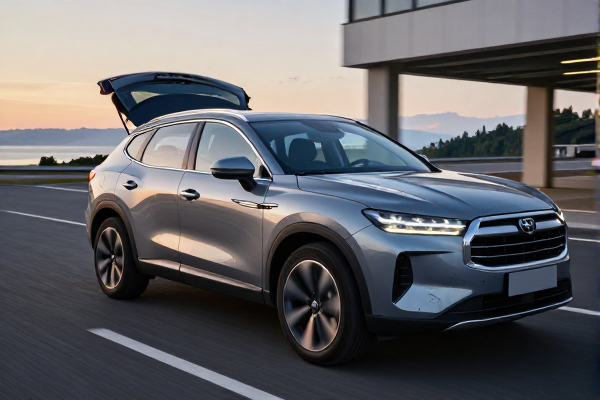
As of May 7, 2026, another Chinese electric car is officially a step closer to Australian roads. Local approval records now list the Wuling Eksion 560, a mid-size electric SUV that should go on sale Down Under sometime in 2027. It's an important move, not just for Wuling, but for SAIC Motor, the Chinese giant that already sells two popular brands in Australia: MG and LDV.
Wuling is a familiar name in Asia, but largely unknown to many Australian buyers. That could be about to change.
The Eksion 560 is a mid-size, five-seat SUV measuring 4745mm long. That puts it in the same territory as the Tesla Model Y and Zeekr 7X, although its positioning is quite different. It's not a performance-oriented electric SUV; it's a practical, family-focused machine with an affordable price tag in mind.
In China, the same car is sold as the Xingguang 560. In Indonesia, it's called the Eksion 560. The name varies by market, but the platform and overall package are basically the same. What matters for Australia is that the version approved is the battery-electric model. Petrol and plug-in hybrid versions exist elsewhere, but they haven't been green-lit here yet.
The approved Australian version runs a single front-mounted electric motor producing 150kW. Torque is expected to match the Indonesian model's 310Nm. It's a front-wheel-drive layout, which fits the car's no-fuss, efficiency-minded character.
Power comes from a 69.2kWh battery pack. In Indonesia, that battery supports up to 530km of driving range under the CLTC test cycle. The stricter WLTP standard, which is closer to real-world use in Australia, will likely push that figure under the 500km mark. Either way, it's a solid number for a car in this price bracket.
When it's time to recharge, the Eksion 560 can DC fast charge from 0 to 100 percent in roughly half an hour. That's a practical figure for daily use, and it makes the car a more compelling option for buyers who don't have a home wallbox.
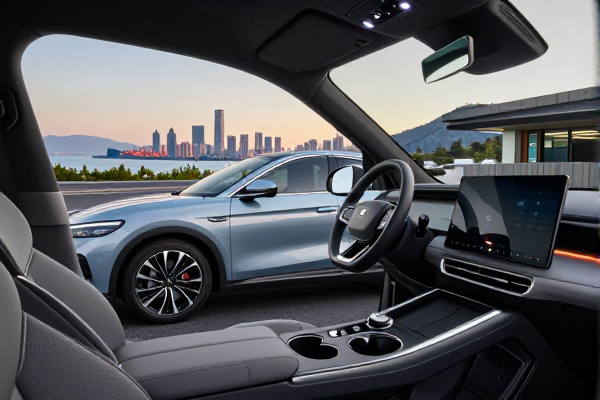
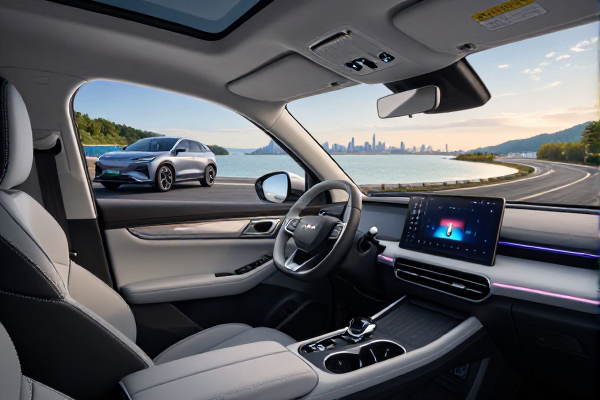
Wuling has kept the interior straightforward but reasonably well-equipped. The seats are wrapped in synthetic leather, with the front ones offering ventilation and electric adjustment. There's a 12.8-inch central touchscreen and an 8.8-inch digital driver display. It's not a flashy dashboard, but it looks modern and functional.
One thing to note: the Australian version will only have five seats, at least for now. A seven-seater variant exists in other markets, but local buyers won't get it initially. That could be a disappointment for some families, but it also keeps the car lighter and more efficient.
There's still no official word on exactly when the Wuling Eksion 560 will arrive in Australia, or who will sell it. The fact that it has already passed approval suggests a launch is being planned, but the distribution side is still under wraps.
In Indonesia, the car starts from 399,000,000 rupiah — roughly A$32,000 in recent media reports. Australian pricing is expected to be higher once local compliance, delivery and dealer networks are factored in. A starting price around A$35,000 or slightly above looks realistic.
At that level, the Eksion 560 would be one of the more affordable electric mid-size SUVs on the Australian market. It wouldn't be the absolute cheapest EV in Australia, but it would land well below the Model Y's entry price and undercut most comparable electric SUVs.
Wuling is part of the SAIC Motor family, which already has a strong footprint in Australia through MG and LDV. Adding Wuling would give SAIC three separate brands on sale locally, each with a different role.
MG has become a mainstream player with a broad range of affordable cars. LDV is more commercial-focused, with vans and utes. Wuling could slot in as the budget-friendly EV specialist, particularly in the booming mid-size SUV segment.
It's also worth remembering that General Motors holds a significant stake in Wuling. So while the brand is often described as Chinese, there's a long-standing multinational joint-venture structure behind it. That gives the Eksion 560 a bit more global credibility than some of the Chinese brands that have flooded world markets in recent years.
Several important questions remain. There's no confirmed launch date, no local dealer announcement, and no detailed specification list for Australian-market cars. The approval covers the EV version in its current form, but local tuning, equipment levels and standard safety features could differ from Indonesian or Chinese specs.
Potential buyers should also be prepared for some confusion around the driving range. The 530km figure mentioned in some coverage is based on China's CLTC standard. Australian homologation and WLTP testing will almost certainly produce a lower number. That's not a criticism of the car; it's just how different testing systems work.
Another factor is charging ecosystem. The Eksion 560's fast-charging capability of around 30 minutes is decent, and it should be compatible with public DC networks in Australia. But Wuling will need to prove that ownership costs, service backup and parts availability are on par with more established brands.
This approval is part of a much broader trend. Chinese brands are increasingly using smaller export markets like Australia as testing grounds for more ambitious global expansion. The Australian market is mature, right-hand-drive and highly competitive, making it a useful proving ground for quality, reliability and customer support.
If Wuling can build a credible presence there, it becomes another beachhead for the SAIC group outside China. For consumers, that means more choice and lower prices in the electric SUV segment. For established brands, it means another aggressive competitor fighting for attention.
The Eksion 560 might not be the flashiest car on the road, but it could be one of the most significant arrivals for Australian EV buyers in 2027. The approval is done. Now the wait is for pricing, launch details and the first local deliveries.
More details could emerge before the end of 2026. For now, the message is simple: the Eksion 560 is coming to Australia, and the mid-size EV market is about to get a bit more interesting.