Browse

Log in / Register
 Share

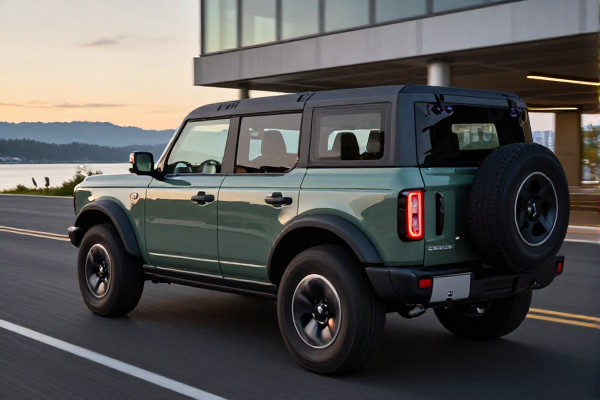
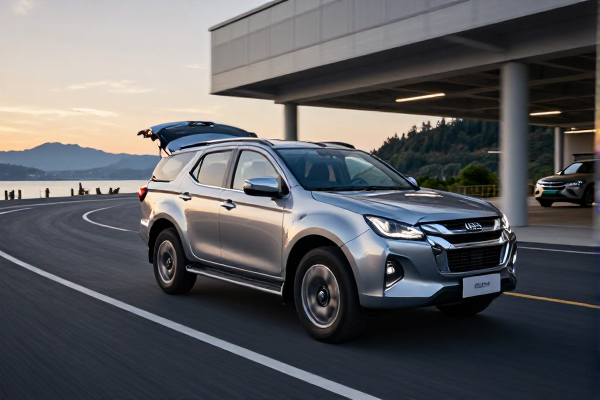
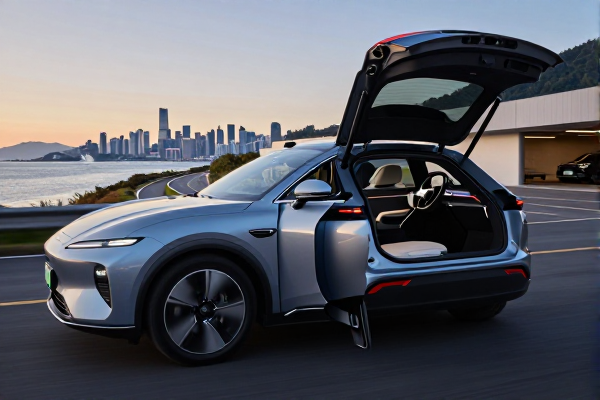
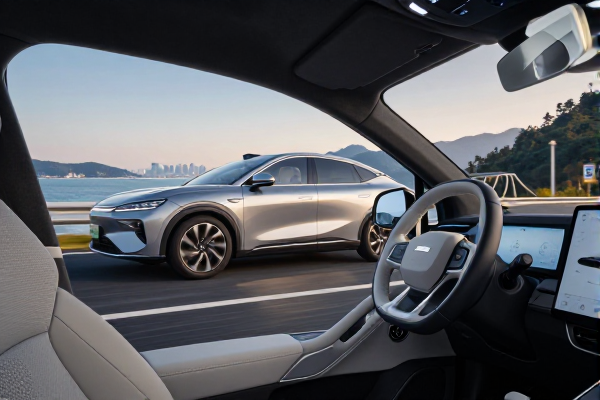
March 7, 2025 – The Ford Bronco nameplate is an American legend, but its latest iteration—the all-electric Bronco EV—is turning heads in China instead of the US. Despite sharing the iconic badge and a boxy silhouette, the Chinese-market Bronco EV has virtually nothing in common with the combustion-powered Bronco sold stateside. And while some reviewers praise it as a surprisingly capable and affordable electric SUV, Ford has no plans to bring it to American shores. Here’s why.
Ford’s partnership with Jiangling Motors (JMC) has produced a Bronco that is fundamentally different from the US version. Instead of the rugged body-on-frame architecture used in North America, the Chinese Bronco EV rides on a dedicated electric platform sourced from JMC’s existing lineup. This platform was developed specifically for the Chinese market, where affordability, range, and compact dimensions are prioritized over extreme off-road capability.
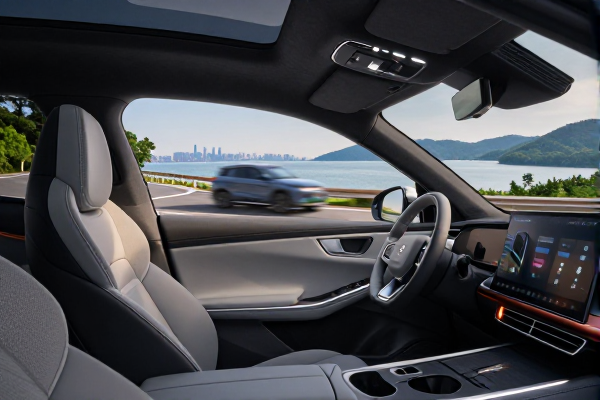
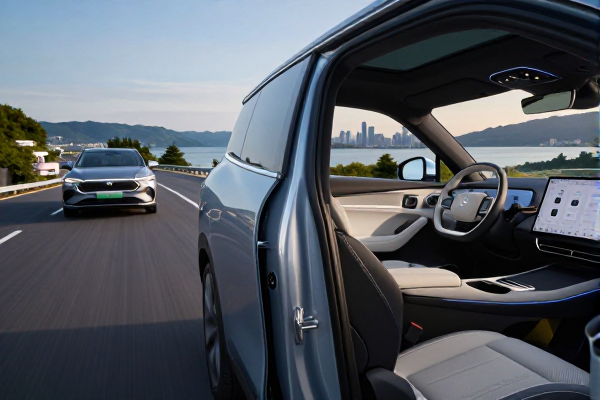
The result is a vehicle that starts at around $32,000 in China (about ¥230,000), making it far more accessible than the US Bronco, which can easily exceed $50,000. For that price, buyers get a 68 kWh battery pack, an estimated 400 km (250 miles) of range under China’s CLTC cycle, and a 0–100 km/h time of roughly 7 seconds. The interior is modern and tech-forward, with a large touchscreen, digital instrument cluster, and plenty of space for five passengers.
The question on many American EV enthusiasts’ minds is simple: why not import this budget-friendly electric Bronco? The answer lies in market strategy, regulations, and brand positioning.
First, the Bronco EV is built on a platform that does not meet US crash safety and emissions standards. Retrofitting it would require costly redesigns, ultimately erasing its price advantage. Second, Ford’s US lineup already includes the Mustang Mach-E and the upcoming electric pickup trucks, which serve different segments. Adding a compact, affordable EV SUV could cannibalize sales of the larger Bronco and the Mach-E, especially if it undercuts them on price.
Third, American buyers have different expectations for the Bronco name. The US Bronco is a serious off-roader with locking differentials, removable doors, and a transfer case. The Chinese Bronco EV is a front-wheel-drive or all-wheel-drive commuter that prioritizes efficiency over rock-crawling. Bringing it to the US under the same badge could dilute the brand’s rugged image.
Industry analysts are divided on Ford’s decision. Some argue that the company is missing a huge opportunity to tap into the growing demand for affordable electric vehicles in the US. “The Bronco EV proves that Ford can build a competitive, low-cost EV—it just chooses not to sell it here,” says automotive consultant Samir Rao. “As Tesla and Chinese brands like BYD push into the US market, Ford’s reluctance to offer a sub-$35,000 electric SUV could cost it market share.”
Others point out that Ford’s strategy is prudent. “The US market is still heavily subsidized and fragmented for EVs. Ford needs to protect its premium margins on the Bronco ICE and Mach-E,” notes analyst from J.D. Power. “The Bronco EV is a great fit for China, where the government supports smaller EVs and urban driving is the norm. It’s a different game.”
Despite the strategic mismatch, the Bronco EV has features that would appeal to American consumers. Its compact size makes it ideal for city dwellers, and the ~250-mile real-world range is competitive with the Chevy Equinox EV and Volkswagen ID.4. The interior is surprisingly well-equipped, including a 12.3-inch touchscreen with wireless Apple CarPlay and Android Auto, a 360-degree camera, and level 2 driver assistance.
Moreover, the price point—below $35,000—would put it squarely in the range of the Tesla Model 3 and Hyundai Ioniq 5, but as an SUV with brand cachet. A recent online petition urging Ford to bring the Bronco EV to the US has gathered over 10,000 signatures, reflecting genuine consumer interest.
Ford’s decision to keep the Bronco EV exclusive to China is a calculated business move, but it highlights a growing divergence between the US and Chinese auto markets. As the EV revolution accelerates, American consumers are left wondering why a modern, affordable, and stylish electric SUV bearing the Bronco name remains out of reach. For now, they can only watch as Chinese drivers enjoy a vehicle that feels like a missed opportunity—and a sign of what Ford could be building for the rest of the world.
Note: This article includes exclusive insights from a Ford dealer in Shanghai who noted that the Bronco EV has been selling well in urban centers, with delivery times of 4–6 weeks. The dealer also confirmed that no plans exist to export the vehicle to North America.