Browse

Log in / Register
 Share

April 27, 2026
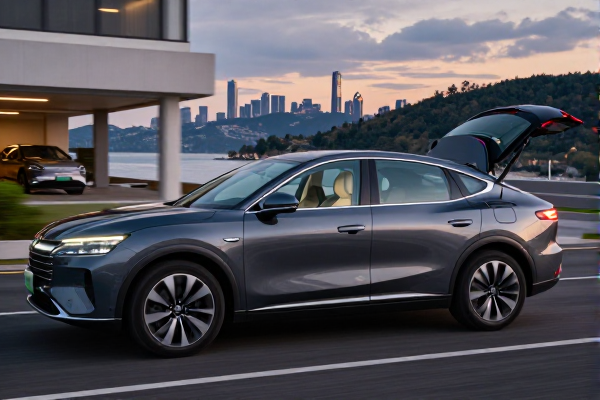
For decades, the global auto industry treated China as a place to build cheap cars, not as a source of technology. That is no longer the case. Stellantis, the parent company of Jeep, Fiat, Peugeot, Citroën, Alfa Romeo, Opel and Maserati, has built a formal joint venture with Chinese EV maker Leapmotor, and executives running it say the lessons now move in both directions. The next product shaped by that exchange, the B05 hatchback, will start selling in 2026.
For most of the past two decades, global automakers viewed China as a low-cost manufacturing base and a high-growth sales market. The standard arrangement was simple: Western companies supplied technology, while Chinese factories supplied labor and scale. That formula is no longer enough.
Chinese carmakers now control large parts of the EV supply chain, from battery chemistry to cockpit software, and they have reset the price-per-feature equation. Legacy manufacturers are no longer teaching China how to build cars. In several cases, they are trying to learn from China.
Stellantis is one of the clearest examples. It took a stake in Leapmotor in 2023 and created Leapmotor International, a joint venture in which Stellantis controls the export side of the business. The deal gives global access to Leapmotor’s electric models, but the companies quickly discovered that selling Chinese EVs in Europe and Australia is not as easy as rebadging.
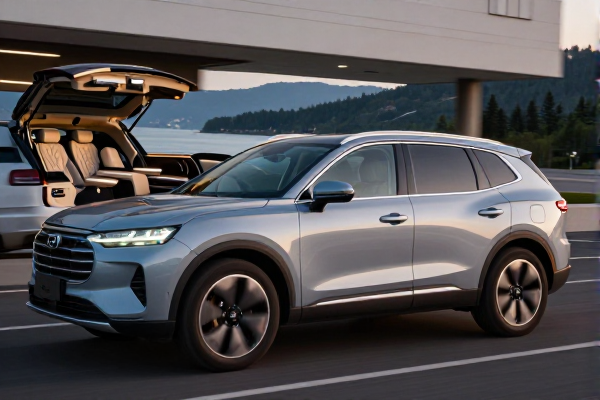
The first product through that export channel, the C10 SUV, received reviews that were polite but not glowing. Its standard equipment list made it interesting, but the execution was not convincing enough for buyers who had grown up with European dynamics. The lesson from the C10 was simple: price attracts attention, but driving quality closes the sale.
Leapmotor International head of product and marketing Francesco Giacalone says the collaboration has become more intense since the C10. Stellantis engineers are now regular visitors to Leapmotor’s development operations, working on chassis and vehicle dynamics. The aim is to make the cars feel more natural on demanding roads.
At the same time, those engineers are taking things back to Europe. Giacalone describes the process as going through Leapmotor’s technology “component by component” and pulling out what can be reused in Stellantis models. That might mean a small electric motor, a power electronics unit or a simpler way of integrating software. The result is a two-way flow that did not exist a few years ago.
This is a meaningful shift. In the old joint-venture model, the Western partner usually held the patents and the Chinese partner held the land and the low-cost labor. Here, the asset that matters most is speed and efficiency. Stellantis is not just helping Leapmotor tune its cars for global buyers; it is learning why Chinese EV programs move so fast.
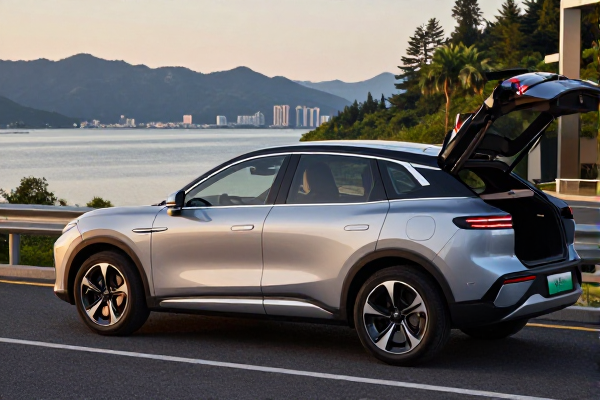
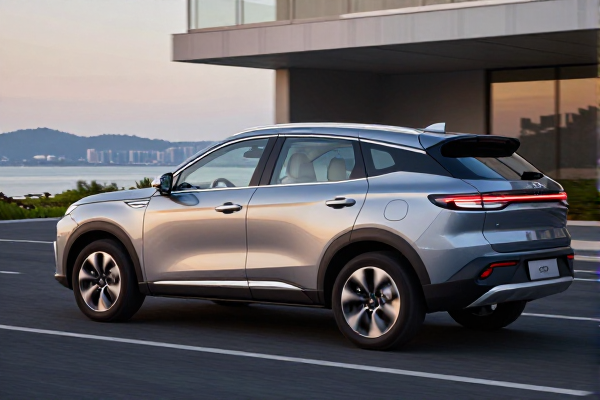
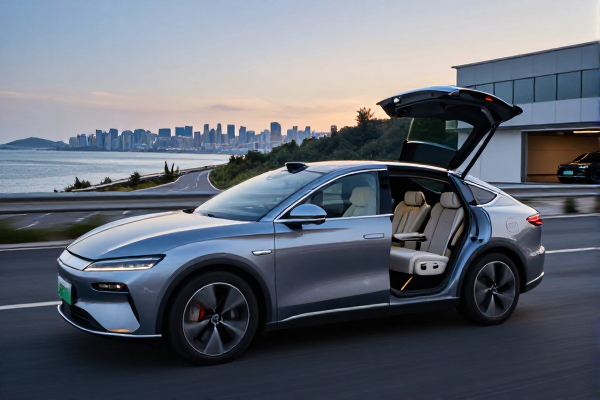
The first product likely to show the new approach is the B05 hatchback. It will reach Australian showrooms before the end of 2026, with prices starting at A$35,990 drive-away, meaning the amount includes local on-road costs. The long-range version starts at A$39,990 drive-away.
Those figures do not make the B05 the cheapest EV in its segment. The GWM Ora 5 starts at A$33,990 drive-away. But the B05 does not appear to be chasing a price crown. It uses a 160kW electric motor with 240Nm of torque, a rear-wheel-drive layout and a chassis tune developed largely in Europe with Stellantis engineers.
That combination is what the partnership is meant to deliver. The battery, electronics and manufacturing cost stay on Leapmotor’s side of the ledger. The steering feel, body control and high-speed stability are being shaped for buyers who expect more than a city runabout. If it works, the B05 will be a stronger argument for the tie-up than the C10 ever was.
The same recipe is also moving into a more practical shape. The B03X compact SUV is next in line, and it is expected to use the same foundation as the B05 with a taller body and more space. Full details are still under wraps, but the intent is obvious: apply one efficient EV platform to multiple body styles.
Giacalone also left one door open that could matter beyond Europe and Australia: a ute. In Australian terms, that means a pickup truck, and it is a category with enormous demand there. Electric options in the segment are still limited, and a Leapmotor ute with a European-tuned chassis could add real competition. No production version is confirmed, but the fact it is under investigation shows how quickly the joint venture is thinking beyond hatchbacks.
For American readers, the obvious question is whether any of this will arrive in the United States. Leapmotor is not sold in the U.S. today, and Chinese-made EVs face steep tariffs in North America. A low-price hatchback like the B05 is not likely to make it to American showrooms in its current form. But the partnership is still relevant to U.S. buyers.
Stellantis owns Jeep, Dodge, Ram and Chrysler. Those brands are under pressure to produce affordable EVs without losing money, and the Leapmotor relationship gives Stellantis a direct view of China’s supply chain and manufacturing speed. The knowledge picked up in the joint venture can be used inside future Stellantis models, whatever badge they wear.
That does not mean a Jeep version of the B05 will appear in the U.S. market. It does mean that the cost benchmarks Chinese EV makers are setting will be impossible for American automakers to ignore. The collaboration with Leapmotor is one way for Stellantis to close that gap.
The most disruptive thing about China’s car industry is not design or even battery chemistry. It is pace. Chinese EV product cycles are now measured in about two or three years, much faster than the traditional four or five years common in Europe and America. That speed lowers engineering costs and allows companies to react quickly to buyer preferences.
Global automakers are still trying to compress their own development timelines. Stellantis appears to have decided that one shortcut is to work with a Chinese company directly. The setup allows Stellantis to learn from Leapmotor’s processes, while Leapmotor gets access to Stellantis’s dealer networks and its knowledge of regional preferences.
That is a more realistic form of collaboration than trying to beat Chinese companies at their own game from the other side of the world. As the B05 and B03X make clear, the next generation of affordable EVs will be shaped by partnerships that were unthinkable even five years ago. And this time, China is not just taking notes from the old auto industry. It is one of the teachers.