Browse

Log in / Register
 Share


Good Wednesday morning, and welcome to The Downshift. Today is October 21, 2026, and the auto industry is juggling geopolitics, safety wires, and one very fast charging demo. We’ll also flag a recall that involves a bottle of isopropyl alcohol. If you listen to The Drivecast, note the schedule shuffle: this week’s episode is moving to Thursday on Apple Podcasts, Spotify, and other podcast apps.
Chery, one of China’s biggest car exporters, is telling the auto world not to overthink the politics. In an interview covered by Reuters, Vice President Charlie Zhang said the company is “very open to different options,” including a potential linkup with American manufacturers. More importantly, he argues that Chery can strip Chinese technology out of the vehicles it plans to sell in Canada starting in 2027.
“Definitely from a technical point of view, we will be able to find a China-free solution in terms of hardware and software,” Zhang said.
The comments land as lawmakers in Washington push to keep Chinese-made cars from slipping into the U.S. market, possibly through a backdoor route from Canada. Chery’s answer is essentially an engineering one: give regulators the supply-chain separation they want while still selling a Chinese-branded vehicle.
From The Drive’s vantage point, this is the next phase of the “China-free” conversation. It’s one thing for a Western automaker to redesign its own sourcing; it’s another for a Chinese carmaker to do it proactively as a market-entry strategy. The likely recipe involves non-Chinese chips, software licensed from Western partners, and possibly final assembly in North America. Whether that will satisfy Congress is a political question, not an engineering one. And in Chery’s case, “China-free” describes components, not ownership.
Toyota has issued a recall covering roughly 106,000 Land Cruiser Hybrid SUVs from model years 2024 through 2027. The issue is in the fuel delivery path: the tube that carries fuel from the tank can separate from the tank itself, which creates an obvious fire risk.
Dealers are being told to install a supplemental clamp or replace the tube altogether. It’s the kind of problem that rarely gives owners much warning, so the repair order makes sense. Toyota has been pushing hybrids across its SUV lineup, and that makes fuel-system fit and durability even more critical. Anyone who smells fuel near the rear of a Land Cruiser probably shouldn’t wait for the recall letter.
Acura used a dealer meeting in Las Vegas to lay out an aggressive plan: the lineup grows from four vehicles to six, with five new or updated models coming. Honda’s premium brand wants to sell 200,000 units a year in the U.S., which would be a meaningful jump from where it sits today.
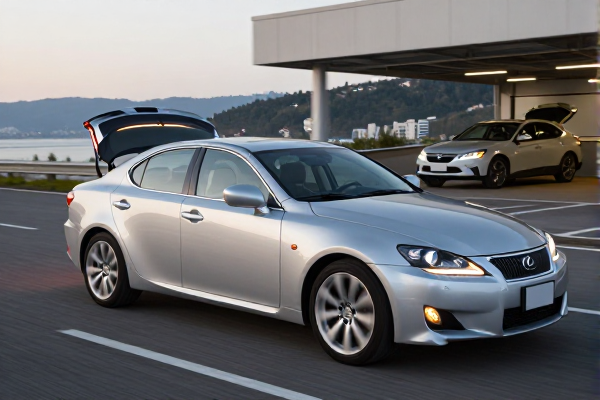
But there’s a catch. The RDX compact crossover, which plays in Acura’s largest volume segment, is still on hiatus and won’t be replaced for roughly two years. Dealers are left to sell the rest of the lineup while competitors in that segment keep moving. Compact crossovers are the default entry point for many luxury buyers, so a two-year gap is a long time to hand customers to the Lexus NX, Genesis GV70, and Cadillac XT5. Announcing an expansion and a long wait in the same breath is a bold move, but Acura says the plan is set.
Mercedes-Benz claims it has conducted something no automaker has done before: a high-speed side impact test with two moving vehicles. The setup put a hybrid CLA Shooting Brake against a fully electric CLA in a T-bone configuration, as if both were rolling through an intersection at around 35 mph.
The automaker says the passenger cells in both vehicles remained intact, and the risk of serious or life-threatening injuries was low. The battery in the electric CLA also stayed damage-free. Standard regulatory side-impact tests are usually run with a stationary vehicle and a moving barrier or sled, so this test adds a real-world layer of energy convergence. Mercedes isn’t hiding the marketing intent: it wants buyers of its EVs to hear the word “intact” as often as possible.
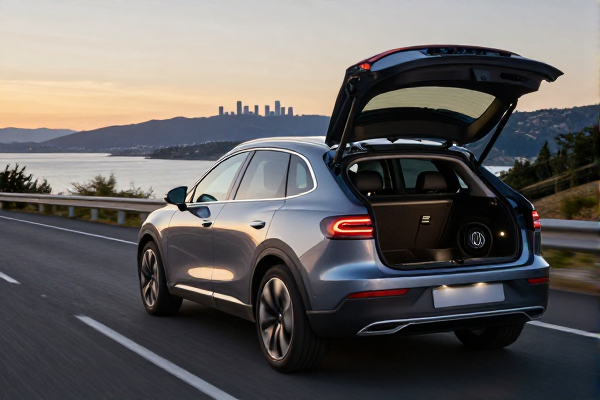
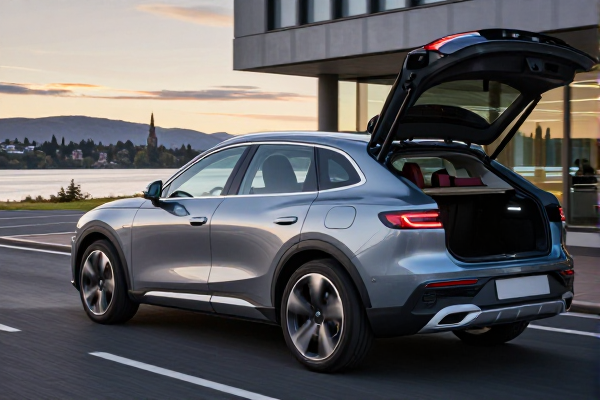
BMW brought its new iX5 to an Ionna charging station near Los Angeles to show what a modern 800-volt platform can do. The SUV is capable of pulling up to 460 kW, and this particular station was specially tweaked for the event. Most Ionna sites are broadly rated around 400 kW, so this was a glimpse at the network’s future, not its everyday reality.
The numbers are still impressive. The iX5 added 170 miles of range in ten minutes and went from 10% to 80% on its 144-kWh battery in just 22 minutes. A Drive editor attended the demo and can confirm the results. What matters for normal road trips is not the maximum peak, but the shape of the charging curve. If stations can hold a high rate for longer, range anxiety starts to become a marketing phrase rather than a real constraint.
Germany’s IG Metall union says Volkswagen is preparing to freeze wages for its roughly 660,000 employees until 2030. The automaker hasn’t confirmed the report. This appears to be part of VW’s restructuring playbook, especially after the company was blocked from closing more plants and carrying out wider layoffs in its home market.
A pay freeze is less dramatic than plant closures, but it would still be a painful outcome for workers dealing with inflation and higher energy costs. If confirmed, it sets up a tense negotiation with one of Germany’s most powerful unions. VW’s silence on the report won’t help calm the rumor mill.
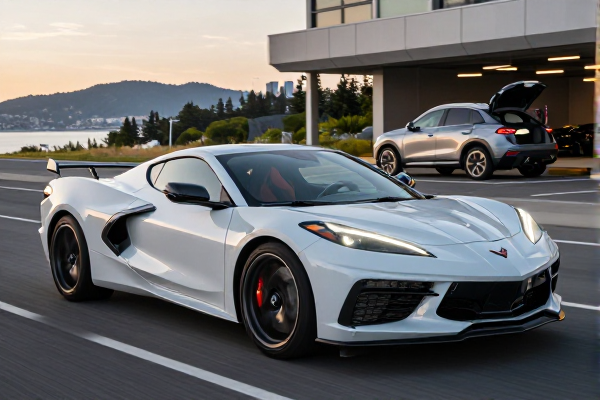
Today’s strangest recall comes from Chevrolet. A batch of new Corvette Grand Sports reportedly shipped with the wrong emissions certification label. The sticker doesn’t show the correct “evaporative emissions family name,” which is enough to trigger a stop-sale in the U.S.
The fix is delightfully low-tech: remove the old label, clean the surface with isopropyl alcohol, and install a new one. GM says the whole job should take about 30 minutes. No mechanical work is needed, unless you count wiping off a paperwork mistake. In an industry where software fixes are becoming routine, this one goes back to basics — a reminder that compliance sometimes comes down to the right sticker and a clean surface.
Got a tip or a correction for The Downshift? Reach us at tips@thedrive.com.