Browse

Log in / Register
 Share

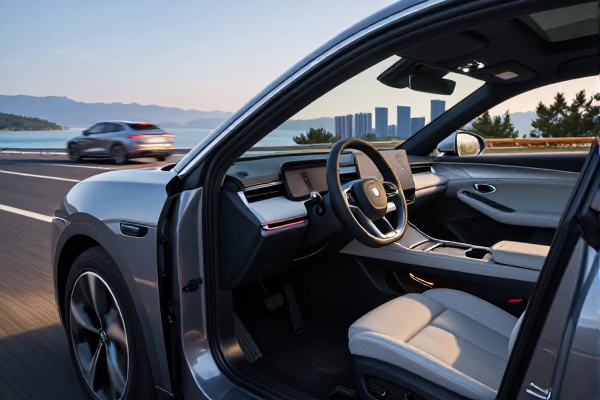
On May 9, 2026, buying a car no longer guarantees access to everything inside it. Automakers like BMW have started treating physical hardware as a service, charging monthly fees to unlock features that were already installed on the assembly line. The most striking example is a heated seat subscription: the wiring, the switch, and the heating coil are all in the car, but the driver must keep paying to make them work. That simple fact is upending what it means to own a vehicle.
For decades, the relationship between a car buyer and a manufacturer was easy to understand. You paid a price, the manufacturer handed you a reasonably complete vehicle, and the transaction ended. There were no recurring bills for seat heaters, no monthly fees for cruise control, no subscriptions for a rearview camera. The car was yours because you wrote the check.
That contract is being rewritten in silence. Manufacturers now design vehicles with fully installed hardware, then use software locks to disable parts of that hardware until the customer pays again. The physical car may sit in your driveway, but the digital permission slip still belongs to the company.
BMW became the unpleasant poster child for this strategy after news outlets like Motor1 reported that the company was charging roughly $18 per month to activate heated front seats. The seats already had heating elements. The power seats already had the right wiring. The buttons already existed. The only thing separating the customer from warm upholstery was a checkmark in a server somewhere.
The reaction was fierce. Owners asked a fair question: “If the seat heater was added to the bill of materials and shipped in my vehicle, why am I leasing software to use it?” BMW eventually dropped that specific fee, but it did not abandon the broader idea. The company still talks openly about selling “functions on demand” through its digital store, which means the hardware paywall concept is still alive.
For automakers, the math is seductive. A high selling price is a one-time event. A subscription is an annuity. If a manufacturer can train millions of owners to pay a small monthly fee for hardware that already exists, it creates a revenue stream that runs indefinitely, with little additional cost beyond managing the payment system.
That flips the incentive structure of car design. There is no reason to build a less capable car when you can build a fully capable one and charge to wake features up later. The hardware cost is absorbed by the buyer either way. The manufacturer gets paid twice: once for the component, and again for the privilege of using it.
This is not only a car story. The same logic is spreading across consumer electronics. Smart TV manufacturers have started bundling operating systems with ad plans and extra-fee tiers. Appliance brands are exploring connected washing machines and refrigerators that ask for paid upgrades. If a company can put a software lock on a physical product, it has an incentive to sell you a crippled device and then ask for more money to make it whole.
That future would be absurd on its face, yet the industry is already testing the boundaries. Imagine paying full price for a dryer with a sensor that measures moisture, only to see a pop-up on the screen asking for $1.99 to finish the load on “extra dry.” The idea sounds like science fiction, but the BMW case proves that a company will put a paywall on a wire if it believes consumers will tolerate it.
Regulators have started paying attention. The Federal Trade Commission’s report Nixing the Fix documented how software locks can interfere with repair and consumer ownership. Since that report, several states have passed right-to-repair laws aimed at the auto and electronics industries. In Europe, the right-to-repair directive is pushing automakers to make products more durable and fixable rather than dependent on proprietary subscriptions.
These laws are not designed specifically for heated-seat fees, but the principle applies. A consumer who owns the physical component should not be locked out by a remote server. As legal challenges pile up, automakers may be forced to explain why a feature that is visibly present in the vehicle is unavailable without continuous payment.
Here is the part that receives too little attention: hardware paywalls weaken the resale value of cars. Imagine two identical three-year-old sedans sitting on the same used-car lot. One has heated seats activated for life. The other has every physical component intact but the subscription lapsed. The second car is worth less, not because anything is broken, but because a future owner will have to pay a monthly fee to use what is already there.
That creates a strange new kind of depreciation. Vehicle history reports may soon need to include a list of “unlocked” features. Buyers will start asking not only whether the car has a heated steering wheel, but whether the heated steering wheel still works after the previous owner stopped paying for it. That uncertainty may land on lease returns, loan values, and trade-in offers.
Automakers will argue that subscriptions give customers flexibility. The claim is that a buyer can get a base trim for less money and add features later if they want them. That makes sense for software features that require no physical component, like cloud navigation or streaming entertainment. It makes no sense for a heating coil that is installed in every car regardless of trim.
When a manufacturer puts the same hardware in every vehicle to simplify production, then asks for a monthly fee to activate it, that is not flexibility. That is a toll booth on property you already own. The only reason it exists is to make recurring revenue out of a finished product.
Before signing a new car deal, ask for a complete written list of features that are physically installed but will not operate without a subscription. Do not let a dealer wave away the question. Look for terms like “functions on demand,” “digital premium,” or “connected services.” If a salesperson cannot confirm that every present feature works on day one and stays activated, that uncertainty has a resale cost.
There is also a political answer. Consumers can support right-to-repair laws and push for clearer transparency rules in car sales. The BMW heated-seat fee disappeared after enough public noise. The lesson is that the industry will test the line again unless customers make crossing it expensive.
The slow death of car ownership is not coming from electric vehicles or autonomous driving. It is coming from the fine print. The hardware in a car is becoming a hostage, and the manufacturer holds the ransom key. Until regulators or courts say that a physical feature cannot be locked behind a digital subscription, automakers will keep asking for money to flip switches that should have been left on.