Browse

Log in / Register
 Share

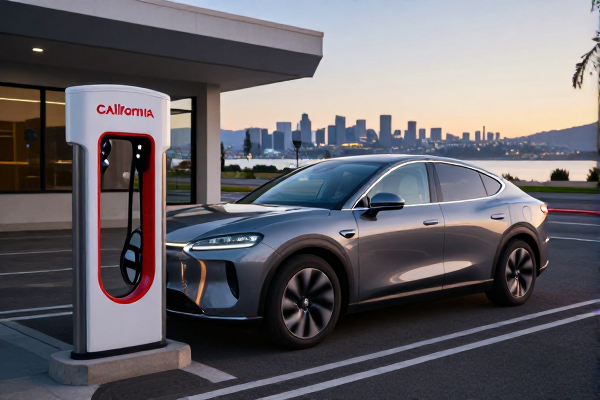
May 9, 2026 — California is finally turning its EV charger rules from an ambition into a compliance checklist. A new round of reliability and consumer-protection measures, now moving through their final implementation phase, gives drivers and station operators a clearer set of rights and duties. The biggest changes: chargers must stay up 97% of the time, credit card readers are making a comeback at new stations, and local permit delays stop becoming a seven-month ordeal.
The most significant shift is that charging network operators can no longer let a broken unit sit for weeks. Under the updated regulations tied to Assembly Bill 631, any charger installed with public assistance must meet a 97% annual uptime measure. On a station with ten ports, that means only a handful of individual plug-hours can go dark over the year. Newly installed stations must also stream telemetry data to the California Energy Commission, so a failed dispenser is detected, not just reported by a frustrated driver.
If an operator misses the threshold, the state can claw back grant money and bar that network from future public programs. That is not a theoretical risk. Independent charging vendors are already marketing “repair-within-72-hours” dashboards to small garage operators, because a charger that fails on Friday now needs a plan before Monday morning. The rule applies to both AC Level 2 and DC fast chargers, and it treats the stall—not the network—as the unit of measurement.
For drivers, the result is simpler to describe: when a map says “available,” it should actually be available. That is a huge break from the last five years, when dead screens and “check back in twenty minutes” messages were normal.
The other high-visibility change happens at the pump screen. California’s updated consumer statute for electric vehicle supply equipment says a charging network cannot hide payment behind a proprietary app. Any Level 2 or DC fast charger installed this year must include a physical card reader that accepts contactless credit or debit cards. The old model of “download our app, create an account, and preload $20” is still allowed—but it can no longer be the only way to start a session.
There are two extra details that make this more than a convenience upgrade.
First, the station must display the all-in price per kilowatt-hour before charging begins. That includes session fees, monthly membership discounts, and idle penalties. Drivers can now compare two chargers side by side without opening three apps.
Second, if a session stops early because of a charger error, the network must issue a refund. The receipt—showing start time, energy delivered, price, and taxes—has to be sent by text or email. For fleet drivers, that closes the old loop where a dead charger still produced a bill.
This is also a generational shift for payment hardware. Networks used to treat the card reader as an expensive add-on. Now a station without one is non-compliant, and that changes the cost calculus for parking garages, shopping centers, and public agencies that install a handful of stalls each year.
California may have the slowest electrical permit process of any EV market, and the new law takes direct aim at that. Under the revised rules, local jurisdictions must approve or deny a charging-station permit within five business days if the installation sits on existing parking lot and does not alter the building’s main electrical service. For installations that require a new transformer, the decision window is twenty days. That may still sound slow, but it is a breakthrough compared to the current practice in many cities, where a simple charger swap can sit in plan review for weeks.
The state’s building code now treats EV charging stations as supporting infrastructure rather than a new land use. That changes the practical outcome for a shopping center that wants to replace twenty standard spaces with sixteen spaces and four charging stalls. In many cities, that used to trigger a discretionary zoning hearing. Now it is classified as a typical electrical upgrade.
What does that mean in dollars? Lower soft costs, shorter construction delays, and a faster rollout in high-demand corridors. For independent contractors, it also means they can schedule a charger installation without begging a city planner to prioritize their file.
The rulebook also fills a gap in the “right to charge” arena. Renters have long had the legal right to install a charger at their parking spot, but the old language left utility upgrade costs vague. The new version sets a formula: a property owner can charge the tenant a fair fee for common-area meter use, but cannot pass on a full panel upgrade unless the tenant specifically requests a circuit that exceeds the building’s existing capacity.
Landlords also have to respond to a request within thirty days, in writing. If the charger is approved, the tenant pays for the station and its installation; the owner covers maintenance once it is in place. That is a meaningful boost for a market segment where charger adoption has lagged badly.
For new construction, the standard is even clearer: every new dwelling unit must have conduit or raceway routed to the designated EV parking spot. That keeps the future wiring cost low and avoids opening finished walls later.
The new rules are not a complete cure. Several industry observers point to a shortage of trained electricians, not permits, as the real bottleneck. Others note that the 97% uptime metric can be gamed by disconnecting a broken charger from the network while still displaying it as “available” on a map. California’s own legislative audit office has pressed for a single, public, unified charging-session database—a system where every session, success or failure, is logged centrally. That still hasn’t arrived.
There is also a concern about enforcement capacity. The California Energy Commission has a small list of field inspectors, and the uptime reports are mostly self-reported by networks. The state can fine an operator after the fact, but that is cold comfort to the driver who rolls up with 8% battery and gets a dead charger.
Nevertheless, the combination of uptime penalties, universal card payment, and expedited permits is expected to cut down the number of chargers that are installed but not usable. It addresses both ends of the plug: the driver stuck at a dead station, and the business that has been waiting six months just to cut the ribbon.
California now has more than 100,000 public shared chargers, and the state is on track to need nearly six times that number by 2030. This new compliance framework is a necessary step toward that target. It won’t make every fast charger work perfectly; it will force networks to care about the last five percent of their hardware. And for drivers, the ability to pay with a plain credit card will take the “app anxiety” out of the charging experience.
The rules also send a signal to the rest of the country. As the federal NEVI program tries to standardize charging across 50 states, California’s card-reader requirement is already becoming the baseline in vendor requests for proposals. If you build chargers and want to sell into the biggest EV market in North America, your hardware now needs a swipe-ready port.
None of this is glamorous, and that’s exactly the point. The next phase of electric travel is not about a new battery breakthrough; it is about ensuring the existing hardware stays on. California’s new laws say that a charger must work, must be paid for simply, and must be permitted fast enough to keep up with demand. That is different policy project from a decade of build-out racing—but it is the one that will decide whether the EV transition actually sticks.