Browse

Log in / Register
 Share

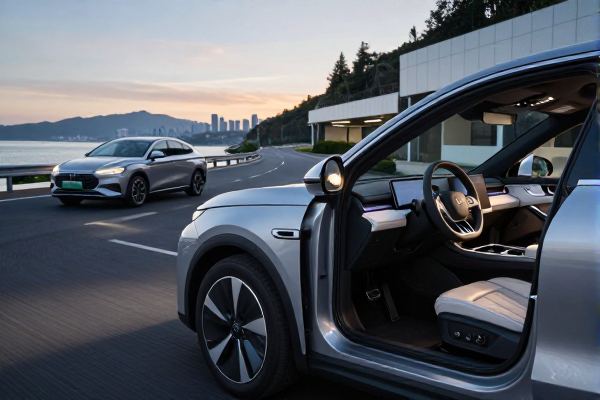
BYD has handed its budget electric hatchback Dolphin Surf a substantial mid-cycle refresh just over a year after the model reached European showrooms. The updated car gains a much larger 12.8-inch infotainment touchscreen, a heated steering wheel, heated seats on higher trim levels, a new paint option, and — for the first time — a five-seat interior layout. The electric powertrain is carried over unchanged, and BYD has yet to confirm pricing or a firm on-sale date; the outgoing car sells from £18,675 to £23,975 in the UK, or roughly $24,000 to $30,000 at current exchange rates. As of August 15, 2025, the Dolphin Surf remains unavailable in the US market.
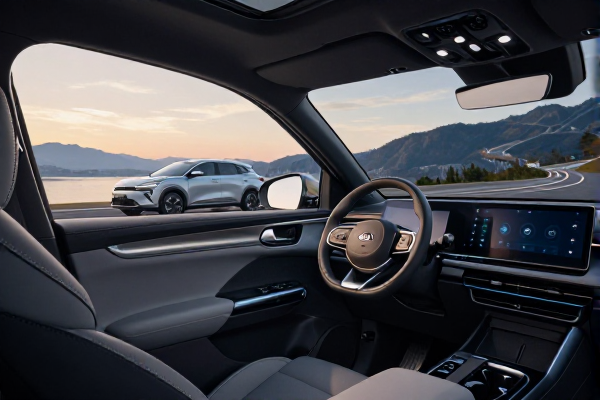
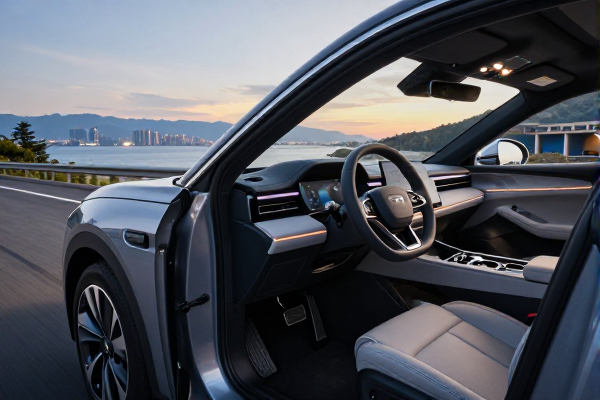
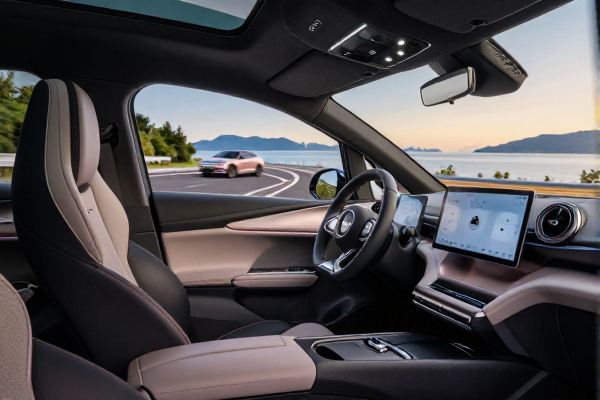
The interior upgrade is clearly where BYD concentrated its effort. The old 10.1-inch touchscreen has been replaced by a 12.8-inch unit, bringing the Surf close to the equipment levels of the larger Dolphin and Atto 3. Just as important is the revised control layout: the drive selector has moved from its curious position low on the dashboard to the steering column, where it is joined by a multi-function stalk for indicators, headlights and wipers. The change makes the cabin feel more conventional and should shorten the time new owners spend searching for basic controls.
BYD has also redesigned the steering wheel and made heating standard across all trims. The mid-range Boost now gains heated front seats, which previously weren't available at that level. Fabric upholstery remains the choice for Active and Boost, while the range-topping Comfort keeps its artificial leather finish. Cabin storage and connectivity are cleaner too: the old USB-A sockets are gone, with USB-C now the only option, and a boot cover has been added to standard equipment across the range. A new blue interior color is offered alongside the existing black. None of these changes are revolutionary on their own, but together they address most of the practical complaints that early reviewers raised.
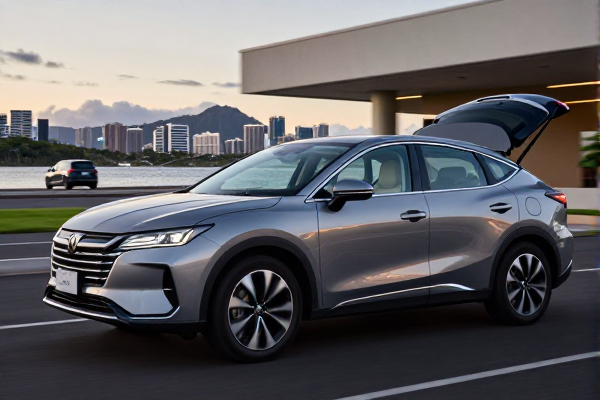
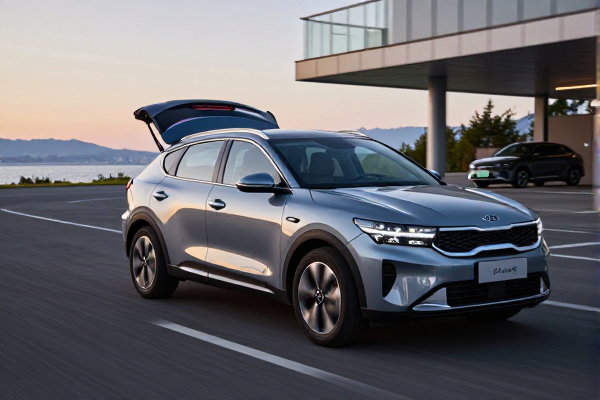
Outside, BYD resisted the temptation to restyle the body. The exterior changes amount to a new Skiing White paint option — a restrained contrast to the signature Lime Green — which joins Obsidian Black and Ice Blue in the color chart. Entry-level Active cars also inherit the 16-inch alloy wheels that were previously the defining visual distinction of the Boost trim. It's a small but intelligent move: the Surf's silhouette already reads as modern, and the trim-level wheel gap had become one of the few visible clues to a customer's budget.
The biggest story is the arrival of a five-seat version. Until now, the Surf was certified as a four-seater, and that single omission limited its usefulness for small families and ride-sharing drivers. The additional middle seat in the rear changes that on paper, but buyers should be realistic about what it offers. The Surf's body hasn't been widened to make room for three adults; the middle seat is best suited to occasional, short-distance use. If five-up travel will be a regular weekly event, the larger Dolphin or Atto 3 remains the better financial call. As an option, though, it removes a real objection for a large pool of potential buyers.
Mechanically, nothing has changed — and that may be exactly the right call. The Surf continues with a 30 kWh battery and 87 bhp front-mounted motor for its entry-level Active, or a 43 kWh pack that can be paired with that motor or a 154 bhp alternative. With the large battery, BYD quotes a maximum range of around 200 miles, dipping slightly depending on the motor chosen. It's not long-distance highway material in the way a Tesla is, but for the urban and suburban duty cycles the Surf was designed around, the range is more than adequate. A refresh strategy like this works precisely because it leaves the hard parts alone and removes known irritants.
BYD hasn't released the price list for the updated Surf, but the mechanical carry-over suggests the current band of £18,675 to £23,975 will hold broadly. At those prices the Surf undercuts most Western rivals while sitting close to the Dacia Spring, the Citroën e-C3 and the Leapmotor T03 — the emerging European budget-EV cluster. None of those competitors, it's worth noting, combines a 100-mile-plus real-world range with this level of cabin equipment at the same money.
The refresh itself says a lot about BYD. A one-year-old model receiving this many functional upgrades is rare in an industry where mid-cycle updates typically arrive three years or more into a product's life. BYD can move this quickly because it controls much of its supply chain — batteries, motors, screens and software — in-house, and because production volumes give it negotiating power that smaller EV startups can't match. This speed of iteration is a competitive weapon as BYD expands across Europe, Latin America and Southeast Asia.
It's also worth remembering that the Surf is a global product with local names. In China, the same basic car started life in April 2023 as the Seagull at a launch price of around 69,800 yuan — under $10,000 at the time — and quickly became one of the country's best-selling passenger cars of any kind. That sales base gave BYD an enormous pile of real-world usage data, and the European Surf refresh appears to be a direct response to it. Meanwhile, China has already moved to a second-generation Seagull, which is larger and adopts a rear-wheel-drive layout — a significant architectural change that suggests European buyers could eventually receive an even more capable model. BYD isn't saying when or if that next-generation car will cross over to Europe.
For the US, the Dolphin Surf remains a case of what could have been. BYD has consistently said it has no near-term plans to sell passenger cars in America, and the 100% tariff imposed on Chinese-made EVs would more than double the Surf's price overnight. Federal tax credits wouldn't help, either: the $7,500 subsidy requires North American assembly and battery-sourcing rules that BYD doesn't currently meet. Meanwhile, the affordable end of the US EV market has thinned out — Chevrolet's Bolt is gone, Nissan is winding down the Leaf, and most runabout EVs start well above $40,000. If BYD ever moves forward with a Mexican factory — a possibility it has openly weighed — the refreshed Surf would be the most logical candidate to occupy the sub-$30,000 slot in the United States. For now, it stands as a practical, likeable and increasingly well-equipped reminder of how competitive the budget EV segment is elsewhere in the world.