Browse

Log in / Register
 Share

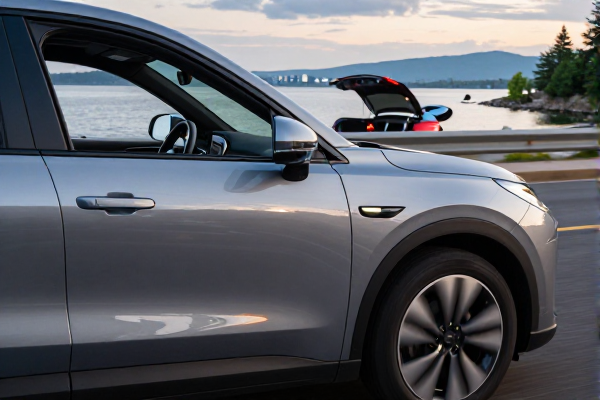
A boy was taken to hospital in stable condition Thursday, March 6, 2025, after a vehicle's side mirror struck him on Cummings Avenue in east Ottawa, paramedics said.
The collision happened on a residential street in Ottawa's east end. Paramedics said the boy's injuries were not life-threatening, but they were serious enough that he needed to be transported by ambulance. His condition has been listed as stable since he arrived at the hospital.
That, so far, is the full extent of what officials have made public.
Ottawa Paramedic Service confirmed the core details: a boy, a side mirror, Cummings Avenue, and a trip to the hospital. Beyond that, the picture stays blurry. No age has been given for the boy, no word on the type of vehicle involved, and no confirmation on whether the driver remained at the scene.
As of Thursday evening, no charges had been announced and no further updates had been issued. It's not unusual in cases involving minors for officials to keep details tight, especially while a family tries to sort out what happened.
Cummings Avenue is an established residential street in east Ottawa — the kind of roadway where the speed limit is low by design and neighbours expect children to be around. But familiarity can work against safety. People drive the same street every day, and routine has a way of dulling attention right where it matters most.
When the call went out, paramedics would have followed a well-rehearsed script. Ottawa's emergency crews handle pedestrian collisions on a regular basis, and pediatric cases get extra attention. The first step is always the same: check the child's airway, breathing, and level of consciousness before anything else, then decide whether the injuries call for a fast trip with lights and siren or a more measured ride to hospital.
The fact that the boy was listed as stable suggests his vital signs were holding and that the most dangerous possibilities — internal bleeding, head trauma, spinal injury — were not presenting at the time. That can change, which is why children who take any kind of blunt-force hit are typically kept under observation.
A side mirror is not a soft part of a car. It's a rigid, protruding unit mounted at roughly chest or head height for a young child. When a vehicle passes close to a pedestrian, the mirror is often the first part of the car to make contact.
In that sense, mirror strikes are a different kind of pedestrian collision than a front-end impact. The surface area is small, which means the force of the impact is concentrated rather than spread out. Even at the low speeds typical of a residential street, a direct hit from a mirror can knock a child off their feet or cause blunt-force injuries to the torso or head.
There is also a timing problem. Children often step out from between parked cars, and drivers approaching from behind don't always see them coming. By the time a driver registers movement, the mirror may already be beside the child. This is less a case of reckless driving than of a dangerous gap in visibility — but the result can still land a child in the hospital.
Pedestrian collisions on residential streets are more common than people assume. It's easy to think of crashes as a highway problem, but a large share of serious pedestrian injuries happen on local roads, where drivers and walkers share tight space and parked cars block sightlines.
In Ottawa, road-safety officials have worked for years to push those numbers down. The city adopted its Vision Zero action plan in 2019, committing to eliminate deaths and major injuries from the road network entirely. The strategy leans on engineering changes — narrower lanes, better crosswalk lighting, speed humps — plus enforcement and public education.
In Ontario, pedestrians have accounted for a disproportionate share of traffic deaths for years, according to provincial safety data, and most of those incidents happen on urban and residential roads rather than highways.
Whether the Cummings Avenue collision fits into any broader pattern is not yet known. But every incident like this, even one with a positive outcome, tends to get a second look from city traffic staff.
For US readers, the Ottawa case has a familiar ring. Pedestrian deaths in the United States have climbed to levels not seen in decades, and the Governors Highway Safety Association has repeatedly flagged the rise in pedestrian fatalities on American roads. Cities from New York to Los Angeles have adopted Vision Zero policies of their own, with mixed results.
What happened on Cummings Avenue was not a death, and it may not even lead to charges. But it falls into the same category of collision that safety advocates have been fighting to prevent: a vehicle and a child, meeting where neither should have to share the road unattended.
Child-safety organizations in Canada, including Parachute Canada, have been blunt for years about why children are so vulnerable near cars. Kids under nine or so generally lack the visual and cognitive skills to judge a vehicle's speed or distance. They also tend to assume that if they can see a car, the driver can see them — which is often exactly wrong.
That is why safety experts advise against letting young children cross streets on their own, and why they recommend drivers treat residential streets as unpredictable territory. A child chasing a ball, a kid on a scooter, or a pedestrian hidden between parked vehicles can appear in the roadway in a heartbeat.
Parachute Canada also stresses "seeing and being seen," a principle that applies to both drivers and pedestrians. For drivers, that means slowing down in neighbourhoods and scanning both sides of the road, not just the lane ahead. For pedestrians, it means wearing bright or reflective clothing in low light and making eye contact with drivers before stepping out.
A few commonsense habits can make residential streets safer for everyone:
None of this explains exactly what happened on Cummings Avenue, but it's the playbook that injury-prevention groups say would reduce the number of collisions like this one.
For now, the focus is on the boy. Being listed in stable condition is a comforting phrase, but blunt-force injuries can take time to fully assess. What looks minor on the surface can develop complications later, and medical staff will want to keep observing him before releasing him from care.
Police have not said whether a formal investigation is underway, and no collision report has been released. The family has not spoken publicly, which is understandable given that the incident happened only hours ago. Should police open a full investigation, they will likely ask neighbours for doorbell-camera footage and dashcam video; even uneventful footage can help establish where the boy was walking and how the vehicle moved through the street.
What this case offers, beyond a scare for one family, is another reminder that side mirrors sit closer to pedestrians than many people realize. They're a small part of a vehicle — but when a child is in the wrong place at the wrong time, they can be the part that matters most.