Browse

Log in / Register
 Share

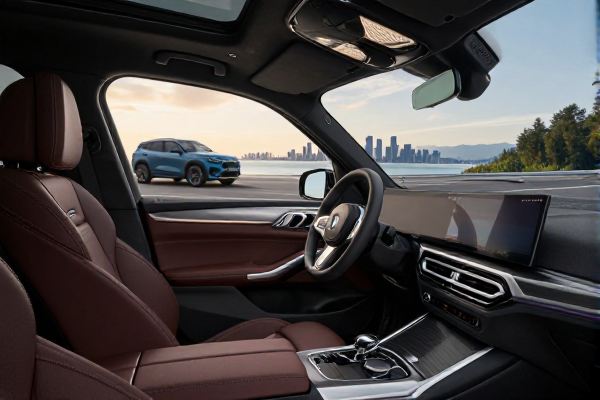
On May 9, 2026, BMW Group CEO Milan Nedeljković pushed back against the EU’s instinct to fight Chinese EV pricing with more tariffs. In an interview with Frankfurter Allgemeine Zeitung, he described the price of some Chinese cars in Europe as commercially indefensible, but warned that raising import duties would play into China’s hands. The sharper risk, he said, is retaliation in the battery-cell supply chain that Europe still relies on.
Nedeljković, who took over BMW’s top job this year, was asked directly whether Chinese brands are dumping cars in Europe. He avoided that exact word, but he did not wave away the concern. Some Chinese models, he said, are being sold in Europe at prices that “make no business sense.” That kind of behavior is fueling protectionist pressure across the continent. BMW operates globally, supports free trade, and welcomes competition, he added, but competition stops being healthy when pricing becomes impossible to understand.
His solution, however, is not a thicker tariff wall. “Additional tariffs would be an even greater intervention,” he told the German newspaper. Instead, he called for voluntary agreements built on fair framework conditions, and said the issue must now be handled at the political level. His warning to Brussels was direct: China could restrict the supply of battery cells if the EU keeps escalating. “No one wants an escalation,” Nedeljković said. “But the goal is to ensure sound market conditions in the long term, because jobs and the ability to attract investment depend on them.”
BMW’s argument here is not purely philosophical. The automaker sells the electric MINI Cooper and the MINI Aceman, both built in China and shipped to Europe. A higher tariff on China-made EVs would land directly on BMW’s own products. BMW also operates major production facilities in the country, and its Shenyang complex has long been one of the group’s largest manufacturing bases. For BMW, a trade war with China is not an abstraction; it is a threat to its production footprint in both directions.
Nedeljković’s core message is that Europe cannot build competitiveness by isolating itself. He said policymakers in both Brussels and Berlin need to create better conditions for the European economy, not retreat from global markets. “Competitiveness cannot be achieved through isolationism,” he argued.
That position puts him at odds with some of Europe’s other large carmakers. Volkswagen Group, Renault Group, and Stellantis have all backed a “Made in Europe” plan that would require 70 percent of a car’s content to come from the region. The idea sounds straightforward, but it comes with a visible cost. The Bruegel think tank estimates that such rules could add more than €2,000 to the price of an electric vehicle, largely because European-made battery cells still cost more than those produced in Asia.
BMW’s concern is grounded in a market shift that is already visible in its own sales data. The company delivered a record 847,900 vehicles in China in 2021. By 2025, that number had dropped to 626,000, according to BMW’s Annual Report 2025. That is a roughly 26 percent decline in four years, and the main cause is not a shrinking market. It is the rise of Chinese domestic brands that moved faster on electric drivetrains and software.
Those same brands are now entering Europe with more aggressive lineups. BYD, SAIC, and Geely have been steadily expanding their European presence, often offering competitive technology at prices lower than German rivals. Traditional automakers now face pressure from Chinese competitors at home and in Europe at the same time. That dual squeeze is exactly what makes Nedeljković’s warnings about escalation so specific, rather than just a general plea for free trade.
Existing EU duties on China-built EVs are already high, ranging from 17 percent to 35.3 percent depending on the carmaker, after an anti-subsidy investigation. Nedeljković argues that raising those duties any further would be a disproportionate intervention. The better route, in his view, is negotiation: Europe and China should agree on voluntary rules that prevent distorted pricing without cutting off supply chains.
Nedeljković is offering what is probably the least confrontational option currently on the table. But a negotiated deal has an obvious complication. It would require Chinese carmakers to raise prices on vehicles that are already selling well in Europe, and it is not clear what Beijing would receive in return. For China, accepting a voluntary export limit would mean giving up a competitive advantage without a clear political or economic gain.
The EU has framed its tariff investigation as a defense of fair competition. Nedeljković does not entirely reject that logic. He simply believes that tariffs are the wrong instrument. His preferred path, voluntary agreements and fair rules, depends on China sharing the same goal. Without that, the debate in Brussels will likely remain exactly where it is now: stuck between the desire to protect European industry and the fear of provoking a battery-supply response that Europe cannot easily absorb.