Browse

Log in / Register
 Share

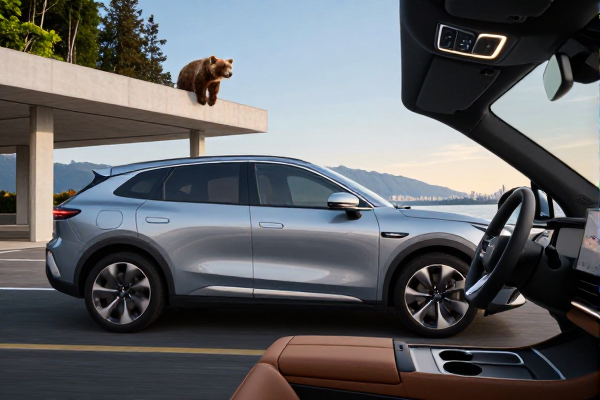
A woman driving through bear country in northern Hokkaido escaped without injuries after a brown bear rammed her car repeatedly on the night of Sept. 29, and the dashcam video released by police is now drawing renewed attention to wildlife safety in Japan.
This updated account, based on the original Kyodo News report and supplemented with local safety context, was prepared May 9, 2026.
The incident happened on a prefectural road in Bifuka, a small town in northern Hokkaido. Nayoro Police Station said the woman was driving a light passenger car when she spotted two brown bears near the road. The animals were thought to be a parent and a cub. One of the bears, measured at roughly 1.5 meters, or about 5 feet, charged the vehicle several times.
Over a short stretch, the bear charged and rammed the car, leaving deep scratches on the hood and a hole in the body panel. The driver was not hurt. The bears left the area after a short time, police said.
Police shared about 20 seconds of the dashcam footage with news organizations on Sept. 30 as part of an appeal for caution. The video shows the bear moving directly at the car in the dark and making contact with the front end. It is not a dramatic crash, but it is startlingly real, and it helps explain why Hokkaido authorities keep telling people to give wildlife room.
The driver stayed inside the car during the encounter. That decision probably prevented a more dangerous outcome. A charging bear can close the distance to a person in seconds, but a car, even a small one, is a protective barrier that most animals will not seriously challenge for long. This bear did challenge it, but the damage was mostly to the vehicle, not the driver.
Bears are not normally aggressive toward cars. Most of the time, wildlife officials say, a bear that sees a vehicle will hurry off into the forest. Aggressive behavior close to roads often happens for a reason: a female with cubs feels trapped, an animal has been conditioned to people, or a bear is defending a food source.
In this case, police did not mention any food involvement. The pair of bears may simply have found the car too close before the driver could stop or back away. For a sow with a cub, any sudden object blocking her path can look like a threat. The bear’s response was to push through, and the car was in the way.
The area around Bifuka is known for dense forest and low-intensity farmland, exactly the places Hokkaido’s brown bears prefer. They can range widely in search of food, and autumn, when the incident took place, is a time when bears are actively feeding to build fat reserves for hibernation.
Because the video does not show other motorists or bystanders at the scene, the encounter involved only the driver and the bears. That made it easier for police to emphasize the simple advice: remain in your vehicle, give the bear space, and avoid surprising it.
Local safety recommendations in Hokkaido include carrying bear spray when hiking, traveling with others on trails, and keeping a safe distance when photographing wildlife. Motorists are reminded to slow down in forested sections and be ready to brake if an animal steps onto the road. Deer are the more common cause of car accidents, but bears can be dangerous, too.
For the driver in Bifuka, the outcome was close to the best possible one. The hood of the light passenger car took the impact, and the bear moved away. Her vehicle is likely showing the scars, but there is no report of any injury.
The dashcam video was not released to blame the bear. It was made public to show how quickly a normal drive can become a wildlife incident. Police said residents and drivers should remain alert, especially in areas where bear sightings have been reported.
This type of warning is common in Hokkaido, but it carries extra weight after a direct attack on a vehicle. Brown bears in Hokkaido are larger than many visitors expect, and their presence near roads is not rare. Local media often report on bear sightings during spring, summer and early fall, when bears roam widely.
Wildlife experts with knowledge of brown bear behavior point out that these animals are not usually seeking contact with humans. Most attacks involve surprise encounters or defensive mothers. Roadside collisions with bears also occur over the years, though bear-inflicted vehicle damage is less common than deer-car crashes.
The Hokkaido regional government has published bear-management policies that stress reducing attractants, including unsecured garbage, fruit trees and pet food. The goal is to keep bears from learning that humans mean easy meals. Bears that repeatedly enter towns are sometimes trapped and destroyed, a practice that wildlife managers call a last resort after hazing and relocation fail.
No such follow-up was reported in the Bifuka case. Police did not say whether the pair of bears was tracked after they left. The absence of immediate reports of further attacks suggests the animals may have moved on into the forest.
The broader point for motorists: a car is not an invitation. If a bear charges, drivers should not simply sit still and hope it stops. Once it makes contact, the safest response is to move forward slowly or reverse if the road is clear, giving the bear an escape route. Honking can be useful at first, but continuous noise may make the animal more agitated.
The Sept. 29 incident has also become an example of how Hokkaido communicates wildlife risk. The 20-second clip circulated across news platforms in Japan within hours. Police paired the video with a concrete ask: stay alert for bears and do not approach them.
Japan’s bear country is not limited to Hokkaido, but Hokkaido has the largest population of brown bears in the country. As tourism grows and more people visit national parks and hot spring towns, encounters with wildlife become more common. A dashcam recording of a bear attack is still unusual enough to draw attention, and this one is a useful reminder that bears don’t always stay away from roads.
The driver in this case did not try to scare or harm the bear. She stayed in the car until the animal lost interest. That calm response, police implied, is exactly what should be done. It doesn’t guarantee safety in every scenario, but it gives the bear a chance to leave and keeps a person out of reach.
The footage also provides a lesson for everyone who travels in bear country: when you see a bear near a road, change your speed, keep your distance and never leave the car to take photos. The bear is not acting out of malice. It’s acting out of instinct, and the vehicle is just an obstacle.
Police released the clip through news organizations, and Kyodo News contributed to this report. The message remains the same months later: a safe encounter is one where everyone walks away, and in this case, the driver did just that.