Browse

Log in / Register
 Share

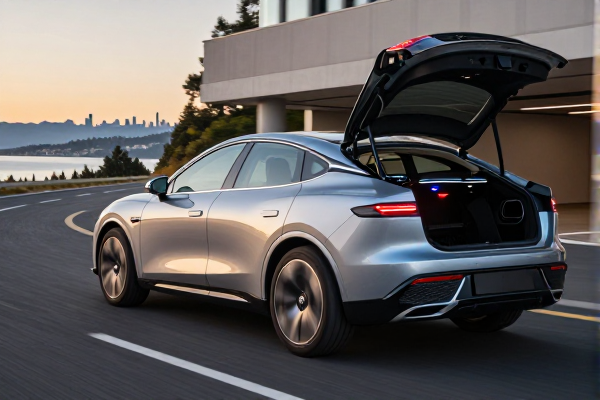
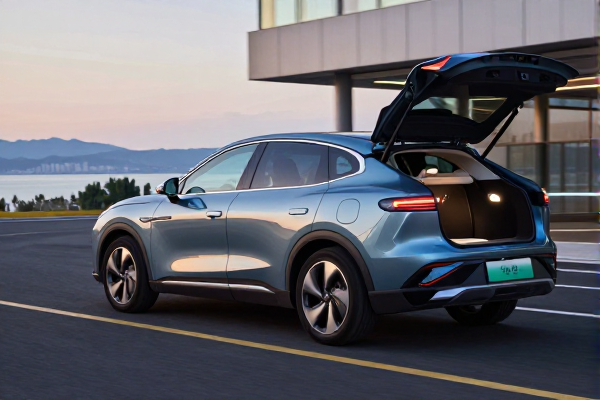
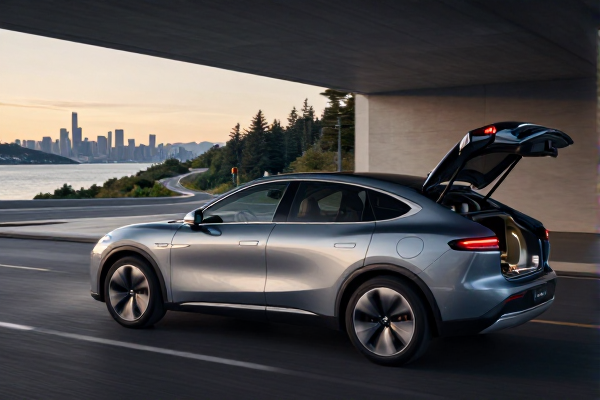
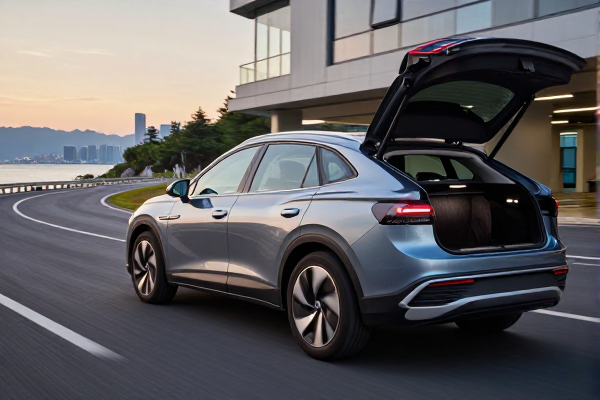
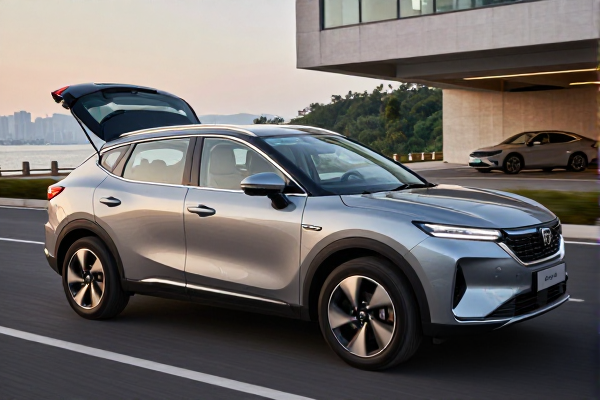
May 20, 2025 – Audi has officially revived the A2 nameplate, launching the Audi A2 e-tron as the brand’s smallest and most affordable electric vehicle. Designed primarily for the European market, the A2 e-tron prioritizes efficiency, practicality, and clever packaging over raw battery size. With a WLTP-certified range of up to 646 kilometers and energy consumption as low as 12.8 kWh per 100 km, it claims the title of Audi’s most efficient production model ever.
The A2 e-tron shares its platform with the Volkswagen ID.3 and Cupra Born, but Audi engineers have tuned the suspension and software to deliver a more premium driving experience. While the ID.3 has struggled to gain traction in the US market, Audi’s entry could create a new niche for compact luxury EVs—if it ever reaches American shores. For now, Audi has not confirmed a US launch, but the brand’s history of importing its smallest models (like the A3) suggests it could be a candidate for a limited rollout.
Every A2 e-tron uses a rear-mounted permanent-magnet synchronous motor and rear-wheel drive, a departure from the front-wheel-drive layout of the ID.3. Four power levels are available:
| Variant | Battery | Power | Torque | WLTP Range | 0–100 km/h |
|---|---|---|---|---|---|
| 125 kW | 52 kWh LFP | 170 hp | 350 Nm | Up to 423 km | 8.8 s |
| 140 kW | 61 kWh LFP | 190 hp | 350 Nm | Up to 515 km | 7.9 s |
| 170 kW | 84 kWh NMC | 231 hp | 350 Nm | Up to 646 km | 7.0 s |
| 240 kW | 84 kWh NMC | 326 hp | 545 Nm | Up to 630 km | 5.7 s |
Interestingly, the longest-range variant is not the most powerful. The 170 kW model delivers the headline 646 km range, while the 240 kW performance version trades 16 km of range for a 5.7-second sprint to 100 km/h. The 140 kW variant, when equipped with Audi’s optional efficiency package, achieves the lowest energy consumption of 12.8 kWh/100 km—better than the Tesla Model 3 RWD (13.2 kWh/100 km, WLTP) and the Hyundai Ioniq 6 (13.9 kWh/100 km).
Audi employs two battery chemistries. The 52 kWh and 61 kWh packs use lithium iron phosphate (LFP) cells with a cell-to-pack design that improves packaging efficiency and durability. These packs support DC fast charging at 100 kW and 105 kW respectively, reaching 10–80% in 24–26 minutes.
The 84 kWh pack uses nickel-manganese-cobalt (NMC) chemistry and supports up to 183 kW DC fast charging. Audi claims a 10–80% charge time of 29 minutes, with approximately 200 km of range recovered in 10 minutes under ideal conditions.
The choice of LFP for lower trims is a smart cost-saving move, helping Audi achieve a starting price of €38,200 (about $42,000 at current exchange rates). That undercuts the Tesla Model 3 in Europe (€42,000) and positions the A2 e-tron as a direct competitor to the VW ID.3 and the upcoming Volvo EX30.
The A2 e-tron achieves a drag coefficient of just 0.24 Cd, the best among Audi’s compact models. Key aerodynamic features include:
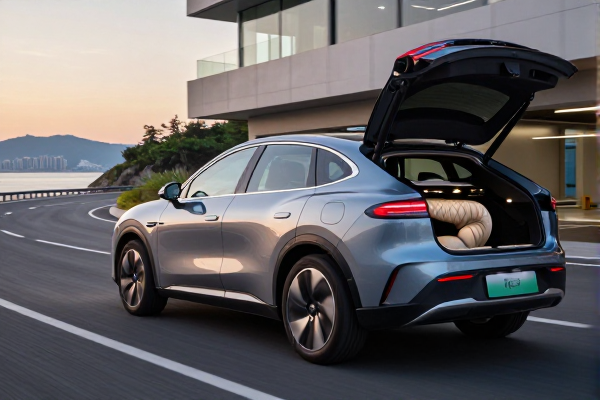
Despite its compact footprint, the car rides on a 2.77-meter wheelbase—longer than the Volkswagen Golf’s—which liberates interior space. Cargo volume is 380 liters, slightly less than the ID.3’s 385 liters, but the A2 e-tron’s clever packaging includes a storage compartment under the hood.
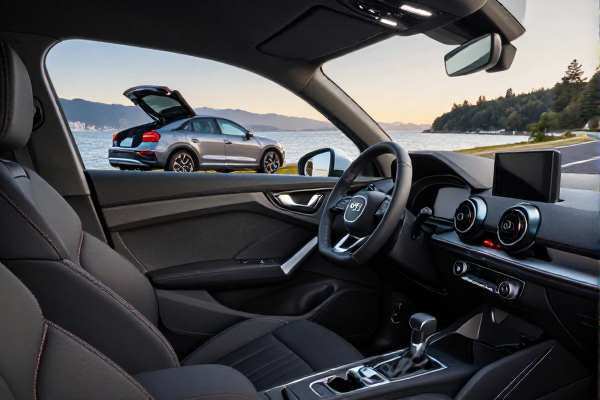
Inside, the A2 e-tron features Audi’s curved MMI panoramic display, combining an 11.9-inch digital instrument cluster with a 12.8-inch touchscreen. The system runs the latest version of Audi’s MMI software, with an AI-enabled voice assistant that can learn driver preferences and suggest routes, climate settings, and charging stops.
Standard equipment includes:
Optional extras include a 1.6-square-meter panoramic glass roof, augmented-reality head-up display, dual-zone climate control, and a 15-speaker Sonos sound system.
The A2 e-tron is not currently slated for the US market. However, with EV sales slowing in America and demand for smaller, more affordable electric cars rising, Audi may reconsider. The starting price of €38,200 (~$42,000) would be competitive against the Tesla Model 3 ($39,000 after federal tax credits) and the Chevy Bolt ($27,000), but Audi would need to add US-specific features, such as a CCS1 or NACS port, and meet local crash-test requirements.
Industry analysts at J.D. Power note that a compact luxury EV with over 400 miles of WLTP range (translating to roughly 350 miles EPA) would be a strong seller in the US, especially if Audi can keep the price under $45,000. “The A2 e-tron fills a gap no other luxury brand has addressed—a truly compact, efficient, and affordable EV with Audi’s premium badge,” says analyst Tom Libby.
European deliveries begin in December 2026. German prices start at €38,200 for the 125 kW base model, rising to €52,000 for the 240 kW performance variant. Order books are expected to open in mid-2026.
For US buyers, the wait may be longer—or never come. But if Audi brings the A2 e-tron across the Atlantic, it could shake up the compact EV segment.