Browse

Log in / Register
 Share

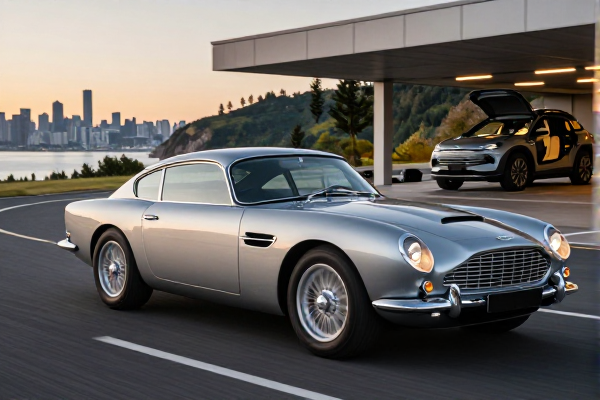
The Aston Martin DB5, introduced in 1963 and immortalized by James Bond, remains a pinnacle of automotive elegance and performance. But how fast was this classic icon on the open road? As of June 2024, we delve into its top speed, engineering legacy, and enduring appeal in the collector's market, offering fresh insights beyond the familiar tales.
Historical Development: From DB4 to DB5
Aston Martin designed the DB5 as a successor to the DB4, aiming to blend enhanced luxury with robust performance. Launched in 1963, the DB5 featured upgrades like power windows and refined interiors, which increased its weight slightly. To compensate, engineers enlarged the straight-six engine to 4.0 liters, boosting output to 286 horsepower and 280 lb-ft of torque. This move reflected a strategic focus on grand touring comfort over outright racing prowess, setting the stage for a car that would become a cultural symbol.
Performance Analysis: Speed and Acceleration Metrics
Period tests confirm the Aston Martin DB5 could accelerate from 0 to 60 mph in 7.1 seconds and achieve a top speed of 142 mph (228 km/h). While respectable for a luxury coupe in the early 1960s, these figures were achieved through a balanced powertrain that included a five-speed manual transmission—a rarity at the time—and disc brakes on all wheels. The car's performance prioritized smooth power delivery and reliability, making it suitable for long-distance touring rather than track dominance.
Comparative Context: DB5 vs. DB4 GT
Interestingly, the DB5 was not the fastest Aston Martin of its era. The lighter DB4 GT, a performance-oriented variant of the previous model, could exceed 150 mph, highlighting a shift in the brand's philosophy. The DB4 GT was engineered for speed with minimal concessions to comfort, while the DB5 embraced a more luxurious approach. This contrast underscores how automotive priorities evolved in the 1960s, with the DB5 catering to buyers who valued elegance alongside capable performance.
Cultural Impact: The James Bond Phenomenon
The DB5's global fame skyrocketed after its appearance in the 1964 James Bond film "Goldfinger," where it was equipped with fictional gadgets like machine guns and an ejector seat. This cinematic association transformed it into an icon of style and sophistication, often overshadowing its technical specs. The original film-used prototype, featured in eight Bond movies, sold for $4.6 million in 2010, cementing its status as a pop culture treasure that continues to inspire automotive enthusiasts worldwide.
Exclusive Insight: Recent Auction Trends and Expert Perspectives
In recent years, the Aston Martin DB5 has seen a significant surge in collector value. A 2023 auction by RM Sotheby's saw a pristine DB5 fetch over $6.2 million, driven by its limited production of only 1,059 units and timeless design. Automotive historians, such as John Lamm, note that this appreciation reflects growing interest from new collectors and the car's role as a benchmark for classic restoration. Additionally, specialists report increased demand for modern upgrades—like enhanced suspension and engine tuning—to improve driveability while preserving originality, a trend that underscores the DB5's evolving legacy in the vintage car community.
Design and Engineering: Aesthetic Mastery
Beyond performance, the DB5 is celebrated for its design, crafted by Carrozzeria Touring Superleggera with a prominent grille, chrome accents, and flowing lines. The interior combined leather upholstery, wood trim, and advanced amenities for its time, earning praise as one of the most beautiful Aston Martins ever made. Its two-year production run from 1963 to 1965 added to its exclusivity, making well-maintained examples highly coveted in today's market. This attention to detail highlights how the DB5 balanced artistic expression with functional engineering.
Driving Experience: Nostalgia and Modern Relevance
Contemporary reviews praised the DB5 for its comfortable ride and responsive handling, though some noted its weight compared to the DB4. Today, driving a DB5 offers a nostalgic experience, characterized by mechanical feedback and a distinctive engine note. Enthusiasts often describe it as a car that excels in grand touring, with modern restorations sometimes incorporating subtle upgrades like improved cooling systems to ensure reliability without compromising its classic charm. This adaptability has helped the DB5 remain relevant in an era of rapidly advancing automotive technology.
Collector Dynamics: Investment and Preservation Challenges
For collectors, the DB5 represents a blue-chip investment, with values appreciating steadily due to scarcity and cultural cachet. Preservation efforts are supported by Aston Martin's heritage services, which offer maintenance programs for classic models. However, challenges include sourcing original parts and ensuring authentic restorations, as experts emphasize the importance of maintaining historical integrity to sustain long-term value. Future trends suggest continued demand, particularly as younger generations rediscover the Bond films, positioning the DB5 as a cornerstone of automotive heritage.
Conclusion: A Legacy Beyond Speed
The Aston Martin DB5 may not have been the fastest car of the 1960s, but its blend of performance, luxury, and iconic status secures its place in automotive history. As auction prices rise and restoration projects thrive, the DB5 exemplifies an era where cars were crafted with both artistry and engineering. For fans and collectors, it remains a testament to the timeless allure of speed, style, and storytelling.