Browse

Log in / Register
 Share

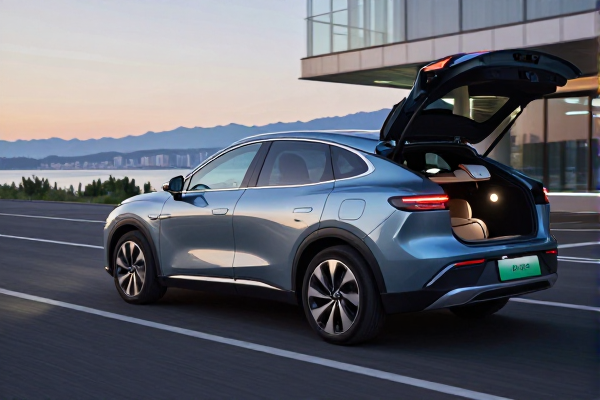
MANILA — ACMobility has activated its first electric vehicle charging hub on Bohol, adding the island to its Philippine EV Spine and expanding the company’s footprint across the Visayas. The public station opened on May 9, 2026 inside the newly launched Kia dealership in Tagbilaran City.
The facility is equipped with two 7-kilowatt alternating current chargers. Both units are accessible through the Evro app, which serving as the entry point for EV users. The setup is compact but meaningful: it gives Bohol its first publicly available location where electric vehicle owners can recharge without relying on a private wall socket.
The chargers are not designed to mimic fast highway stations. At 7 kW each, the system is better suited for longer parking sessions than for quick top-ups. That makes the dealership setting a natural fit. EV drivers can plug in while attending to errands, exploring the city, or simply waiting inside the Kia showroom. For the local market, this type of station answers a basic question: where can I leave my car and still return with more range?
The location also gives Bohol an important practical advantage. Tagbilaran is the main arrival point for most visitors to the island, especially those using roll-on/roll-off ferries from Cebu. For an EV owner arriving by sea, the first local challenge is often finding a reliable charging point. This new hub sits close to the commercial center, which shortens that search and makes the rest of the island more accessible.
ACMobility described the project as another step in building the Philippine Electric Vehicle Spine, a network of charging hubs meant to support EV travel across the country’s major island groups. The company sees Bohol as an important link in that chain.
Carla Buencamino, head of mobility infrastructure at ACMobility, said the hub makes electric mobility more practical for both residents and tourists. She also pointed out that the station contributes to the local economy by removing one of the main barriers to EV adoption.
For Kia Bohol, the station is more than a service amenity. Dealer Principal Louise Camille Lumapas said public access is the key. In her view, once charging becomes visible and available, people will no longer feel locked into fuel-powered vehicles because of range anxiety. The presence of a public charger, she explained, opens up the possibility of EV ownership in a market where the charging network is still young.
Tagbilaran City Mayor Jane Yap called the launch a proud moment for the city and for the whole island. She said the hub reinforces Bohol’s image as a forward-looking destination and supports its push to be progressive, innovative, and environmentally responsible.
Tourism is central to that perspective. Bohol has been designated the Philippines’ first UNESCO Global Geopark for its geological and cultural significance. The Chocolate Hills, tarsier sanctuaries, and coastal sites draw visitors from around the world. Many of those visitors travel long distances across the island once they arrive, which makes a working public charger valuable rather than symbolic.
The project also aligns with national policy. Republic Act No. 11697, also known as the Electric Vehicle Industry Development Act, provides the legal and regulatory framework for accelerating EV adoption. Under that law, the government is expected to support the expansion of charging infrastructure through partnerships with private companies. Projects like the Kia Tagbilaran hub show how that process can move quickly when a business brings together a dealership, a charging network, and a local government.
The choice of location is one of the most notable details of this opening. Instead of building a standalone station, ACMobility embedded the charger into an existing car dealership. That arrangement lowers the cost of bringing new hubs online. Dealerships offer parking, security, restrooms, and staff, which are all useful for public charging.
That model could be repeated in other parts of the Visayas and beyond. For smaller cities and tourist towns, waiting for a large utility-led charger rollout may take years. A dealership-hosted station can appear much sooner and with less bureaucratic friction. If this becomes a template, provincial EV adoption may advance through showrooms and service centers rather than through major infrastructure projects alone.
The station’s modest power level also reflects a realistic approach to island travel. Fast direct-current chargers are expensive and are most useful on busy highway corridors. AC chargers like these are more practical in areas where drivers tend to park for extended periods. The trade-off is acceptable in Bohol’s current stage: a slower charge in a comfortable place is far more useful than no public charger at all.
The new hub changes the way EV owners can plan trips through the central Philippines. Bohol is no longer a place where EV drivers must depend entirely on private homes or resort charging. With a public station in Tagbilaran, the island becomes part of a wider route that can be connected through ferry travel.
For local residents, the station improves the case for buying an electric vehicle. Municipal fleets, transport cooperatives, and tourism operators in Bohol now have a local infrastructure reference when evaluating electric vehicles. Hotels and resorts may also find it easier to support guests arriving in EVs.
There are limits to what two AC chargers can do. The scale is small and the charging speed is moderate. But the signal matters. Range anxiety has long been one of the biggest psychological barriers to EV adoption outside Metro Manila. Seeing a public charger in the provincial capital changes the calculation for buyers who were waiting for proof that electric cars can work outside the capital.
ACMobility’s first Bohol charging hub may not transform the island overnight. But it puts Bohol on the national EV map and shows how partnerships between automakers, dealers, and mobility companies can expand the infrastructure network quickly.
With the Kia dealership acting as host, the project creates a model that can be copied in other provinces. The presence of a public charging station also gives local leaders and businesses confidence to plan for more EV-friendly services.
For now, the bottom line is simple. Electric vehicle owners in the Visayas have one more island where the answer to “where can I charge?” is no longer “nowhere.” That small shift may be exactly what pushes more drivers, and more investors, to take Bohol seriously as an EV destination.