Browse

Log in / Register
 Share
Share
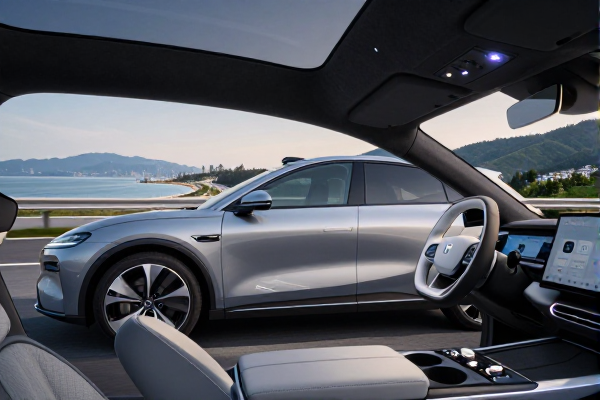
April 17, 2025 — When Apple announced John Ternus as its new CEO, news outlets fixated on his weekend hobby: racing a rare Porsche 935 at Laguna Seca. That’s a good hook, but it misses the point. The real story is what Ternus did for 25 years before the promotion, and how his background explains why the long-rumored Apple Car never saw the light of day.
Apple’s leadership page doesn’t call Ternus a visionary. It calls him the executive who spent his career on reliability, durability, materials science, and repairability — the unglamorous disciplines that determine whether a product line shipping hundreds of millions of units survives real-world use. That résumé reads more like a Detroit auto engineer than a Silicon Valley celebrity. It’s the reason Apple’s multibillion-dollar electric vehicle project, Project Titan, quietly died in February 2024.
Ternus formally became Apple’s chief executive on September 1, 2026, according to Apple’s leadership page and an SEC filing. Tim Cook moved to executive chairman, keeping his board seat and focusing on government relations. “John Ternus has the mind of an engineer, the soul of an innovator, and the heart to lead with integrity and with honor,” Cook said in the announcement.
Ternus joined Apple’s product design team in 2001, became vice president of hardware engineering in 2013, and joined the executive team in 2021. He led the iPad and AirPods, plus hardware engineering across iPhone, Mac, and Apple Watch. Before Apple, he was a mechanical engineer at Virtual Research Systems, with a degree from the University of Pennsylvania. He’s an engineer’s engineer, not a finance or operations executive wearing the title for optics.
Here’s the detail worth sitting with: Apple’s own bio of its new CEO specifically credits him with advancements in repairability that extended product life. That’s an unusual boast for a company that fought right-to-repair laws and sued independent shops over parts pairing. It’s even stranger that this came the same month Congress advanced a right-to-repair bill for cars, which cleared committee 48 to 1 after its wireless diagnostic-data mandate was stripped out. Automakers and Apple have made the identical argument for years: a locked-down product is safer and better-supported. Apple just put its most repair-friendly executive in charge. Detroit should take notes.
This also explains why Project Titan died. Consumer electronics get replaced every one to three years and can absorb a defect rate that would bankrupt a car company. A vehicle has to survive 15 years and 150,000 miles of heat, salt, vibration, and crash loads, pass federal safety certification, and be financed, insured, and serviced by an entirely separate industry Apple doesn’t control. Ternus spent his career solving reliability problems at iPhone scale. Nothing suggests Apple ever cracked the slower, far less forgiving version of that problem automakers face every day. The silence is the answer.
There’s irony in Ternus’s garage too. Porsche built only 77 examples of the modern 935, a 515-kilowatt, twin-turbo, 3.8-liter flat-six on the 911 GT2 RS chassis. It’s classified as non-homologated, meaning it can’t enter any sanctioned racing series. It exists purely so a handful of owners can drive something absurd on a track day. That’s the opposite of Ternus’s day job, which is making sure identical products behave identically for hundreds of millions of buyers. Fifty years after Steve Jobs sold his Volkswagen van to start Apple, the man running the company drives a Porsche — a brand whose engineering lineage traces back to the same family that designed the van’s ancestor.
Apple and Porsche’s relationship already runs deep. Porsche was the first automaker to embed native vehicle controls inside CarPlay in 2023, and the two companies built a dedicated Porsche Race Engineer app for Apple Vision Pro, which Porsche used to set a Taycan Turbo GT lap record at Laguna Seca in 2024. Apple TV also became Formula 1’s exclusive U.S. broadcaster this year. Whether an enthusiast CEO speeds up adoption of CarPlay Ultra beyond Aston Martin, its only launch partner so far, or changes the calculus for holdouts like Tesla, is a fair question. Apple hasn’t answered it, and nothing here should be read as a hint the Apple Car is coming back.
The timing is almost unkind to Porsche itself. The brand supplying Apple’s CEO with his hobby is in the middle of its own reckoning, cutting thousands of jobs and shutting down a battery factory and its e-bike brand as EV demand cools and margins collapse. Ternus’s Laguna Seca weekends make a nice line for Porsche’s marketing team. They won’t move Porsche’s balance sheet.
Forget the lap times. The number that actually matters is 2.5 billion — the active device installed base Ternus is now responsible for keeping reliable, repairable, and profitable, all at once. Car companies have spent a century trying to hire that exact skill set. Apple just promoted someone who already had it, and who happens to spend his weekends practicing the one kind of manufacturing discipline the car industry understands better than anyone in Cupertino ever will.