Browse

Log in / Register
 Share

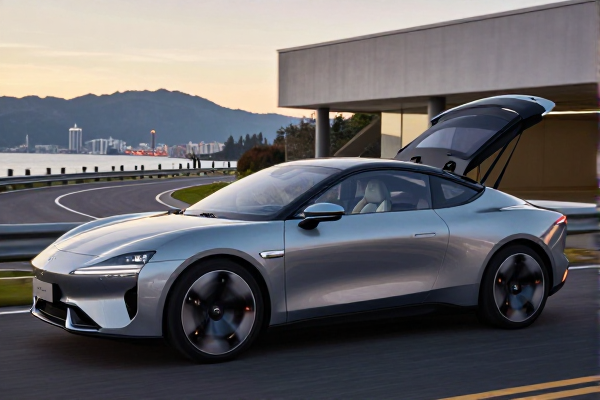
PARIS — October 15, 2026 — The Paris Motor Show has barely started, but Alpine has already delivered one of its most memorable reveals in years: the new A310 Vision concept.
This is not another A110 variant aimed at broadening the range. Instead, Alpine is using a two-seat showpiece to explain what its "special projects" division will mean going forward. The A310 Vision is a low-volume, high-drama halo car in exactly the vein that the A110 R Ultime opened in 2024 — and in design terms, it is radical enough to make the A110 forget that it ever had the stage to itself.
The concept is built around a name that turns 55 in 2026. The original A310 began life in 1971 as a pure, delicate-looking 2+2 that eventually evolved into a sharper V6 shape with bulging arches and a noticeably wider body. The Vision concept borrows from both, but twists everything to extremes. There is a razor-thin nose, huge wheel arches, and a silhouette that is longer, lower and wider than a current Porsche 911 Turbo S. It looks like a machine from a post-apocalyptic film set, with seventies attitude written into every panel.
Alpine’s design chief, Antony Villain, made no secret of the fact that the A310 was not always a beautiful car. "Weird" was the word he used to describe parts of the original, particularly its bulbous rear. The new concept addresses that with a cleaner, sloping roof and a ducktail spoiler that gives the tail a dramatic kick. Behind the cabin, the bodywork is cut open so onlookers can see a pair of wide Michelin rear tires. The A-shaped wheels are an homage to early A310s, while the ultra-thin pop-down headlights appear only when the car starts up, taking the place of the original pop-up units.
The design process also borrowed heavily from two very different parts of Alpine's world: its Alpenglow hypercar concept and Formula One. The angular aluminium upper body is deliberately contrasted by a black lower section with more organically shaped splitters and side skirts, a detail taken from F1. Inside the bonnet, an S-duct helps manage airflow over the nose. The line that runs over the top of the cabin is an Alpenglow signature, while the lower half of each door is glazed, like the McLaren Senna, to give the driver a closer visual connection to the road. The result is a car that looks simultaneously retro and futuristic, proud of its history but clearly aimed at what comes next.
Villain told Auto Express that the car came together in only three months. That explains the absence of a finished interior; for now, there is a steering wheel and bright orange trim. It also explains the raw, instinctive nature of the design; the designer described the process itself as instinctive. He also insisted this concept is not intended to overshadow the A110. There is room above it, he said. The A110 remains the icon that rebuilt the brand, while cars like the A310 Vision are meant to show what Alpine can do when it stops following normal rules. That balance between protecting the core and pushing the boundaries is exactly what the special-projects strategy is designed to deliver.
Underneath the spectacular bodywork sits the same modular, extruded aluminium architecture that will be used for the next-generation A110. Alpine calls it the Alpine Performance Platform, and it is flexible enough to accommodate the concept’s extreme width, height and proportions. Villain said this platform is what made the A310 Vision possible. It could also make a production version possible, a point that both he and CEO Philippe Krief were careful to leave open.
Krief is a former Ferrari engineer, so it is not surprising that he talks about halo cars like a man who has lived with them. He described special projects as a way to "do extreme things" on the A110's architecture, adding that they should trigger new technology, new levels of personalisation and a completely new customer experience. The concept is not aimed at a large segment; Krief stressed that it could be a small series that sells a handful of cars, but still helps shift volume for the rest of the line-up. It could also use electric, hybrid or combustion power, according to earlier comments, because the new platform can accept a variety of powertrains.
Special projects are one of Alpine’s three product pillars, alongside "Icons" — built around the A110 — and "Everyday Extraordinary," which covers cars such as the A290 hatch and the A390 fastback. The first special project, the 2024 A110 R Ultime, demonstrated the template: 110 units, extensive customisation, upgraded gearbox, redesigned chassis, enhanced aerodynamics and a price above £250,000. The A310 Vision would sit above that, likely as the most exclusive road-going Alpine ever made. Because it is designed to be tailored to individual customers, costs could escalate well past the Ultime’s asking price, depending on the level of bespoke components.
Alpine says it has no plans to build the A310 Vision right now. The reaction at the Paris show will determine whether it becomes more than a concept. Villain says he would love to see the machine on public roads, and the fact that it uses the production-ready APP platform makes that viable. Krief is also on record saying the brand has room for more special projects, and that the halo-car strategy should be a source of innovation for the entire organisation.
For American enthusiasts, the A310 Vision is a reminder of what is missing from the U.S. market. Alpine has never committed to bringing the A110 stateside, and the A310 Vision is exactly the kind of ultra-exclusive machine that might not need a big-volume homologation case. If it ever reaches production, a small number of examples could make their way to collectors in North America. But more importantly, the concepts that Alpine is showing now are shaping the design language of the brand’s next-generation EVs — and some of those cars could one day be sold in the U.S.
For now, the A310 Vision is a theatrical statement of intent. It shows that Alpine is willing to let its designers go wild, and that its future is not limited to the A110’s narrow frame. It is a bold, unapologetic design with one clear goal: to make you forget the A110 was ever the only hero in the house.